

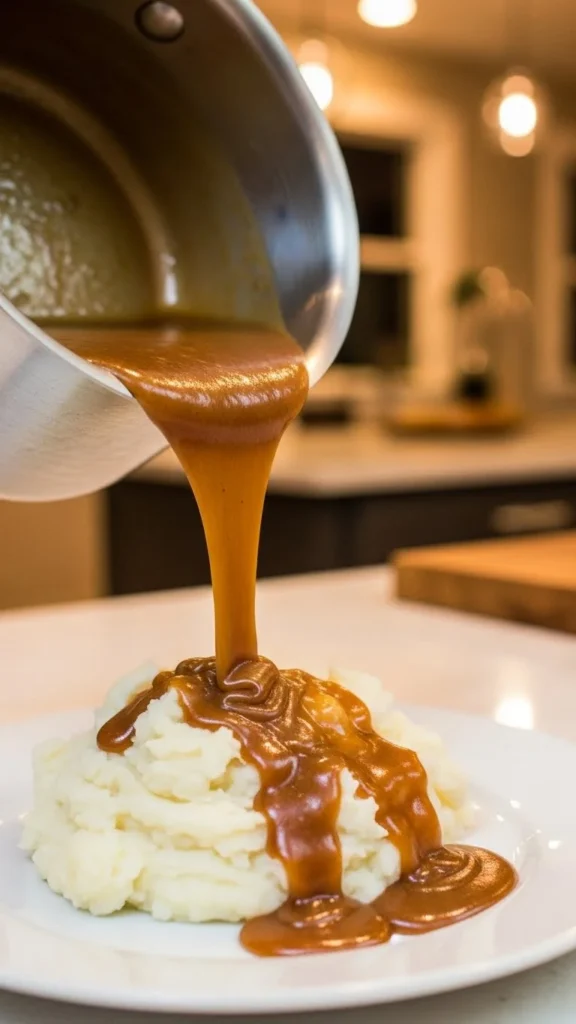
Gravy becomes lumpy when flour hydrates unevenly, heat is too aggressive, or liquid is added without control. Smooth gravy is not about speed. It is about structure. Once the thickening base is built correctly and the liquid is introduced with intention, gravy becomes predictable, glossy, and stable. This guide walks through the entire process so every step produces the result it is supposed to.
Decide How You Will Thicken the Gravy
Gravy problems often begin before the pan even heats. Mixing methods halfway through cooking creates clumps that are difficult to fix later. Choose one method and follow it from start to finish.
Roux Method
This method thickens gravy by cooking fat and flour together before adding liquid. It produces a stable texture and deeper flavor. Use this method when you are starting from pan drippings or butter and want full control over thickness and taste. Roux based gravy reheats well and holds its texture without separating.
Slurry Method
This method thickens hot liquid using starch mixed with cold water. It works when liquid is already simmering and there is no time to build a roux. Use this method when speed matters or when avoiding flour. The key to success here is temperature control and slow incorporation. Once a method is chosen, do not switch mid process.
Prepare Ingredients and Tools Before Heating
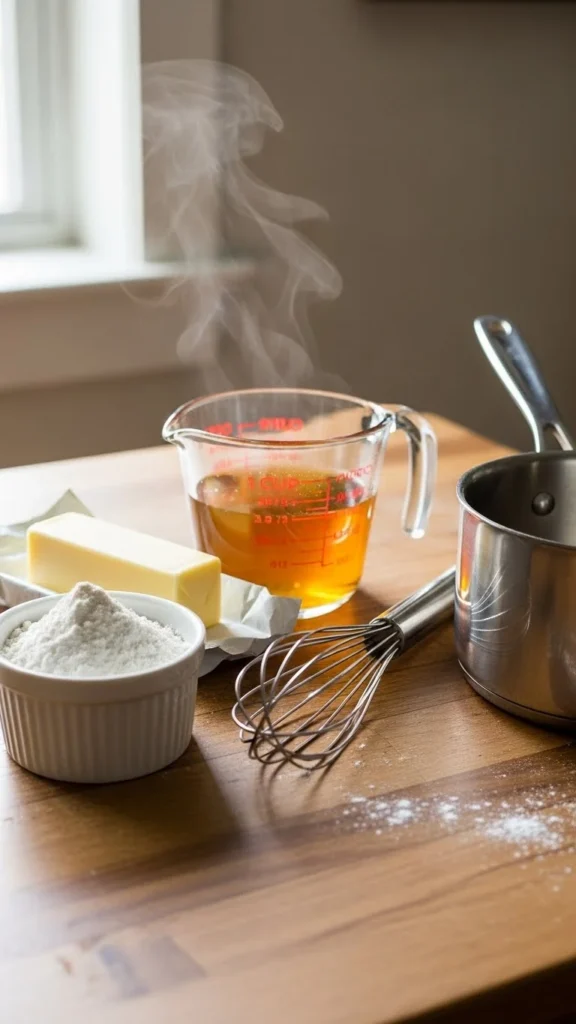
Gravy moves quickly once heat is applied. Everything should be within reach before starting.
What to Have Ready
Measure ingredients before turning on the stove. This prevents rushed pouring and uneven mixing.
- Fat such as butter or pan drippings
- All purpose flour or cornstarch
- Warm stock or broth
- Salt and pepper
- Wire whisk
- Heavy bottom saucepan
Warm the stock gently before using. Cold stock added too quickly increases the chance of lumps.
Build a Smooth Roux Base
The roux is the structural foundation of gravy. If this step is smooth, the rest of the process becomes controlled and predictable.
Correct Roux Ratio
For every 1 cup of liquid, use:
- 2 tablespoons fat
- 2 tablespoons flour
This ratio creates medium thickness gravy that pours easily while holding shape.
Roux Cooking Process
Place the saucepan over medium low heat. Add the fat and allow it to melt completely. Sprinkle the flour evenly across the surface of the fat rather than dumping it in one spot. Begin whisking immediately, pressing the flour into the fat and smoothing out any dry pockets.
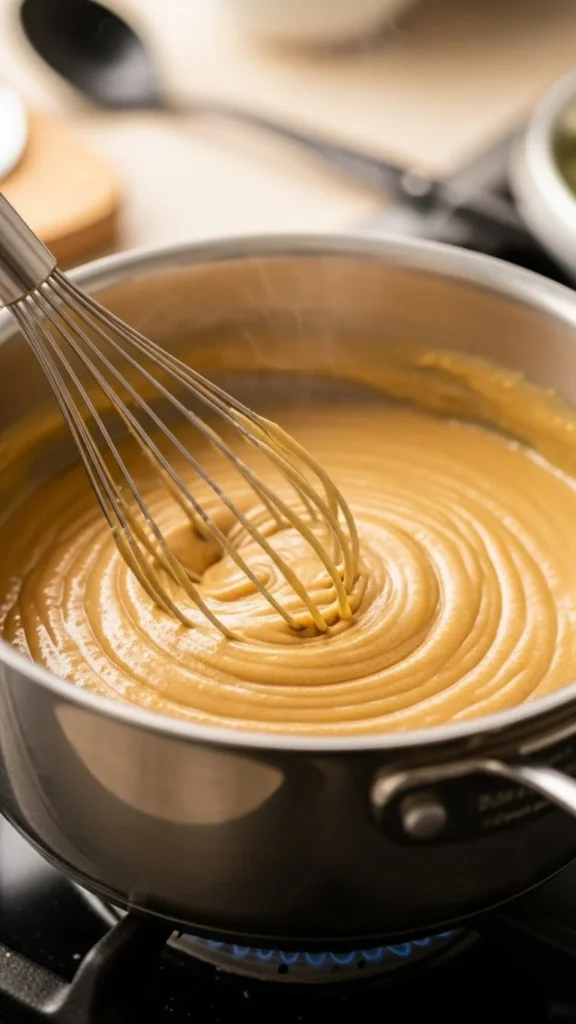
Continue whisking for 1 to 2 minutes. The mixture should look smooth and cohesive, similar to wet sand. It should smell lightly toasted, not raw and not browned. If dark spots appear, the heat is too high. Lower it and continue whisking.
Add Liquid Slowly and With Control
Lumps usually form during this stage. Speed and patience matter more here than anywhere else.
How to Add Liquid Correctly
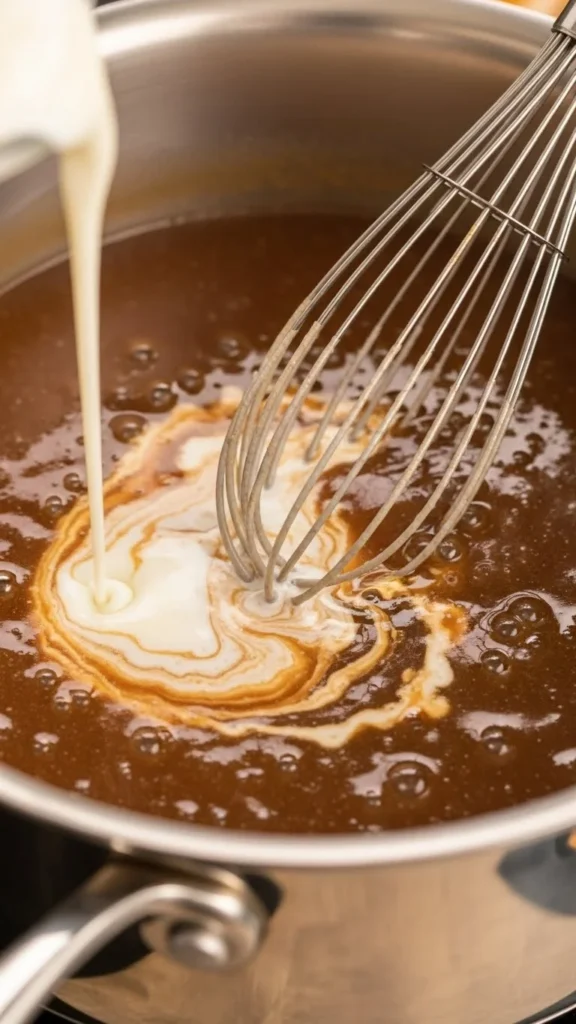
Keep the heat at medium low. Begin adding warm stock in small splashes, no more than a few tablespoons at a time. Whisk continuously as the liquid hits the roux. The mixture will tighten and thicken at first. This is expected.
Do not add more liquid until the mixture smooths out again. Once smooth, add the next small splash and repeat the process. This gradual hydration allows the flour to absorb liquid evenly, preventing clumps from forming.
As more liquid is added, the gravy will loosen and become pourable.
Control Heat During Thickening
Excessive heat breaks starch structure and causes uneven thickening.
What the Heat Should Look Like
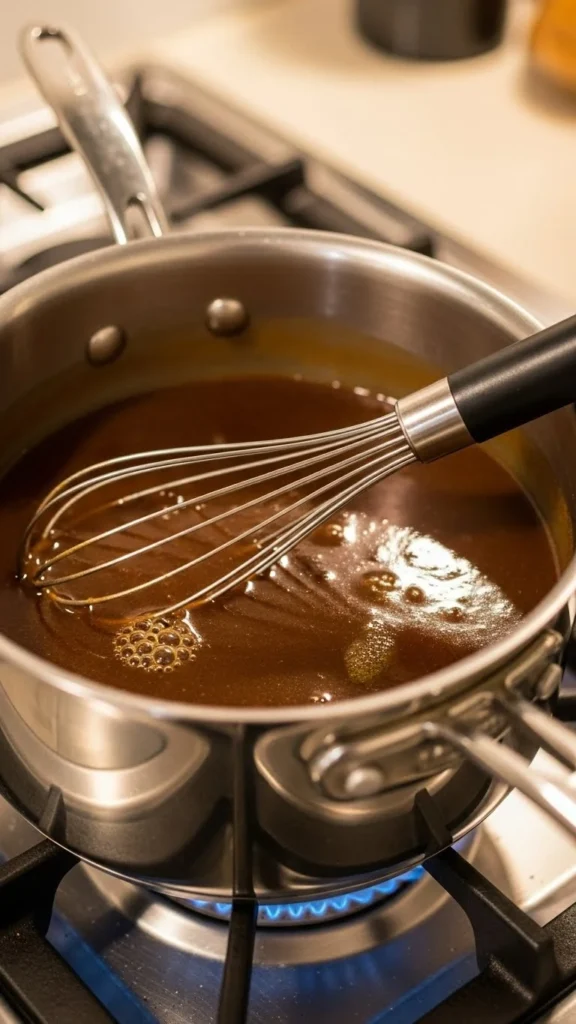
The gravy should gently steam, not boil. Small bubbles may appear at the edges, but the surface should remain calm. If bubbling becomes rapid or aggressive, immediately lower the heat. After all liquid is added and the gravy has thickened, reduce heat to low and allow it to simmer.
Simmer to Finish Texture and Flavor
Thickening happens quickly, but flavor develops over time.
Proper Simmering
Let the gravy simmer for 5 to 7 minutes, stirring occasionally. This allows the flour to fully cook and removes any remaining raw taste. The gravy should coat the back of a spoon and leave a clean line when a finger is drawn through it.
Season Gradually
Add salt in small increments and stir well after each addition. Add pepper next. Taste after each adjustment. Seasoning early and tasting often prevents over-salting.
Use a Slurry When Liquid Is Already Hot
When using a slurry, starch must be fully hydrated before heat activates it.
Slurry Mixing Method
In a separate bowl, combine equal parts cornstarch and cold water. Stir until completely smooth with no visible powder. Lower the heat under the hot liquid. Slowly pour the slurry into the liquid while whisking continuously. Within 30 to 60 seconds, the gravy will begin to thicken. Continue stirring gently until the desired consistency is reached.
Fix Lumps Immediately If They Appear
Lumps are easiest to remove when addressed early.
Quick Fix Options
If small lumps appear, remove the pan from heat and whisk vigorously. This often breaks soft clumps apart. If lumps persist, pour the gravy through a fine mesh sieve into another pan. For stubborn lumps, use an immersion blender briefly until smooth. Return to low heat and continue simmering gently.
Adjust Thickness Without Ruining Texture
Gravy thickens further as it cools, so final adjustments should be subtle.
If Gravy Is Too Thick
Add warm stock one tablespoon at a time, whisking after each addition until smooth.
If Gravy Is Too Thin
Mix a small slurry separately and add it gradually while the gravy simmers. Never add dry flour directly to hot gravy.
Store and Reheat Without Separation
Gravy can be prepared ahead if reheated correctly.
Storage Method
Allow gravy to cool completely. Store in an airtight container in the refrigerator.
Reheating Method
Reheat slowly over low heat while whisking occasionally. Add warm stock if needed to loosen the texture. Avoid high heat during reheating, as it can cause separation.
Common Mistakes That Create Lumps
Understanding what causes failure helps prevent it completely.
Avoid These Actions
- Adding flour directly to liquid
- Pouring liquid too quickly
- Boiling after thickening
- Using high heat early
- Switching between roux and slurry methods
Each of these interrupts even starch hydration.
Flavor Additions That Keep Gravy Smooth
Flavor additions should come after thickness is established.
Flavor Options
- Poultry seasoning for turkey gravy
- Soy sauce for deeper color
- Cream for richness
- Small splash of wine for depth
Add gradually and whisk fully after each addition.
Final Takeaway
Smooth gravy comes from patience, controlled heat, and steady whisking. Build a proper base, add liquid slowly, and respect temperature at every stage. When structure is maintained, gravy stays glossy, lump free, and consistent from start to finish.
Save this guide and use it whenever gravy is on the menu.

Leave a Reply