

Fasting during Ramadan puts real physical demands on your body. Long hours without food or water can lead to fatigue, headaches, or energy crashes if meals are not balanced properly.
Healthy Ramadan cooking is not about complicated recipes. It is about choosing foods that release energy slowly, support hydration, and help digestion recover after fasting.
Focus on five essentials:
- protein
- complex carbohydrates
- fiber
- healthy fats
- hydration
When these work together, you stay fuller longer and avoid post-iftar sluggishness.
Plan Suhoor for Slow and Steady Energy
Suhoor decides how comfortable your fasting day will feel. Sugary foods or refined breads digest quickly and cause hunger within hours. Balanced suhoor meals should combine protein, fiber, and slow carbohydrates.
Protein-Rich Suhoor Choices That Keep You Full
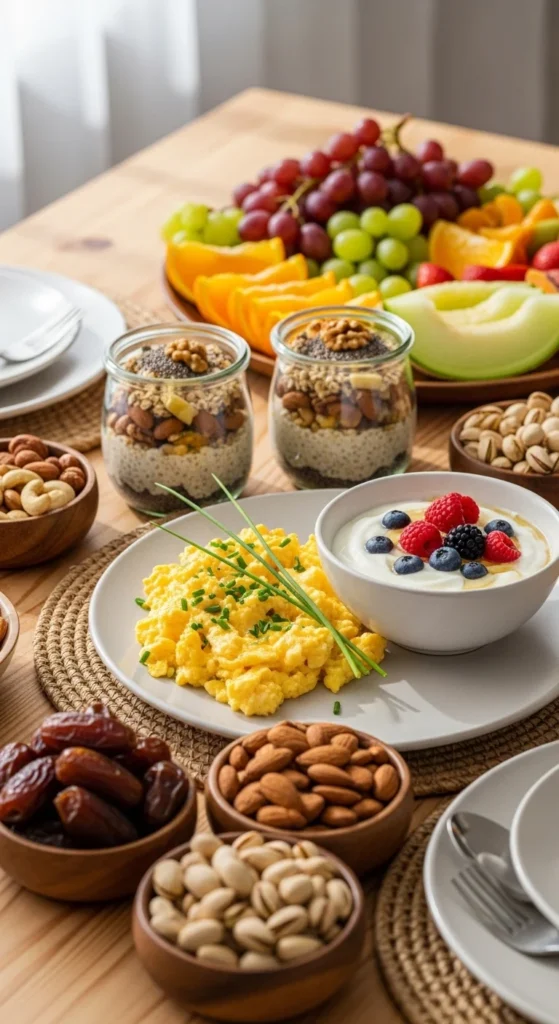
Protein slows digestion and stabilizes blood sugar. Focus on simple options you can cook quickly before dawn:
- Eggs cooked with spinach or tomatoes for fast protein.
- Greek yogurt parfaits with chia seeds for hydration and gut health.
- Ful medames or chickpea salad with olive oil and lemon for plant protein.
- Nuts and seeds like almonds or chia for healthy fats and minerals.
Shakshuka is another excellent suhoor option because eggs cook directly inside tomato sauce and require minimal effort.
Prep-Ahead Overnight Oats for Busy Mornings
Overnight oats solve rushed mornings completely. Prepare once and eat for several days. Popular variations include:
- Berry chia oats for hydration support.
- Banana nut oats for potassium and lasting energy.
- Savory oats cooked in broth with eggs and greens if sweet meals feel heavy early morning.

Choose Complex Carbs Instead of Quick Sugars
Slow carbohydrates prevent energy crashes. Good options include:
- oats
- quinoa bowls
- brown rice
- whole grain bread
- savory oatmeal with vegetables
These digest gradually and help maintain energy throughout the fasting hours.
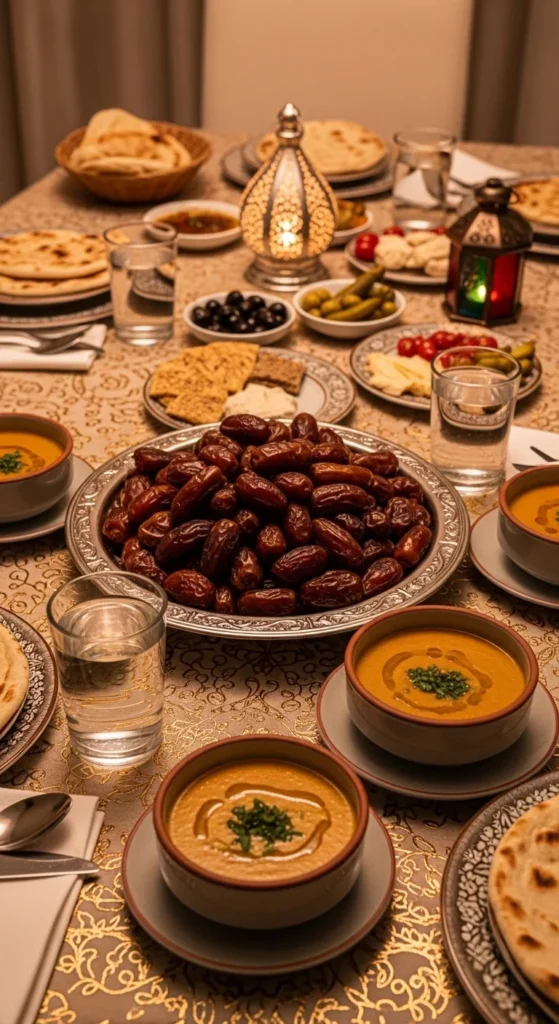
Start With Dates and Soup
Dates provide natural sugars along with potassium and magnesium for quick recovery.
Follow with soup.
- Lentil soup or sharbat, hydrates and adds plant protein.
- Vegetable broths are light and easy to digest.
- Batch cooking soups saves time across the week.
Pause a few minutes after soup before eating the main meal. This prevents overeating.
Build a Balanced Iftar Plate
A good iftar plate restores energy without heaviness.
Lean Proteins That Restore Energy
Lean protein repairs muscles and prevents tiredness after eating.
Easy choices include:
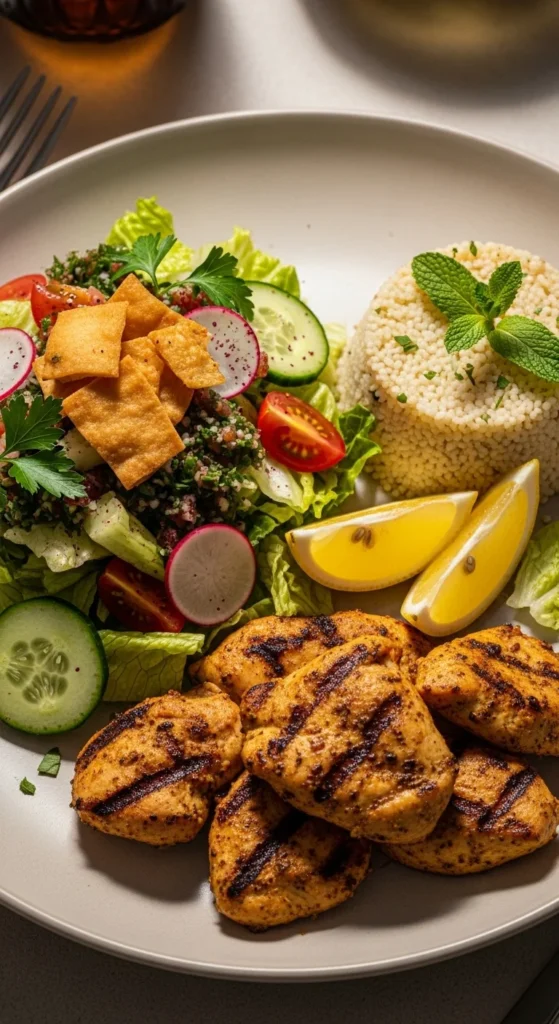
- grilled chicken with yogurt marinade
- baked or grilled fish with lemon
- turkey or beef kofta skewers
- chickpea or lentil stews for plant-based meals
Protein combined with carbohydrates helps the body recover faster after fasting.
Add Fiber-Rich Salads for Digestion
Fresh salads balance richer foods. Try:
- fattoush with cucumber and sumac dressing
- tabbouleh packed with parsley and lemon
- quinoa salad with vegetables
Salads also help hydration naturally.
Make Fried Favorites Healthier
Traditional snacks still belong on the table. The cooking method makes the difference.
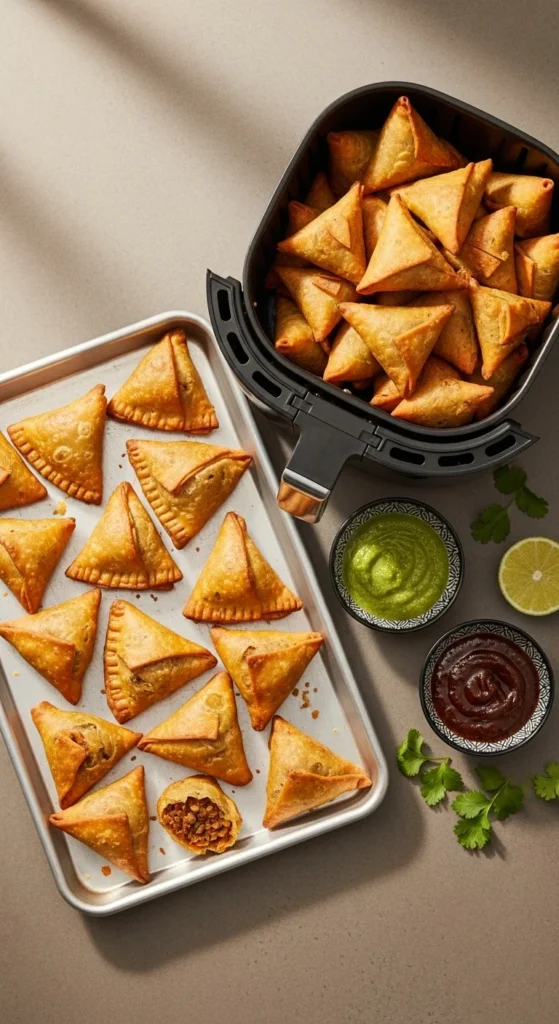
- Bake samosas instead of deep frying.
- Use an air fryer for sambosa or kibbeh.
- Roast chicken wings or vegetables instead of frying.
You keep tradition without feeling heavy afterward.
Smart Snacks Between Iftar and Suhoor
The evening eating window matters more than people realize. Processed sweets spike blood sugar and cause next-day hunger.
Choose steady energy snacks instead.
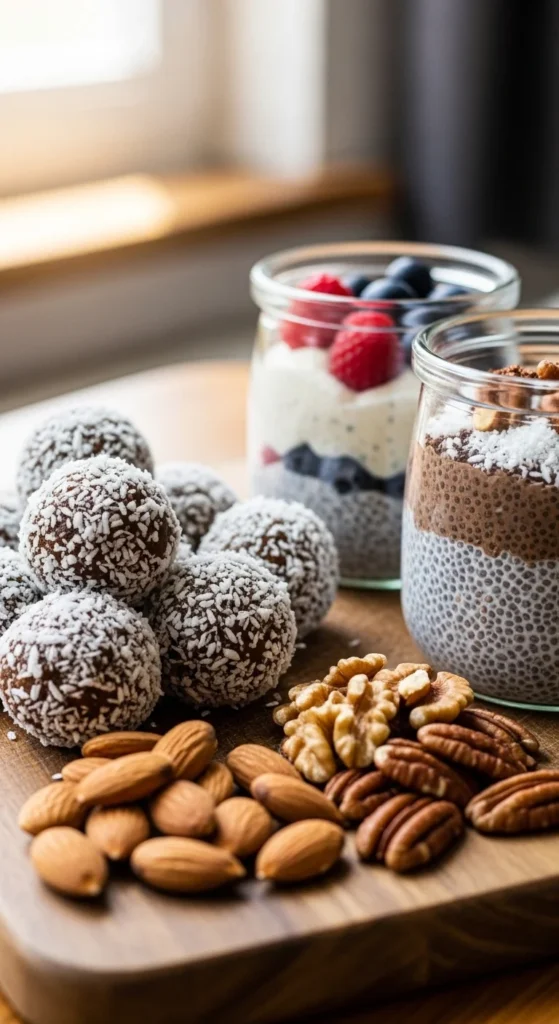
Good options include:
- homemade date energy balls made from oats and nuts
- chia pudding prepared overnight
- yogurt smoothies blended with banana and dates
- small handfuls of almonds or pistachios
Energy balls store for about a week and require no baking.
Hydration Is the Most Important Step
Many Ramadan headaches come from dehydration rather than hunger.
Simple hydration habits:
- drink water gradually between iftar and suhoor
- eat watermelon, cucumber, oranges, and tomatoes
- use coconut water smoothies occasionally
- reduce coffee or strong tea at suhoor
Water-rich foods support hydration more than drinks alone.
Practical Ramadan Cooking Habits That Save Energy
Healthy Ramadan cooking becomes easier with preparation.
- Batch cook lentil soup or stews once weekly.
- Prep vegetables and marinades ahead.
- Use spices like cumin, coriander, sumac, or za’atar instead of heavy sauces.
- Eat slowly at iftar to avoid discomfort.
Small habits reduce stress throughout the month.
Final Thoughts
Healthy Ramadan meals are not about restriction. They are about balance.
Start suhoor with protein and slow carbohydrates. Break your fast gently with dates and soup. Build meals around lean protein, vegetables, and whole grains while staying hydrated throughout the evening.
When meals support your body properly, fasting feels easier, energy stays steady, and Ramadan becomes both nourishing and peaceful.

Leave a Reply