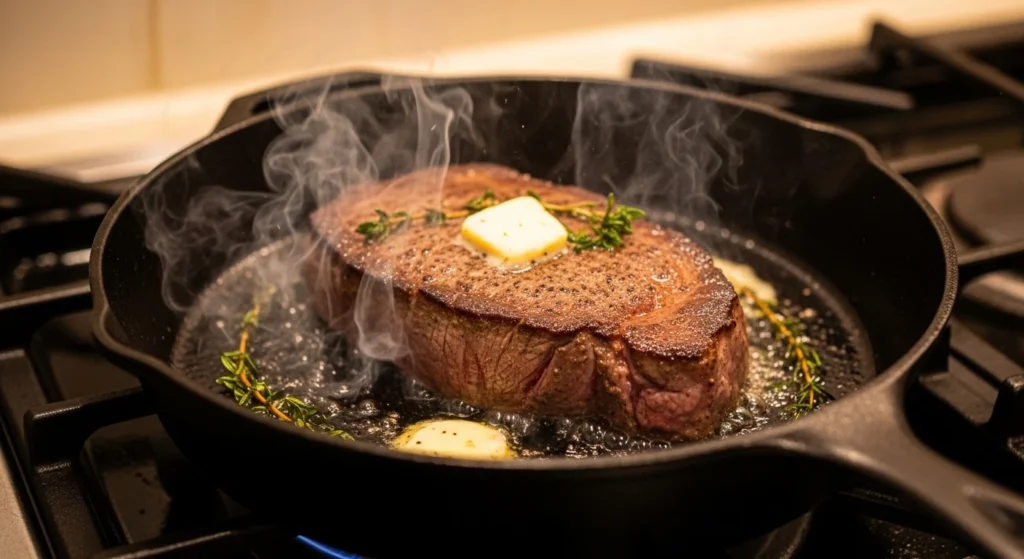
Cooking steak at home can feel intimidating, but the process is actually simple when you understand a few key principles. The secret to restaurant-quality steak is proper preparation, very high heat for the sear, and careful timing. When these steps are followed, the result is a steak with a deep crust, juicy interior, and rich flavor.
The method below focuses on pan-searing because it gives the most control when cooking indoors. With the right pan and temperature, you can achieve the same results as many steakhouses.
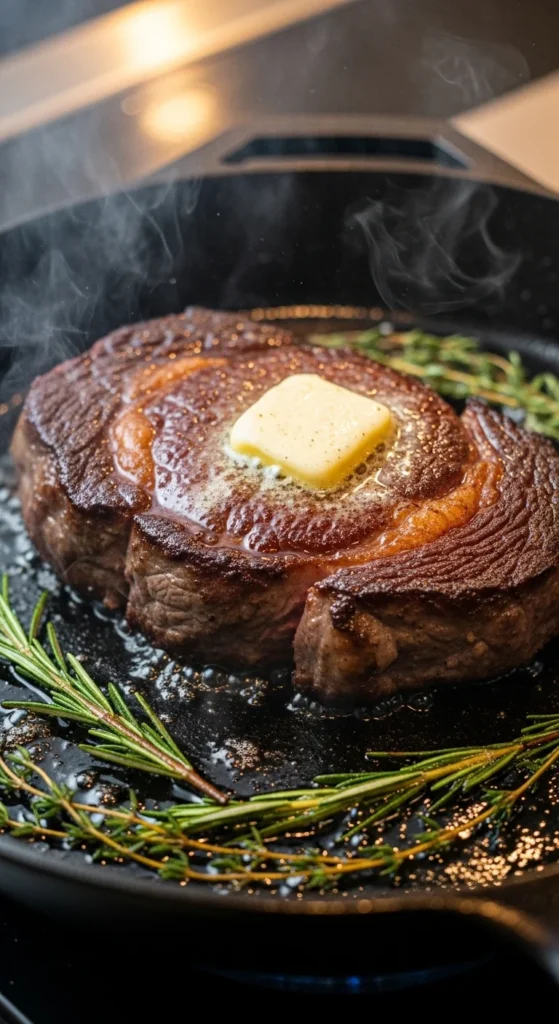
Choose the Right Cut of Steak
Not all cuts cook the same way. Steaks with good marbling stay juicy and develop better flavor when seared.
Popular choices include:
- Ribeye for rich marbling and tenderness
- New York strip for balanced flavor and texture
- Sirloin for a leaner but still flavorful option
Look for steaks with visible fat lines throughout the meat. This marbling melts during cooking and keeps the steak moist.
Bring the Steak to Room Temperature
Cold meat straight from the refrigerator cooks unevenly. The outside may burn while the center remains undercooked.
Allow the steak to sit at room temperature for about 20 to 30 minutes before cooking.
This step helps:
- Cook the steak more evenly
- Develop a better crust
- Reduce temperature shock when it hits the pan
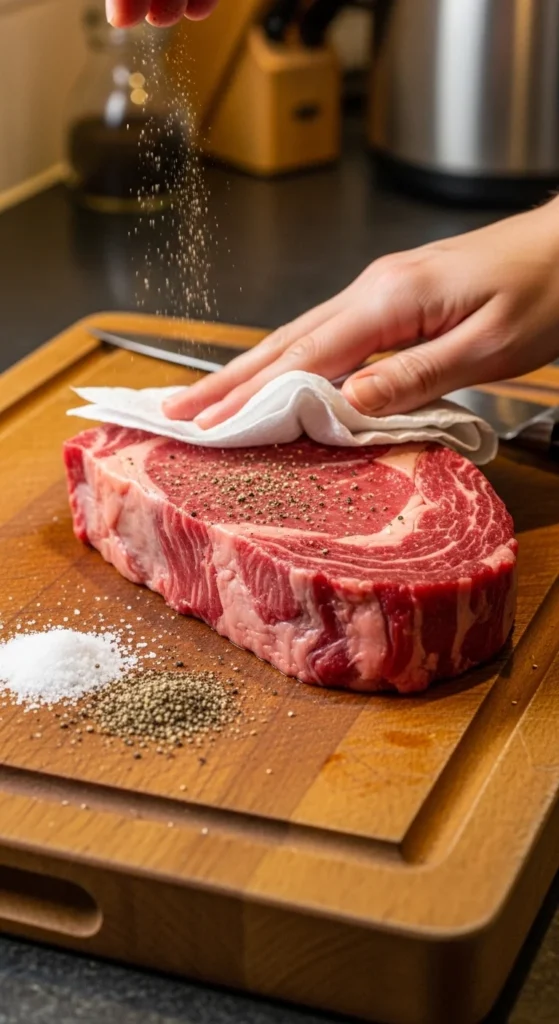
Pat the Steak Dry and Season Generously
Moisture on the surface prevents proper browning.
Before cooking:
- Pat the steak dry with paper towels
- Season generously with salt and pepper
- Lightly coat the steak with oil rather than the pan
Dry surfaces create the intense sear associated with great steak.
Preheat a Cast Iron Skillet Until Very Hot
A hot pan is essential for building a proper crust through the Maillard reaction.
Cast iron is ideal because it holds heat extremely well.
Heat the skillet until it is very hot before adding the steak. You should see light smoke from the oil.
Avoid overcrowding the pan. Cook only one or two steaks at a time so the meat sears instead of steaming.
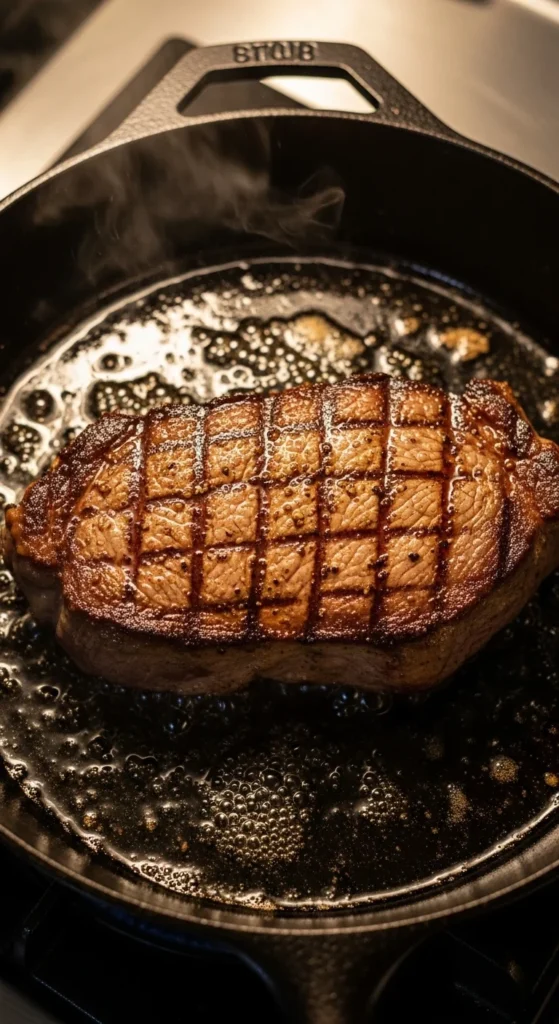
Sear the Steak Without Moving It
Place the steak into the hot skillet and let it cook undisturbed.
For a strong crust:
- Sear for about 1 to 2 minutes per side
- Flip the steak once or every minute depending on thickness
- Avoid pressing down on the meat
Movement prevents the crust from forming properly.
Baste with Butter and Aromatics
During the final minute of cooking, add butter and aromatics to enhance flavor.
Common additions include:
- Butter
- Crushed garlic cloves
- Fresh thyme or rosemary
Tilt the pan slightly and spoon the melted butter over the steak repeatedly. This technique coats the meat with flavor while helping it finish cooking evenly.
Check Internal Temperature for Doneness
Using a meat thermometer removes guesswork.
Common steak temperatures include:
- Rare: 120 to 125°F
- Medium rare: 130 to 135°F
- Medium: 140 to 145°F
Medium rare is the most popular choice because it keeps the steak juicy while still developing full flavor.
Remember that the temperature will rise slightly after removing the steak from heat.
Rest the Steak Before Cutting
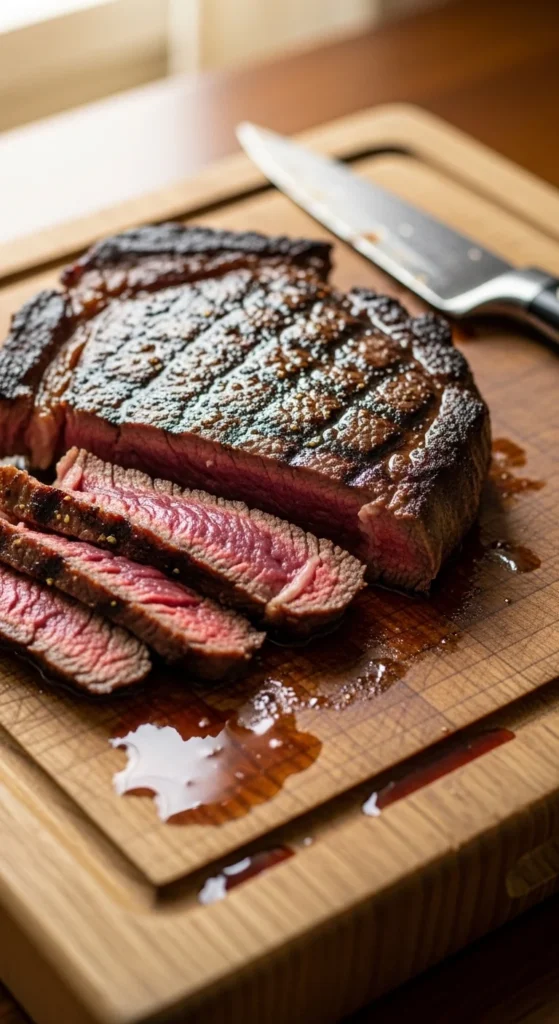
Resting allows juices to redistribute inside the meat. Let the steak rest on a cutting board for about 5 to 10 minutes before slicing.
This step helps:
- Prevent juices from running out
- Maintain tenderness
- Improve overall flavor
Reverse Sear for Thick Steaks
Very thick steaks can cook unevenly if seared first. The reverse sear method solves this problem.
Steps for reverse searing:
- Bake steak in a 250°F oven until it reaches about 120°F
- Transfer to a very hot skillet
- Sear quickly on each side for crust
This technique produces even doneness from edge to center.
Final Thoughts
Cooking the perfect steak at home depends on preparation, heat, and timing. Bring the meat to room temperature, use a very hot pan, sear without moving the steak, and allow it to rest before slicing.
Once these techniques become routine, steak night at home can rival many restaurant meals while giving you full control over flavor and doneness.