

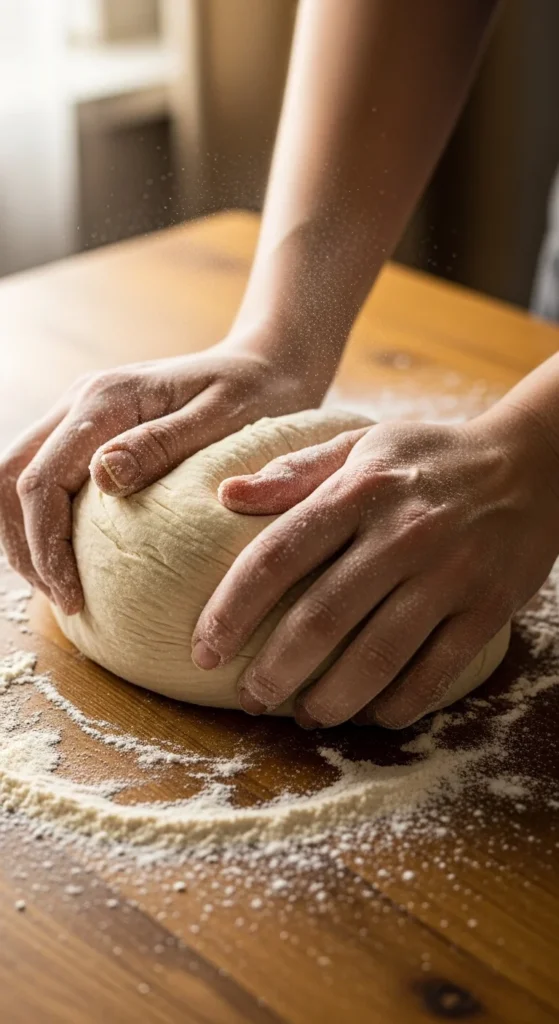
Kneading is the step that turns a rough dough into smooth, elastic dough that can rise into soft bread, pizza, or rolls. Many people struggle with sticky hands, dense bread, or not knowing when to stop.
The truth is simple. Once you understand how dough should look and feel, kneading becomes easy and even relaxing. This guide shows you exactly how to do it so you can knead with confidence every time.
Why Kneading Matters
Kneading develops gluten. Gluten is the protein network that gives bread structure and helps trap gas from yeast. That trapped gas is what makes bread rise and become airy instead of flat.
When you knead dough properly:
- Gluten strands strengthen
- Dough becomes stretchy and elastic
- Air gets incorporated for better rise
Without enough kneading, dough stays weak and bread turns out dense. You are not just mixing ingredients. You are building structure.
Before You Start Kneading
A little setup makes everything easier.
Lightly flour your work surface. Do not heavily coat it. Too much flour makes dough dry and tough.
Useful tools:
- Clean counter or board
- Bench scraper for sticky dough
- Your hands
Expect the dough to feel slightly sticky at first. That is normal and helps create soft bread.
The Classic Hand Kneading Method
Hand kneading teaches you how dough changes as gluten develops. After a few times, your hands will recognize the right texture.
The Basic Motion
Follow a simple rhythm:
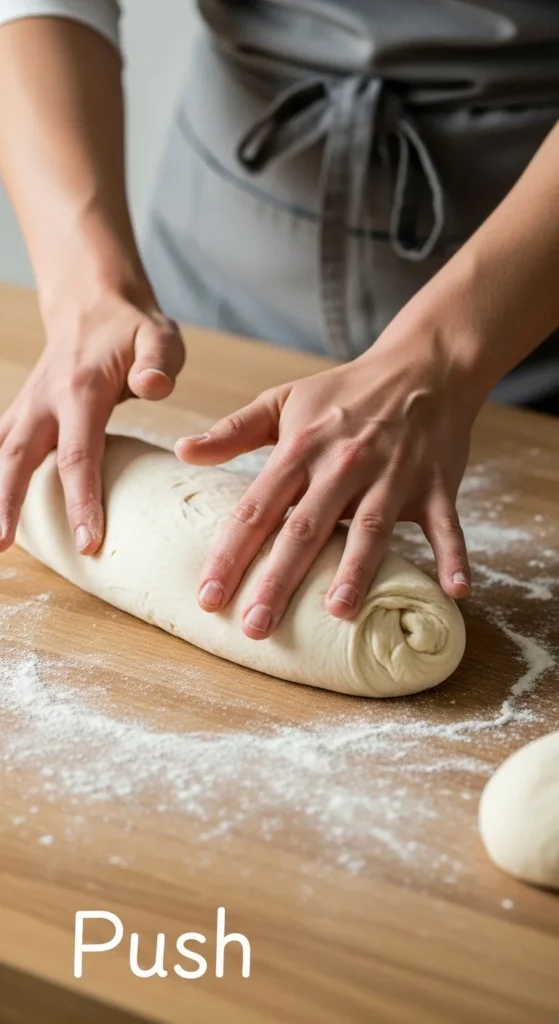
- Push dough away using the heels of your hands
- Fold the far side back toward you
- Turn the dough a quarter turn
- Repeat the motion
At the beginning, the dough looks rough and lumpy. After several minutes, it becomes smoother and elastic.
Most doughs need 8 to 15 minutes of kneading by hand. Watch the dough more than the clock.
What Proper Dough Feels Like
Well kneaded dough has clear signs.
It should feel:
- Smooth rather than rough
- Elastic and stretchy
- Slightly tacky but not sticking to your fingers
If the dough sticks too much, dust your hands lightly. Add flour slowly. A small amount is enough.
Too much flour is one of the biggest causes of dense bread.
How to Know When Kneading Is Done
Two simple tests help you decide.
Windowpane Test
Pinch off a small piece of dough and stretch it gently.
If it stretches thin enough to let light through without tearing, gluten is developed. If it tears quickly, knead a few more minutes.
[Image Prompt: fingers stretching dough thin enough to see light through it for windowpane test]
Poke Test
Press a finger into the dough.
- If it springs back slowly, it is ready
- If the dent stays, knead more
These tests are more reliable than timing alone.
Kneading Sticky or Wet Dough
High hydration doughs feel sticky. That does not mean they are wrong. It just means you use a different method.
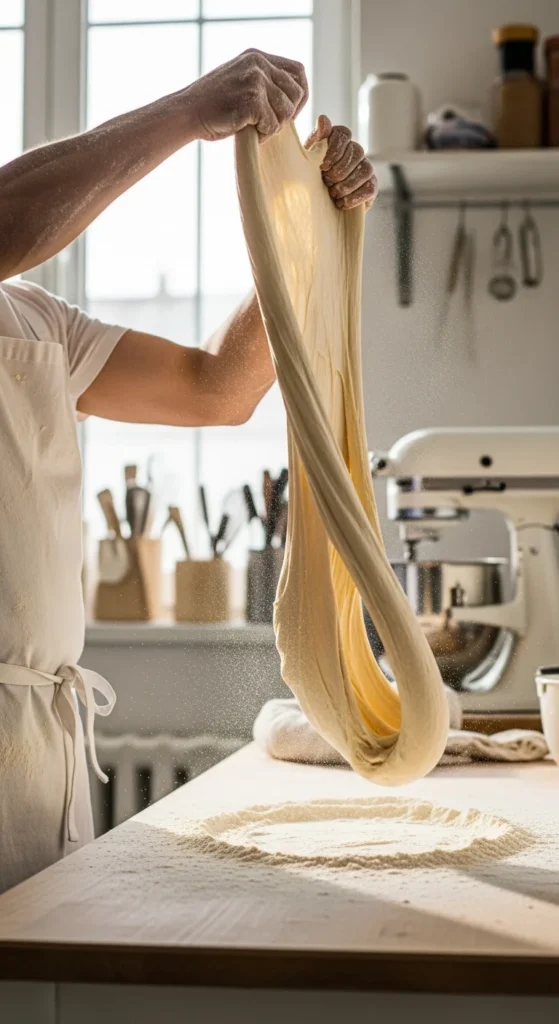
Slap and Fold Method
Lift the dough, slap it onto the counter, then fold it over itself. Repeat this motion. This builds gluten without adding extra flour.
Stretch and Fold in a Bowl
This method reduces mess.
- Stretch one side of dough upward
- Fold it into the center
- Rotate the bowl and repeat
Do this every 30 minutes during the first rise.
Common Kneading Mistakes
Small mistakes can affect results.
Adding Too Much Flour
A little stickiness is good. Adding a lot of flour makes bread heavy. Use a scraper and patience instead.
Stopping Too Early
Gluten needs time. Under kneaded dough produces flat bread. If unsure, knead a bit longer and test again.
Overworking With a Mixer
Over kneading rarely happens by hand but can happen with mixers. Stop once the dough is smooth and elastic.
Time Guide by Dough Type
Different doughs need slightly different handling.
Lean doughs with only flour, water, yeast, and salt for about 10 to 15 minutes. Pizza dough need around 8 to 10 minutes and rich doughs with butter, eggs, or milk need 8 to 12 minutes for gentle kneading.
Wet doughs need short knead plus stretch and folds Bread flour often kneads faster because it has more protein.
Tips for Keeping Dough Fresh
If not baking immediately:
- Cover dough well so it does not dry out
- Store in the refrigerator for slow fermentation
- Use within one to three days depending on recipe
Good storage keeps dough flavorful and workable.
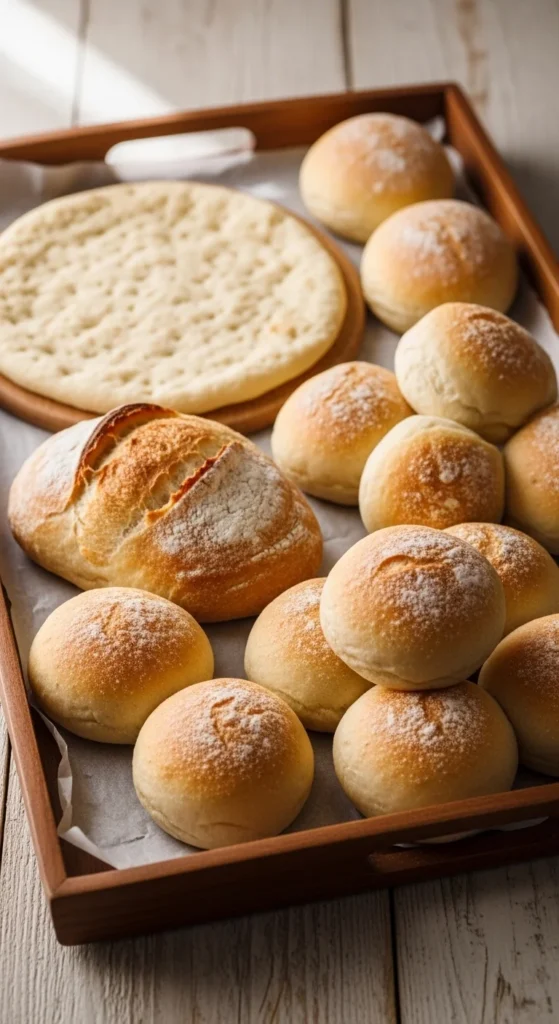
Things To Do With Bread Dough
Once you know how to knead properly, many recipes become easy.
You can make:
- Bread loaves
- Pizza
- Dinner rolls
- Flatbreads
- Sweet buns
Leftover dough can be shaped into small rolls or stored for later baking.
Final Thoughts
Kneading is about rhythm and feel, not strength. Dough will tell you when it is ready if you pay attention to texture and elasticity.
Trust the windowpane test, avoid adding too much flour, and give gluten enough time to develop.
After a few attempts, your hands will recognize perfect dough without any timer. And once that happens, baking becomes far more enjoyable and consistent.

Leave a Reply