

Creamy mashed potatoes are not about luck or talent. They come from controlling moisture, starch, and temperature at every stage. When mashed potatoes turn watery, gluey, or bland, it is usually because one step was rushed or skipped. This guide walks you through the full process, so your mashed potatoes come out smooth, rich, and consistent every time.
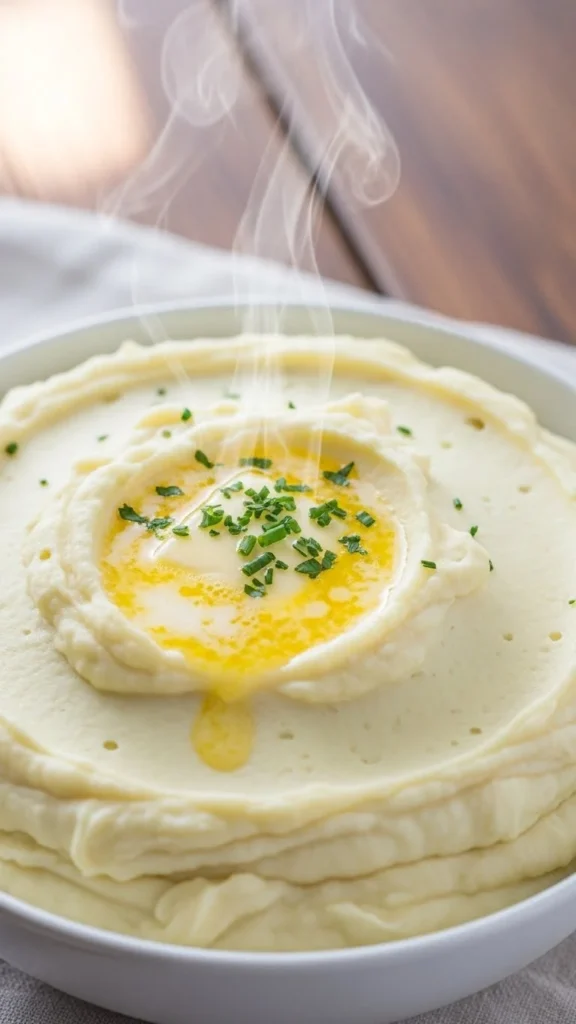
Choose Potatoes That Mash Well
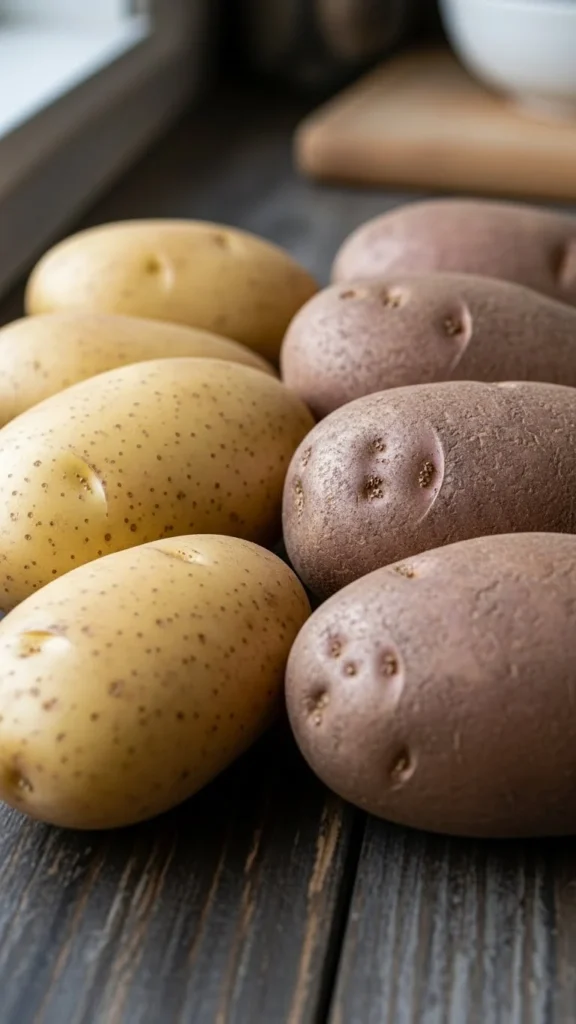
Not all potatoes break down the same way. The variety you choose determines how creamy the final texture can become.
Best Potatoes To Use
- Yukon Gold potatoes give a naturally buttery, creamy texture
- Russet potatoes create a lighter, fluffier mash
Avoid waxy potatoes like red potatoes. They hold their shape too firmly and can turn pasty when mashed.
Cut Potatoes The Right Way
Cut size controls how evenly potatoes cook. Uneven pieces cause some chunks to overcook while others stay firm.
How To Cut Potatoes Correctly
- Peel potatoes if you want a smooth mash
- Cut all potatoes into equal sized chunks
- Each piece should be about two inches wide
- Keep cuts consistent, not perfect
When all pieces are the same size, they soften at the same time.
Start Potatoes In Cold Salted Water
This step prevents the outside from cooking faster than the inside.
Boiling Setup
- Place cut potatoes into a large pot
- Add cold water until potatoes are fully submerged
- Add salt until the water tastes lightly salty
- Place pot on the stove and turn heat to high
Cold water allows potatoes to heat gradually, which protects their structure.
Boil Until Fully Tender
Potatoes must be completely soft before mashing. Any firmness will cause lumps.
How To Know They Are Ready
- Once boiling, reduce to a steady simmer
- Cook for 15 to 20 minutes
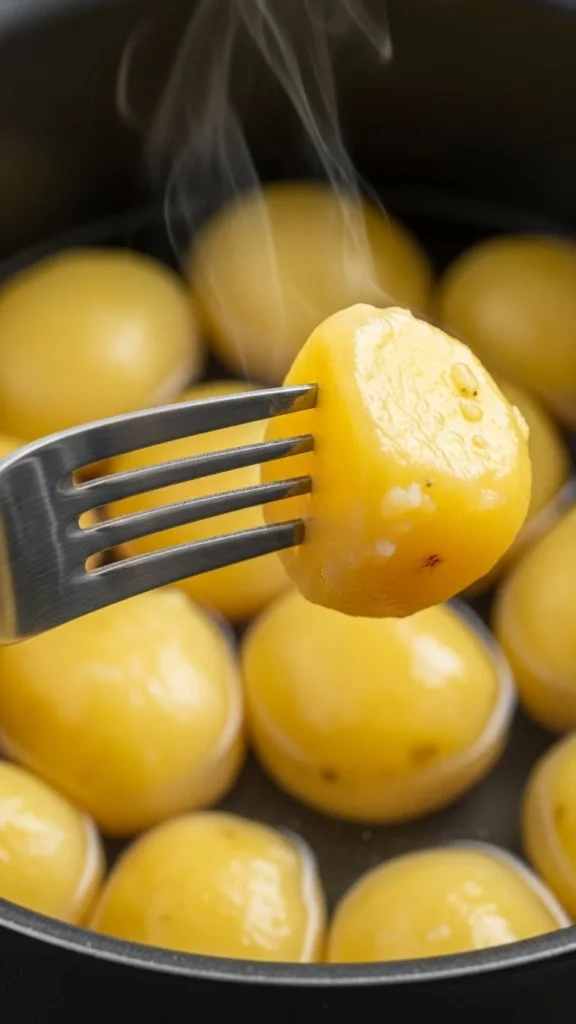
- Test by piercing with a fork
- The fork should slide through without resistance
- No chalky center should remain
Turn the heat off immediately once tender.
Drain Completely And Dry The Potatoes
Excess water is the main cause of watery mashed potatoes.
Drying Process
- Drain potatoes thoroughly in a colander
- Return them to the empty hot pot
- Place pot back on the stove over low heat
- Let steam escape for 30 to 60 seconds
- Shake the pot gently to move the potatoes
This removes surface moisture and concentrates flavor.
Warm Butter And Cream Before Mixing
Cold dairy tightens starch and ruins texture.
Dairy Preparation
- Melt butter gently until just liquid
- Warm cream or milk until hot but not boiling
- Keep both warm while mashing
Warm dairy blends smoothly without shocking the potatoes.
Mash While Potatoes Are Hot
Potatoes mash best immediately after drying.
Proper Mashing Method
- Use a potato masher or ricer
- Mash gently, pressing down and lifting
- Stop once potatoes are smooth
- Do not overwork
Avoid electric mixers or blenders. They break starch cells and create a sticky texture.
Add Butter First Then Cream
The order of mixing matters more than most people realize.
Mixing Sequence
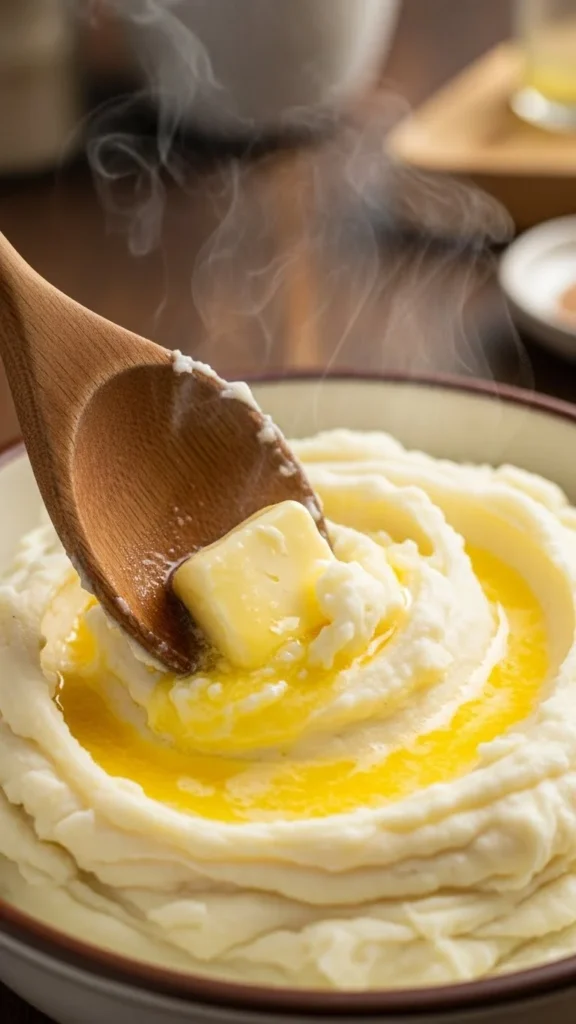
- Add warm butter to the mashed potatoes
- Mix gently until fully absorbed
- Slowly add warm cream in small amounts
- Stop as soon as texture becomes smooth
This fat-first method coats starch particles and creates a silky finish.
Adjust Flavor And Texture Carefully
Final seasoning should be done slowly and thoughtfully.
Final Adjustments
- Add salt gradually and taste
- Add white or black pepper
- Add more warm cream only if needed
- Texture should be soft but hold shape
Mashed potatoes should spread slightly on a plate, not pool.
Optional Add Ins For Extra Creaminess
These additions increase richness without ruining texture.
Creamy Add Ins
- Sour cream for gentle tang
- Cream cheese for body
- Heavy cream for luxury texture
Add small amounts and mix gently.
Make Ahead And Reheat Without Drying Out
Mashed potatoes can be prepared in advance if reheated correctly.
Make Ahead Method
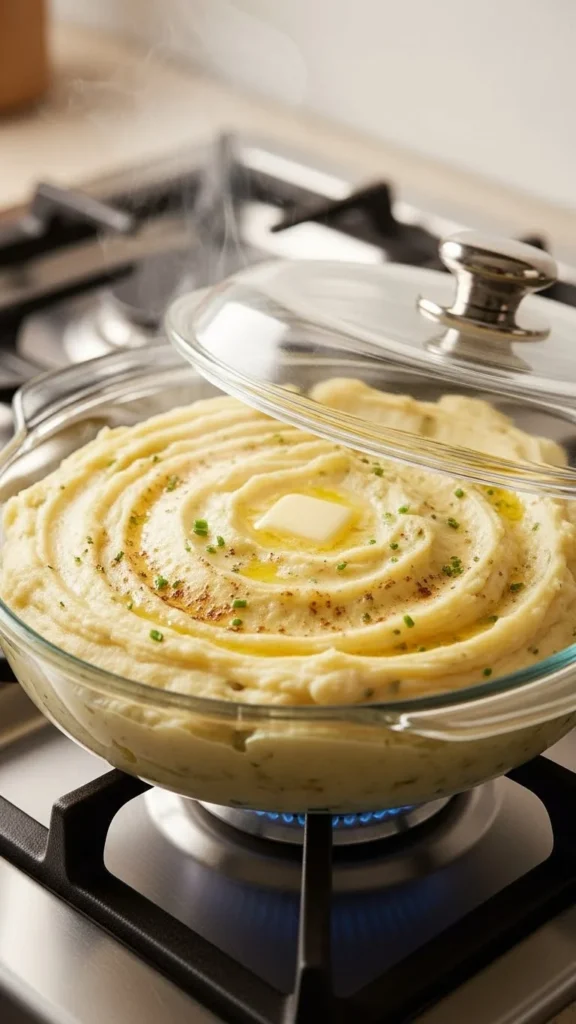
- Transfer to a heat safe dish
- Cover tightly
- Refrigerate
Reheating Method
- Reheat over low heat or in the oven
- Add a splash of warm cream
- Stir slowly until smooth
Never microwave uncovered. It dries the surface quickly.
Common Mistakes That Ruin Texture
These mistakes explain most failed mashed potatoes.
What To Avoid
- Starting potatoes in hot water
- Skipping the drying step
- Adding cold dairy
- Overmashing
- Under seasoning
Flavor Variations That Still Stay Creamy
Once the base is correct, flavors are easy to add.
Flavor Ideas
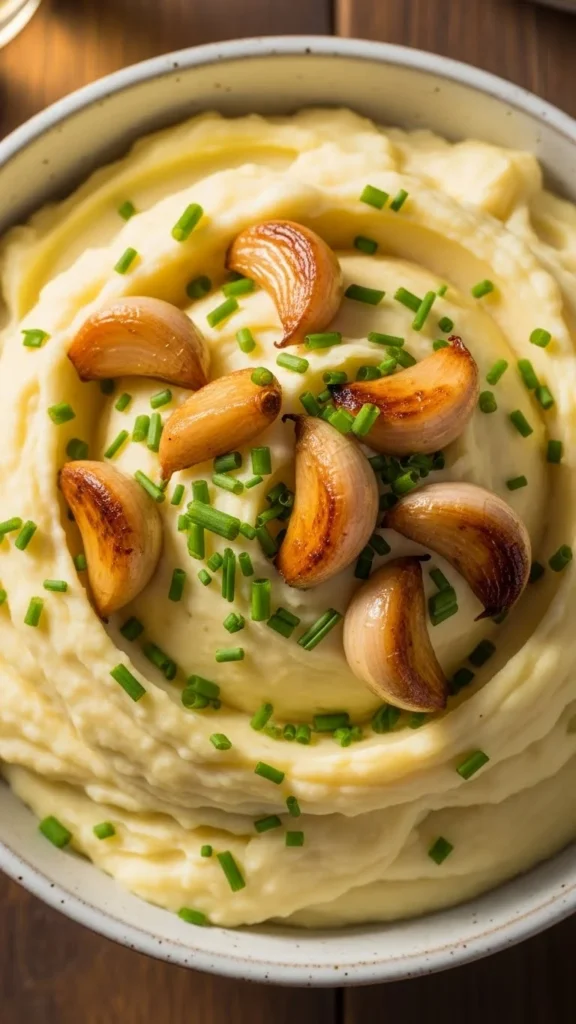
- Roasted garlic
- Fresh chives or parsley
- Buttermilk instead of cream
- Parmesan cheese
Keep additions minimal to protect texture.
Final Takeaway
Creamy mashed potatoes come from controlling moisture, heat, and mixing. Use the right potatoes, start in cold water, dry them properly, add warm dairy, and mash gently. When each step is done with intention, the result is smooth, rich, and consistently creamy.
Save this guide and make mashed potatoes that feel confident and complete every time.

Leave a Reply