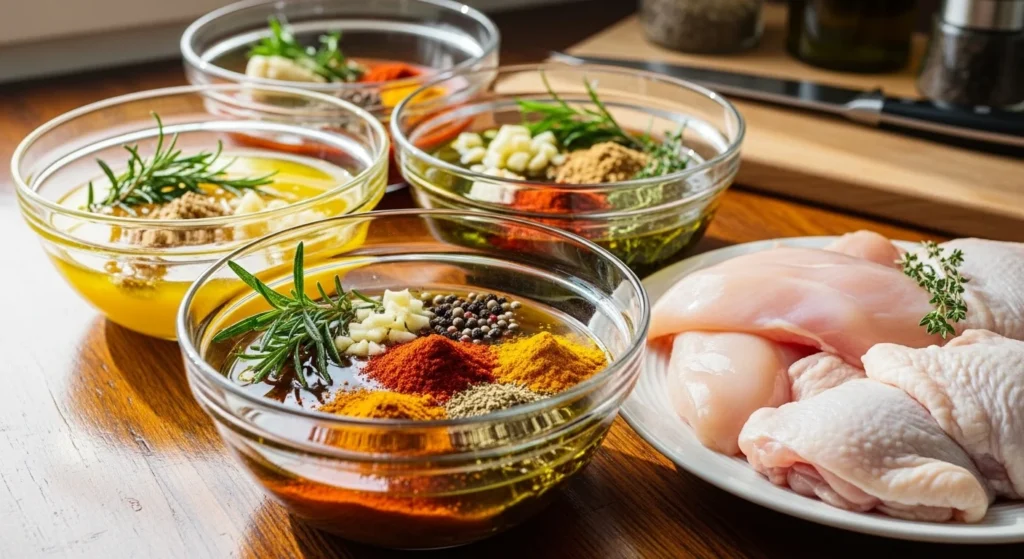
A great marinade can turn simple ingredients into bold, flavorful meals. Whether you are preparing grilled chicken, steak, vegetables, or seafood, the right balance of oil, acid, and seasoning allows the flavors to penetrate the food and enhance texture.
Most easy marinades follow the same structure. Oil carries flavor and prevents drying. Acid tenderizes the protein. Herbs, spices, and aromatics provide depth. Once you understand this formula, creating your own marinades becomes quick and effortless.
This guide shows how to make flavor-packed marinades using pantry ingredients while also sharing timing tips so your food stays tender instead of mushy.
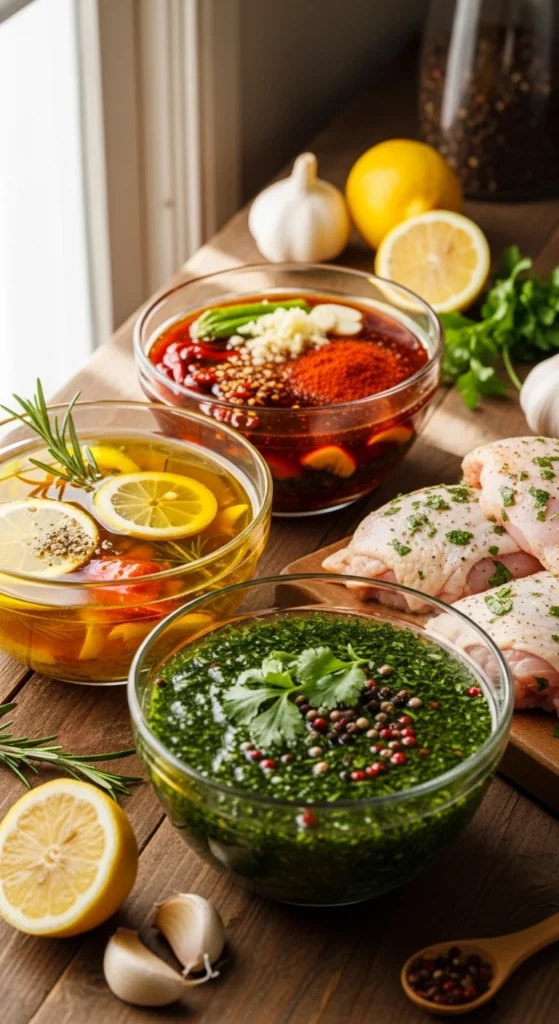
Understand the Basic Marinade Formula
Almost every successful marinade follows a simple balance of ingredients.
The standard structure includes:
- Oil to carry flavors and protect moisture
- Acid to tenderize and brighten taste
- Aromatics and spices for depth
- Optional sweetness for caramelization
A commonly recommended ratio is three parts oil to one part acid.
Typical ingredients include:
- Olive oil or sesame oil
- Lemon juice, lime juice, or vinegar
- Garlic, ginger, or onion
- Soy sauce or Worcestershire sauce
- Honey or brown sugar
Once this balance is correct, you can create dozens of easy marinades from the same base.
Choose the Right Acid for Tenderizing
Acid is what helps break down muscle fibers and soften proteins.
Common options include:
- Lemon juice
- Lime juice
- Apple cider vinegar
- Balsamic vinegar
- Yogurt
Citrus based marinades are extremely popular, especially for chicken breast marinade recipes, because they add brightness while gently tenderizing the meat.
Greek yogurt marinades work differently. Instead of strong acid, yogurt enzymes tenderize meat slowly while adding creaminess.
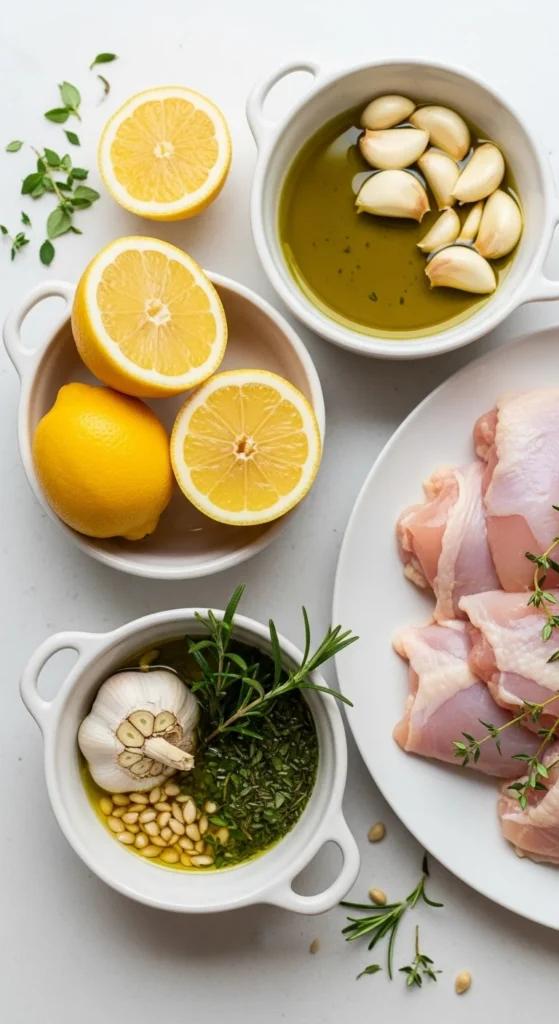
Oil Carries Flavor Into the Meat
Oil plays an important role in every marinade. It distributes spices evenly and helps the marinade coat the protein.
Popular oils include:
- Olive oil for Mediterranean style marinades
- Sesame oil for Asian marinades
- Avocado oil for high heat grilling
Oil also prevents proteins from drying during cooking. This is why many chicken marinade recipes start with olive oil as the base.
Add Aromatics and Spices
This is where marinades become unique. Common flavor boosters include:
- Garlic
- Ginger
- Fresh herbs such as thyme or oregano
- Cumin or paprika
- Chili flakes
Garlic appears in the majority of marinades because it adds strong aroma without overpowering other ingredients.
Combining herbs with garlic and citrus creates one of the most reliable flavor profiles for marinated chicken recipes.
Use Sweetness for Grill Caramelization
Sweet ingredients help marinades caramelize when exposed to high heat.
Examples include:
- Honey
- Brown sugar
- Maple syrup
- Fruit puree such as mango or pineapple
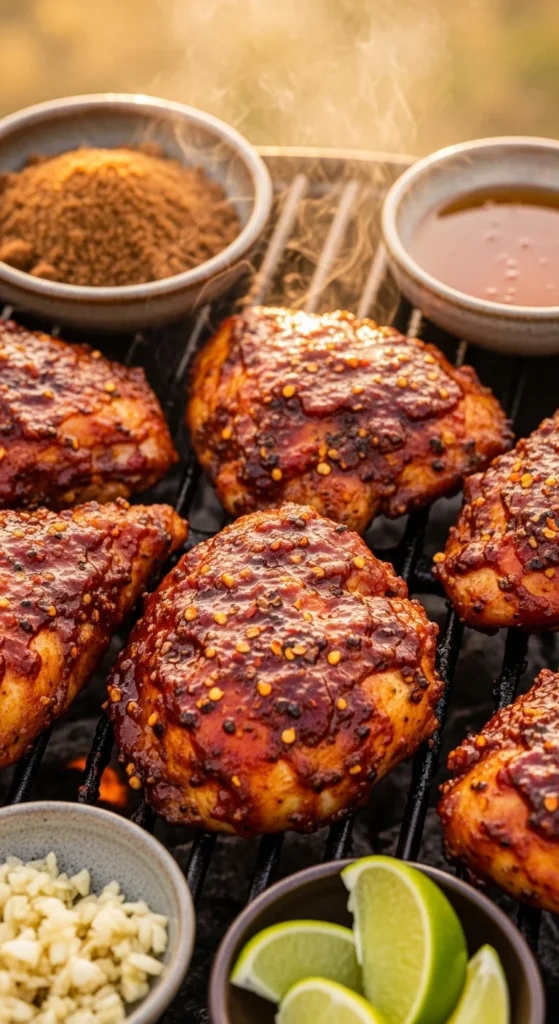
These ingredients are especially helpful in BBQ marinade recipes because they create a rich glaze during grilling.
A balanced BBQ chicken marinade often combines:
- Oil
- Vinegar or citrus
- Honey or brown sugar
- Garlic and spices
Marinate for the Right Amount of Time
Different foods absorb marinades at different speeds. Typical marinating times include:
- Seafood: 15 to 30 minutes
- Chicken: 30 minutes to 12 hours
- Beef and pork: up to 24 hours
- Vegetables: 30 minutes to 2 hours
Over-marinating can damage texture, especially when using strong acids.
Chicken works especially well with shorter marinating times, which is why many chicken marinade recipes recommend about 30 minutes before cooking.
The Mason Jar Mixing Trick
One of the easiest ways to mix a marinade is the jar-shake method.
Simply add ingredients to a jar, close the lid, and shake.
Benefits include:
- Quick mixing without whisking
- Easy storage in the refrigerator
- Simple cleanup
This trick is popular for quick easy marinades when preparing meals for the week.
Marinades for Different Proteins
While the same marinade can work for many foods, small adjustments improve flavor for each protein.
Chicken Marinades
Chicken absorbs flavor quickly and works well with citrus and herb combinations. Popular combinations include:
- Lemon garlic olive oil marinade
- Honey mustard marinade
- Teriyaki style soy sauce marinade
These are common in chicken breast marinade recipes because they enhance mild chicken flavor.
Steak Marinades
Steak marinades often focus on umami ingredients. Common choices include:
- Soy sauce
- Worcestershire sauce
- Garlic
- Brown sugar
These ingredients are frequently used in BBQ marinade recipes for grilled meats.
Vegetable Marinades
Vegetables also benefit from marinades. Great choices include:
- Balsamic vinegar and olive oil
- Lemon herb marinade
- Chili lime marinade
Quick Marinade Flavor Ideas
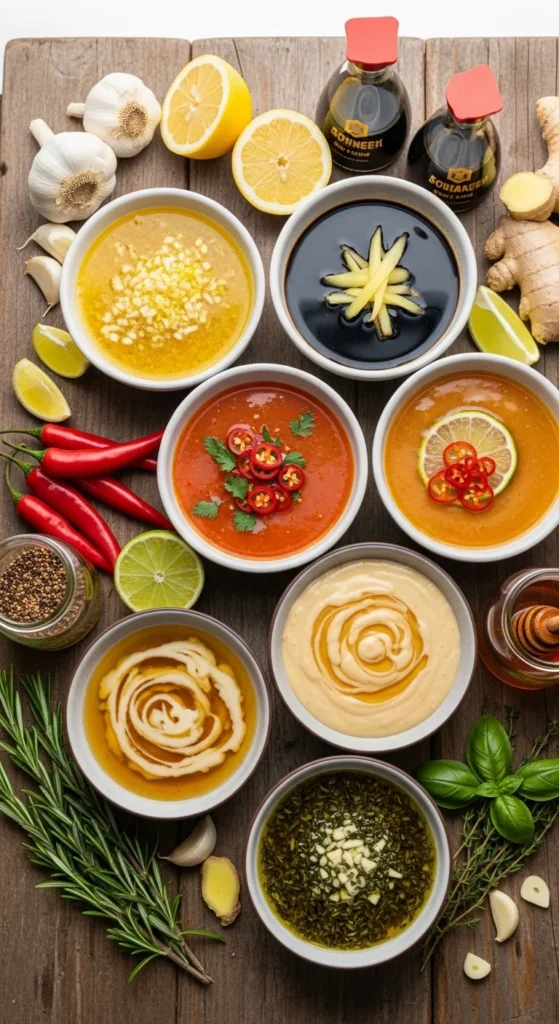
Once you understand the formula, creating new flavors becomes simple. Popular combinations include:
- Greek lemon garlic marinade
- Korean soy ginger marinade
- Mexican chili lime marinade
- Honey mustard marinade
- Garlic herb olive oil marinade
These combinations work well across many marinated chicken recipes and grilled meats.
Common Marinade Mistakes
Even simple marinades can fail when certain details are ignored.
Using Too Much Acid
Too much citrus or vinegar can break down protein too quickly and create a mushy texture.
Marinating Too Long
Acidic marinades should not exceed recommended times.
Skipping Oil
Without oil, marinades do not coat proteins evenly and flavors stay on the surface.
Forgetting Salt
Salt is essential because it enhances flavor and helps seasoning penetrate the food.
Final Thoughts
Once you understand how marinades work, creating them becomes incredibly simple. A little oil, something acidic, and a few herbs or spices are usually enough to build great flavor. From there, you can adjust sweetness, heat, or freshness depending on what you are cooking.
The best part is that you do not need complicated ingredients. Many of the most flavorful marinades come from basic pantry items mixed together in just a few minutes.
Experiment with combinations, taste as you go, and adjust until the flavor feels right. With a little practice, making your own marinades will become one of the easiest ways to improve everyday meals.