A great stir fry sauce does not need complicated ingredients or long prep time. The best versions rely on simple pantry staples and a balanced mix of salty, sweet, tangy, and umami flavors.
Once you understand the basic formula, you can create a restaurant style sauce in minutes and adjust it based on what you have at home.
This approach makes it perfect for quick meals. No cooking is required for the sauce itself, and it works across vegetables, noodles, chicken, tofu, shrimp, or beef.
The 5 Minute Base Formula
A reliable stir fry sauce always follows a simple structure. Each ingredient plays a specific role in building flavor and texture.
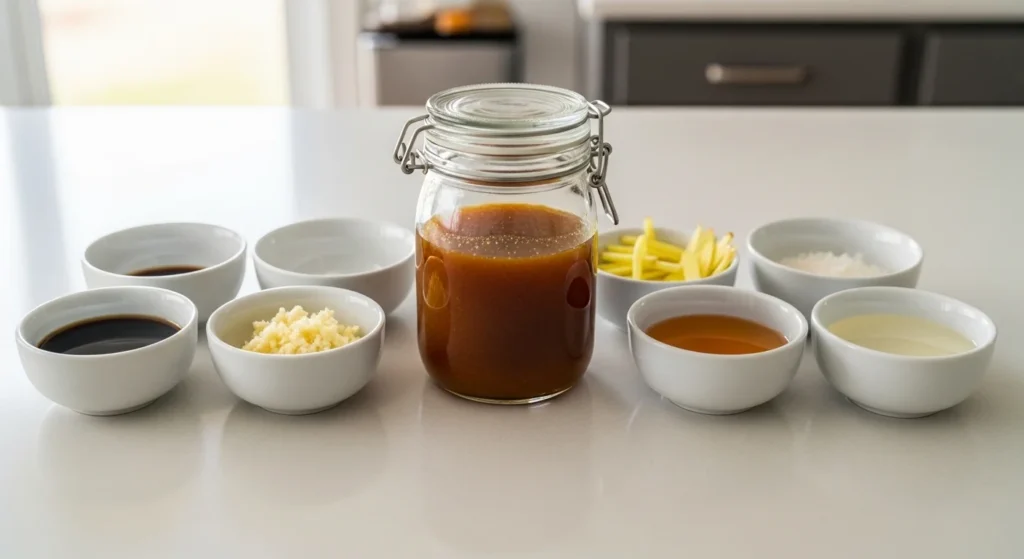
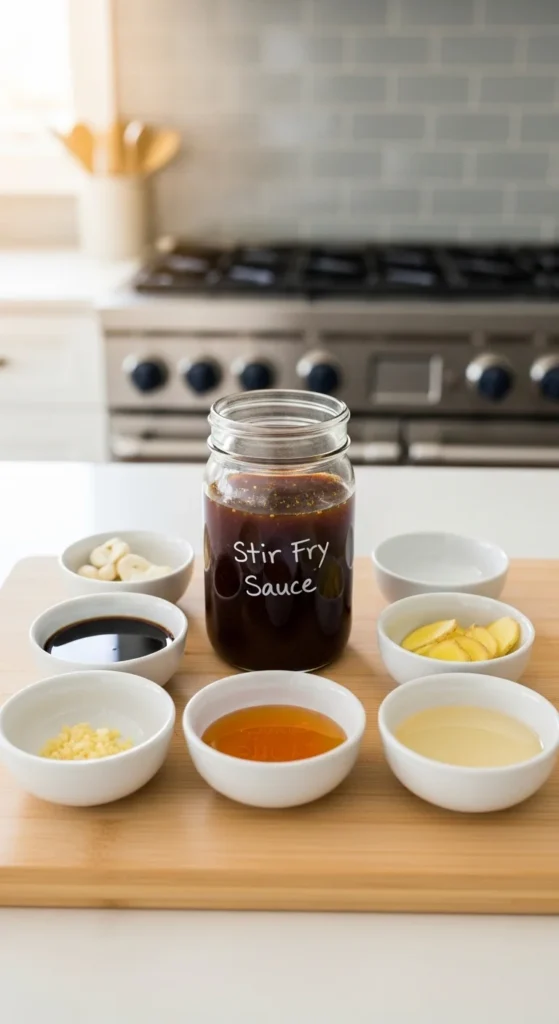
Start with these essentials
- Soy sauce for salt and umami
- Garlic and ginger for aroma and depth
- A sweet element such as honey or brown sugar
- An acid such as rice vinegar or lemon juice
- A liquid base such as water or broth
- Cornstarch for thickening
This combination creates a balanced sauce that coats food properly without becoming too heavy or too thin.
Quick Shake in a Jar Method
This is the fastest and cleanest way to make the sauce. It removes the need for bowls and extra tools.
- Add all ingredients into a jar or bottle
- Close the lid tightly
- Shake for 20 to 30 seconds until fully combined
- Pour directly into your hot pan during cooking
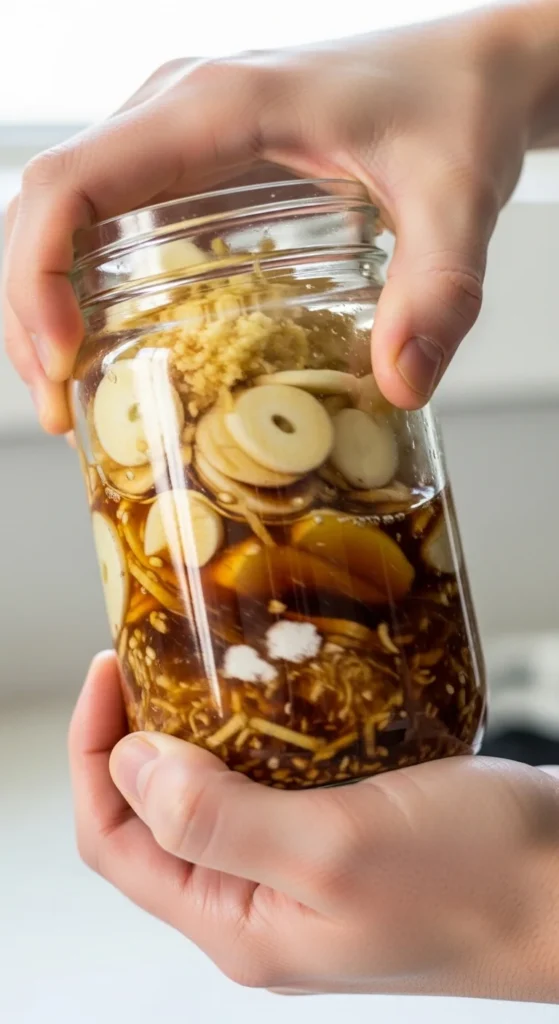
This method is quick, consistent, and easy to repeat every day.
How to Get the Perfect Texture
Texture is where most people go wrong. The sauce should lightly coat the food, not drown it.
- Mix cornstarch with a small amount of water before adding
- Add the sauce only when the pan is hot
- Stir continuously for 30 to 60 seconds
- Watch for the sauce turning glossy and slightly thick
The thickening always happens in the pan, not in the jar.
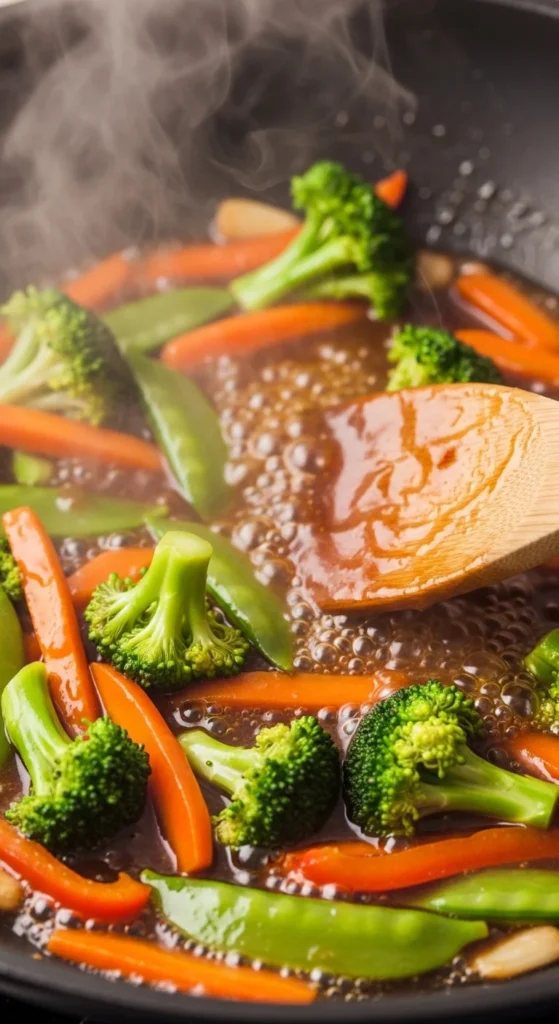
Adjust the Flavor Like a Pro
Every great stir fry sauce is about balance. Small changes can completely transform the result.
- Too salty: Add a splash of water or a little sweetness
- Too sweet: Add vinegar or citrus
- Too bland: Add garlic, soy sauce, or salt
- Too thick: Add water or broth
- Too thin: Add a little more cornstarch slurry
Once you understand this, you stop relying on strict measurements.
Make Ahead and Store Properly
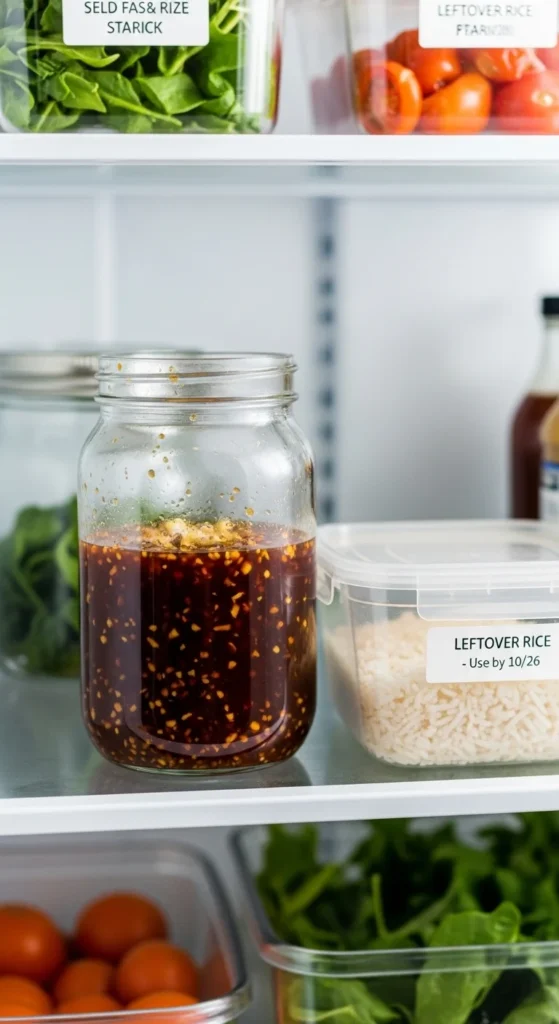
This sauce is designed for convenience, so storing it properly makes a big difference
- Keep in the fridge for up to one week
- Freeze for up to three months
- Shake before using because ingredients settle
- Store without cornstarch if planning long storage
Having it ready saves time during busy evenings
Easy Variations You Can Try
Once you master the base, you can create multiple flavor profiles
- Garlic soy sauce for a classic everyday option
- Spicy version with chili paste or sriracha
- Sweet and savory with honey and garlic
- Tangy version with extra vinegar or citrus
- Sesame style with toasted sesame oil
These variations keep meals interesting without changing your routine
Health and Dietary Adjustments
Modern cooking focuses on flexibility. This sauce adapts easily
- Use low sodium soy sauce for lighter salt levels
- Replace soy sauce with tamari for gluten free needs
- Use coconut aminos for soy free cooking
- Reduce sugar or skip it for low sugar versions
- Use vegetable broth for vegetarian and vegan options
What to Use This Sauce With
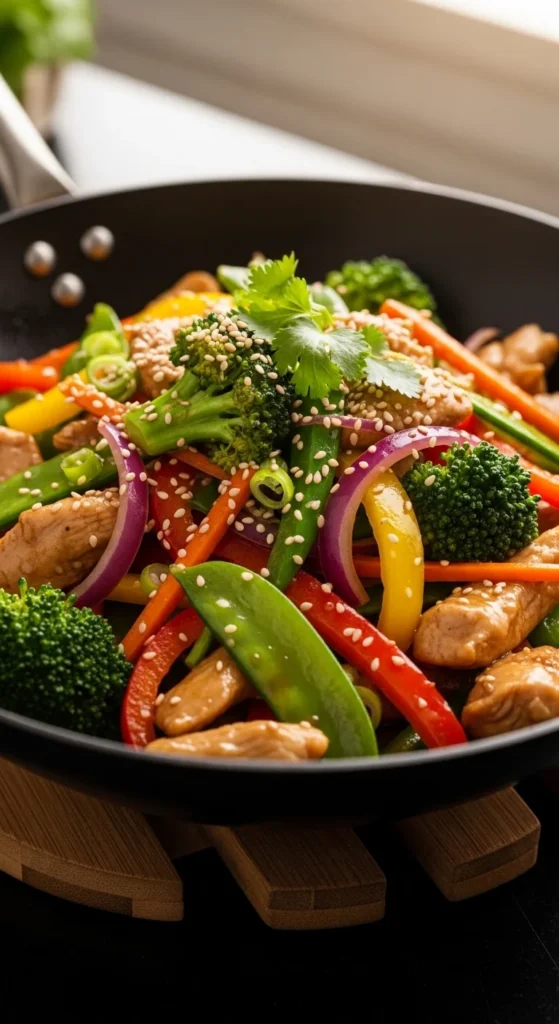
This sauce works across almost every stir fry combination
- Chicken and vegetables
- Shrimp with greens
- Tofu and noodles
- Beef and broccoli
- Mixed vegetable stir fry
One sauce can handle multiple meals without extra effort
Common Mistakes That Affect Results
Understanding mistakes helps you improve faster and avoid frustration
Using Too Much Sauce
This overwhelms the dish and prevents proper cooking. Stir fry should stay light, not soupy
Adding Sauce Too Early
This causes burning or uneven coating. Always add sauce at the final stage
Skipping the Thickener Step
Without cornstarch, the sauce stays watery and does not cling to ingredients
Not Balancing Flavor
Ignoring salt, sweet, and acid leads to flat or overpowering taste
Cooking on Low Heat
Low heat prevents proper thickening and reduces flavor intensity
Final Thoughts
Once you get comfortable with this, it stops feeling like a recipe and starts feeling like a habit. You begin to adjust flavors without thinking, use whatever ingredients are available, and build meals much faster.
It becomes one of those simple skills that makes everyday cooking easier and more enjoyable