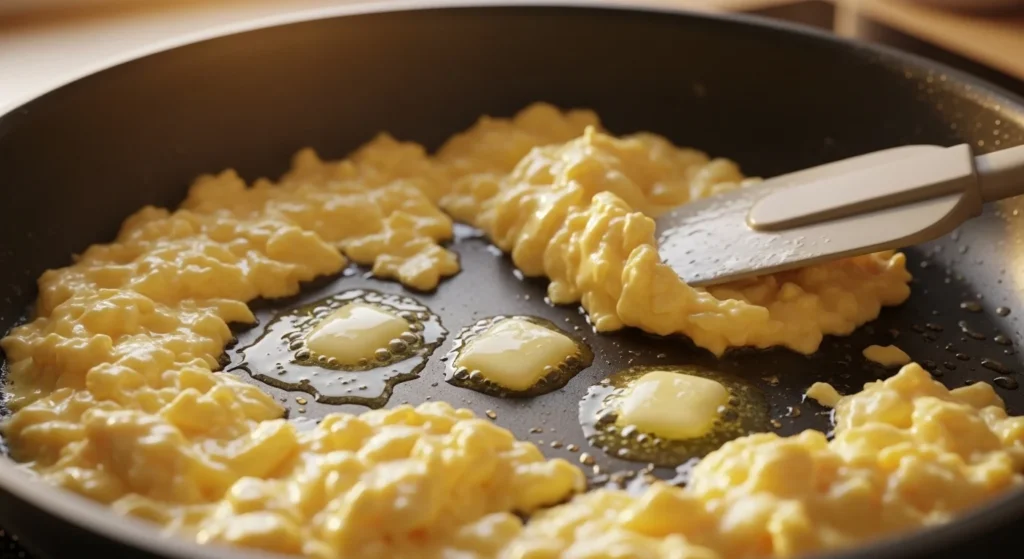
Scrambled eggs seem simple, yet many home cooks end up with dry, rubbery results instead of soft, creamy curds. The secret behind great scrambled eggs is not complicated ingredients. It is gentle heat, proper timing, and careful stirring.
When eggs are cooked slowly and removed from heat at the right moment, they stay tender, rich, and smooth. This technique creates the kind of creamy scrambled eggs often served in restaurants and popular brunch spots.
With a few small adjustments, scrambled eggs can easily become one of the best breakfast recipes you make at home.
Why Soft Scrambled Eggs Taste Better
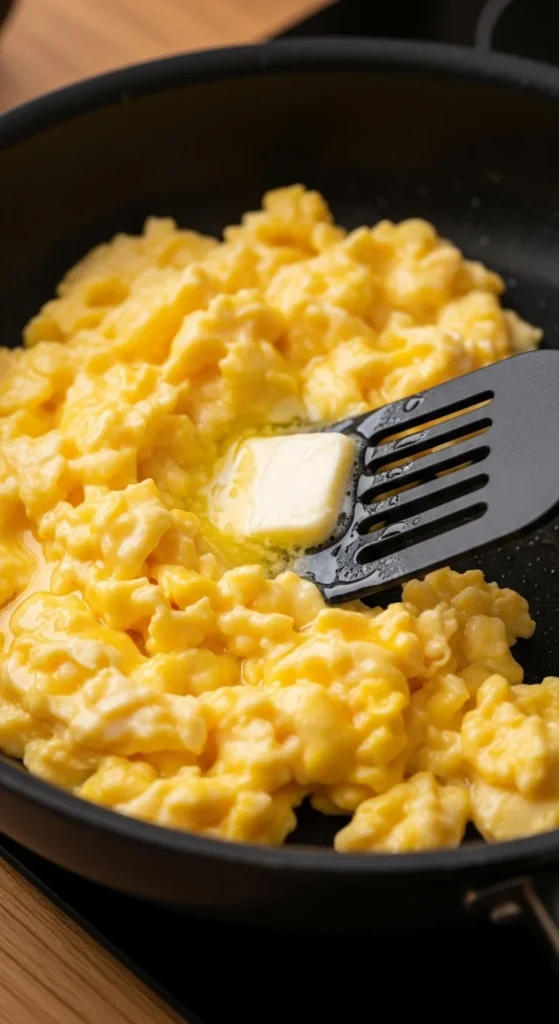
Perfect scrambled eggs have a custardy texture rather than large dry chunks. This happens when eggs cook slowly and the curds remain moist.
Three things control the final texture:
- Gentle heat that prevents overcooking
- Constant folding with a spatula to create soft curds
- Removing eggs from heat before they fully set
These small techniques are what transform basic scrambled eggs into rich and creamy breakfast food.
Choose the Right Pan and Tools
The right pan makes scrambled eggs easier to control.
Most chefs prefer a nonstick skillet because eggs release easily and cook evenly. A rubber or silicone spatula also helps create smooth folds instead of breaking the eggs into small dry pieces.
Helpful tools include:
- Nonstick skillet
- Rubber spatula
- Small mixing bowl
- Whisk or fork
Cast iron can work if it is well seasoned, but nonstick pans give beginners the most reliable results.
Step 1: Prepare the Eggs
Crack the eggs into a bowl and whisk them until the yolks and whites are fully combined.
For extra moisture, you can add a small amount of liquid.
Popular additions include:
- Milk
- Cream
- Water
- Buttermilk
About 1 tablespoon per two eggs is enough to improve softness without thinning the mixture too much.
If you prefer scrambled eggs without milk, simply whisk the eggs alone and rely on butter and gentle cooking for creaminess.
Step 2: Cook on Low Heat
Place a skillet over medium low heat and melt a small amount of butter.
Pour the eggs into the pan and let them sit briefly before stirring. As the edges begin to set, gently push the eggs toward the center using a spatula.
Slow cooking is the most important part of soft scrambled eggs.
High heat causes:
- Dry eggs
- Tough texture
- Browned edges
Low heat allows curds to form gradually while staying moist.
Step 3: Fold the Eggs Instead of Stirring
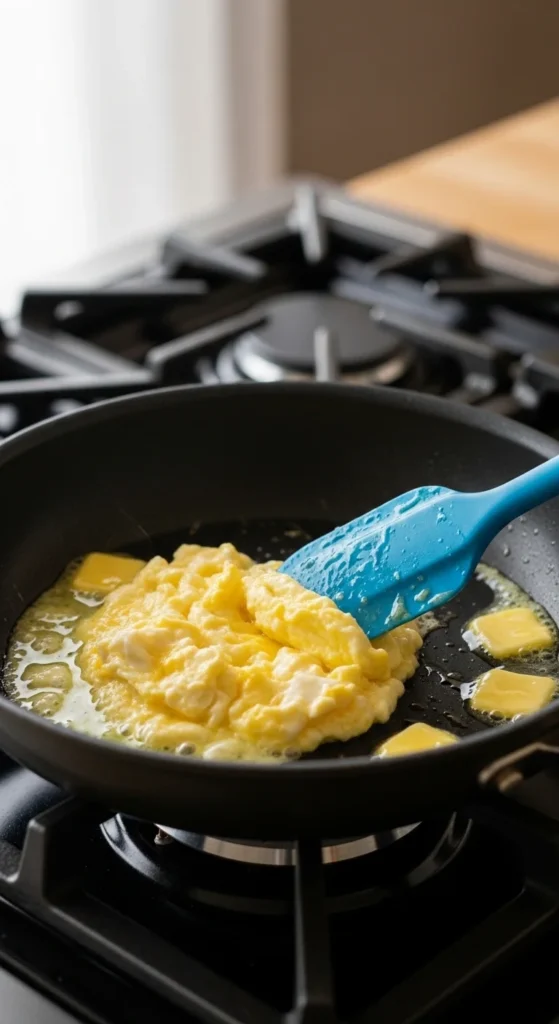
Once the eggs begin forming curds, fold them slowly across the pan instead of stirring quickly.
This technique creates the soft texture associated with creamy scrambled eggs.
Key habits for soft curds:
- Push eggs slowly across the pan
- Allow curds to form naturally
- Avoid breaking them into tiny pieces
Large soft curds give scrambled eggs a rich, custardy feel.
Step 4: Remove Eggs Before They Fully Set
Eggs continue cooking even after they leave the heat.
Remove the pan from the stove when the eggs still appear slightly glossy and soft. Residual heat finishes the cooking process.
If you wait until they look fully cooked in the pan, they will likely become dry on the plate.
This timing technique is used by many chefs to achieve restaurant style scrambled eggs.
Finish with Flavor
Seasoning should be added at the end of cooking rather than before. Salt added too early can draw moisture from eggs and create watery curds.
Finish your scrambled eggs with:
- Salt and pepper
- Fresh chives
- Parmesan cheese
- A spoon of sour cream or crème fraîche
These small additions elevate scrambled eggs from simple morning food into a satisfying best breakfast option.
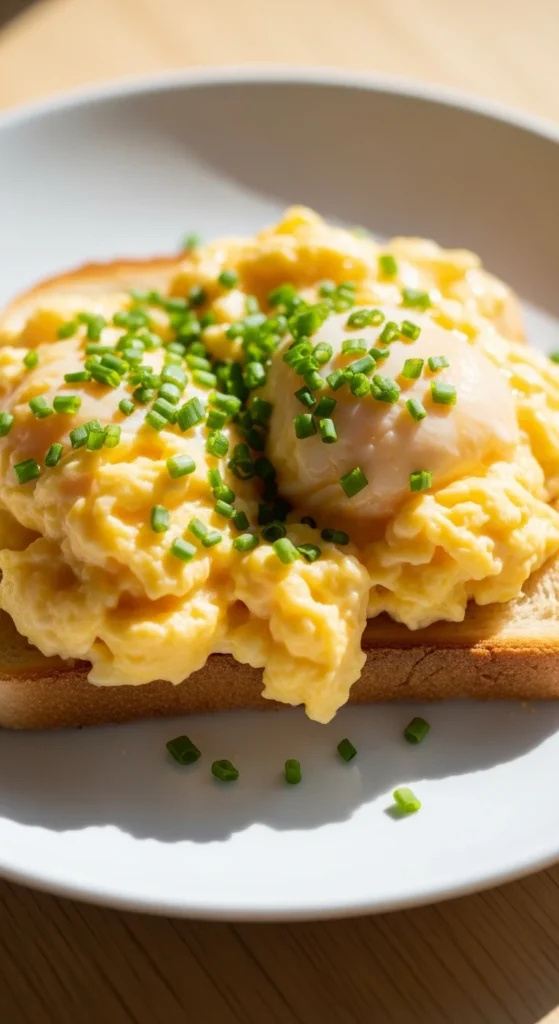
Creative Ways to Serve Scrambled Eggs
Scrambled eggs are incredibly versatile and appear in many breakfast recipes easy enough for everyday cooking.
Popular serving ideas include:
- Breakfast wraps with eggs, cheese, and vegetables
- Toast topped with creamy scrambled eggs and herbs
- Breakfast bowls with potatoes and avocado
- Pancake or waffle side dishes for brunch
These variations turn scrambled eggs into a full best breakfast recipes menu rather than just a quick meal.
Common Scrambled Egg Mistakes
Even simple eggs can go wrong when cooking techniques are rushed. Avoid these common problems to maintain a soft texture.
Cooking at High Heat
High temperatures cook eggs too quickly and force moisture out of the curds.
Stirring Too Aggressively
Fast stirring breaks curds into tiny pieces and removes the creamy texture.
Waiting Too Long to Remove from Heat
Eggs should be removed slightly undercooked because they continue cooking after leaving the stove.
Salting Too Early
Salt added before cooking can cause watery eggs.
Final Thoughts
Perfect scrambled eggs are all about patience. Cook them slowly, fold gently, and remove them from heat before they finish cooking completely.
These small adjustments create soft curds, rich flavor, and the creamy texture people expect from restaurant style scrambled eggs.
Once you master this technique, scrambled eggs easily become one of the most reliable breakfast recipes easy enough for busy mornings yet satisfying enough for weekend brunch.