

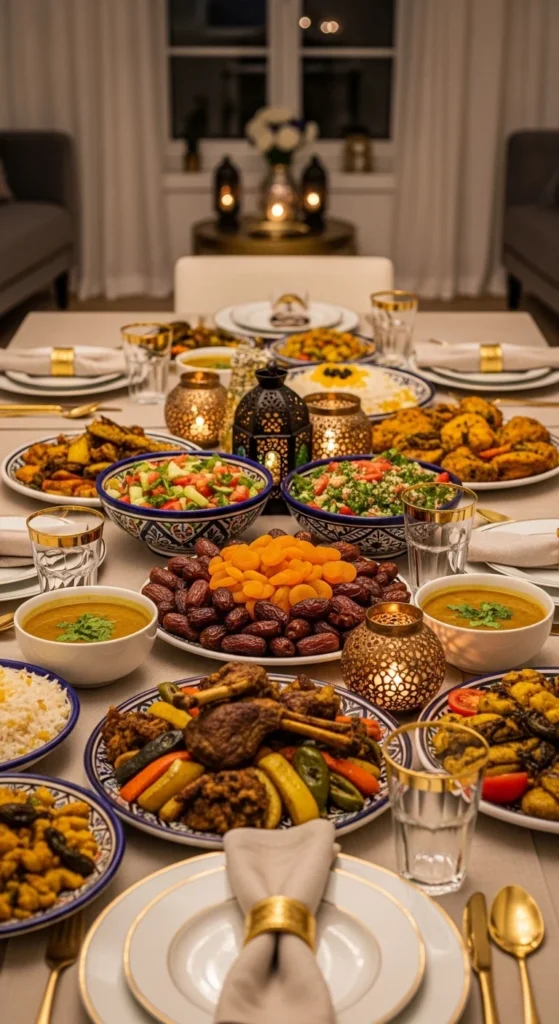
Ramadan is a month of reflection, prayer, and togetherness.
But between fasting all day, managing family routines, and preparing iftar every evening, cooking can quickly become overwhelming.
The secret to a beautiful Ramadan table is not cooking more. It is planning smarter.
When you organize meals ahead, rely on freezer shortcuts, and build flexible dinner systems, you reduce daily pressure and actually enjoy the month.
Step 1: Start With a Monthly Menu Rotation
One of the biggest stress triggers during Ramadan is deciding what to cook every evening while tired and hungry.
A loose meal rotation removes that pressure completely.
Instead of planning thirty different meals, choose around fifteen to twenty trusted mains and rotate them. Think in cooking styles rather than individual recipes.
- Traybake chicken and vegetables nights.
- Stew or daal nights.
- Quick wraps or rice bowl evenings.
- Leftover transformation meals.
This approach prevents boredom without forcing daily decision-making.
A simple notebook list or phone note is enough. You are not locking yourself into rules. You are giving your future self relief.
Step 2: Build a Weekend Prep System That Saves Hours
Two to three hours of preparation once a week can remove most weekday stress.
Focus on the tasks that normally take the longest.
Batch your cooking bases first.
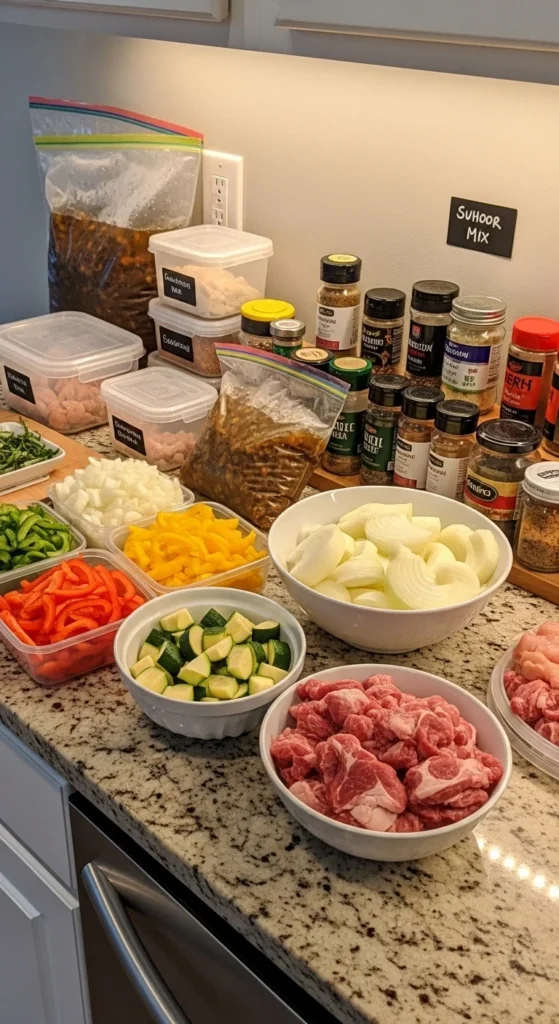
Then prepare ginger garlic paste, caramelized onions, or tomato masala and freeze them in ice cube trays. These small cubes instantly become curry starters, gravies, or marinades without chopping onions every night.
Marinate proteins ahead. Portion chicken, beef, or lamb into freezer bags. Add marinade directly into the bag.
Label and freeze flat. When thawed, the flavor is already developed, and dinner moves straight into the oven or pan. Pre-portion pantry staples.
Step 3: Freeze-Now, Cook-Later Snacks
Iftar snacks are comforting but shaping samosas every evening is exhausting.
Instead, dedicate one snack prep session early in Ramadan.
Foods that freeze extremely well include:
- Samosas.
- Koftas.
- Spring rolls.
- Stuffed pastries.
- Cheese sambosa.
Freeze them raw on trays first, then transfer to bags. They cook directly from frozen in an air fryer or oven.
Step 4: Let Appliances Do the Heavy Lifting
Hands-off cooking is one of the smartest Ramadan dinner strategies. Modern appliances reduce supervision and cleanup.
Helpful tools include:
- Rice cooker for perfect rice or simple biryani bases.
- Air fryer for crisp snacks with less oil.
- Slow cooker or instant pot for soups and daal started at suhoor time.
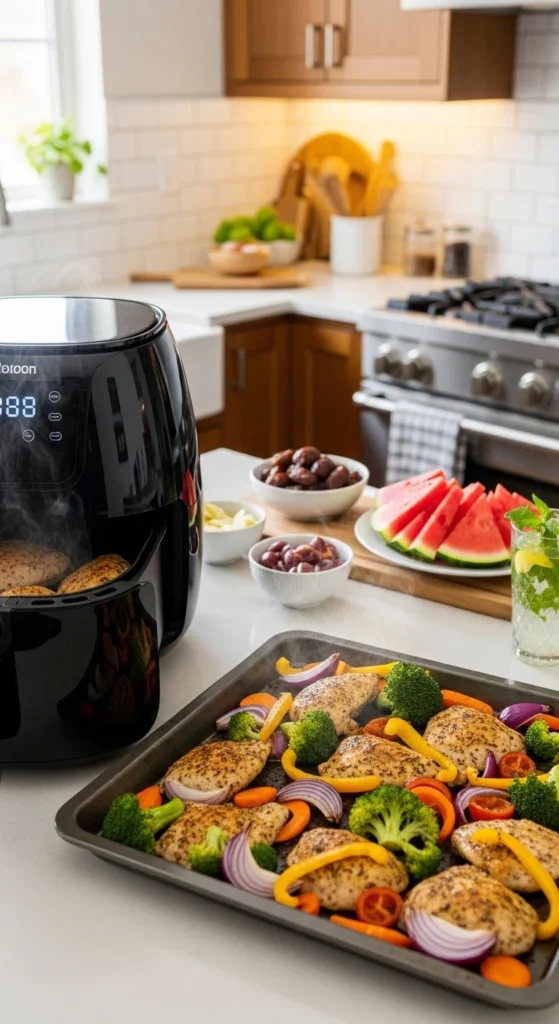
- Oven traybakes that cook entire meals together.
A tandoori chicken traybake with vegetables or a lamb potato bake requires minimal effort yet feeds the whole family.
Step 5: Break Fast Gently for Better Energy
After fasting all day, jumping straight into heavy fried food can cause sluggishness. A structured iftar flow helps both digestion and cooking timing.
Start with:
- Dates and water.
- A warm soup such as lentil or chicken broth.
Dates provide quick natural sugars while soup rehydrates gently. Then move toward snacks and the main meal.
This pacing allows the cook extra minutes to finish final dishes calmly instead of rushing.
Step 6: Suhoor in Five Minutes Still Works
Suhoor often happens half asleep, which leads many people to skip proper meals. Prep-ahead foods remove that problem.
Reliable fast options include:
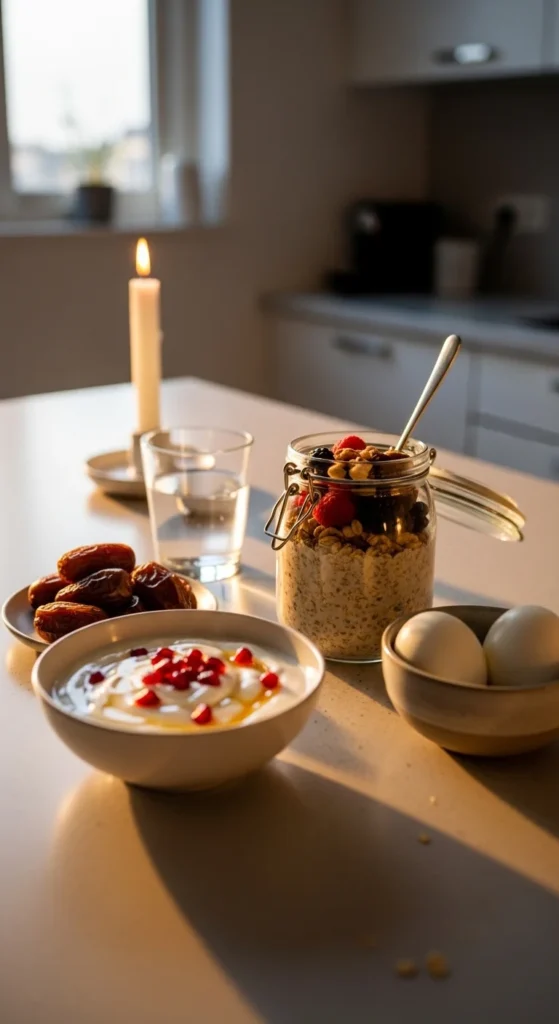
- Overnight oats with chia seeds and fruit.
- Hard-boiled eggs prepared earlier.
- Yogurt bowls with nuts.
- Cheese and leftover flatbread.
Hydration matters just as much as food. A glass of water with lemon and a small pinch of salt helps prevent afternoon fatigue.
Step 7: Use the Leftover Link Between Iftar and Suhoor
Intentional leftovers are one of the most underrated Ramadan strategies.
Cook slightly more at iftar so tomorrow’s suhoor becomes effortless.
Examples include:
- Roast chicken turning into yogurt wraps.
- Rice becomes quick egg fried rice.
- Lentil soup turning into daal with fresh tempering.
This reduces food waste and eliminates early morning cooking.
Step 8: Mix and Match Elements to Avoid Menu Burnout
Cooking full recipes every night causes exhaustion.
Instead, cook flexible elements.
A single pot of chickpeas can become:
- Chaat one evening.
- Salad topping the next.
- Wrap filling later.
Yogurt dips transform easily depending on herbs or spices.
This system creates variety without increasing workload.
Step 9: Make Cooking a Family Activity
Ramadan dinners feel lighter when preparation is shared.
Children can:
- Fold samosas.
- Arrange dates.
- Wash vegetables.
Older family members can:
- Assemble salads.
- Reheat dishes.
- Set the table.
Shared preparation turns cooking into bonding rather than pressure.
A Simple Ramadan Planning Checklist
Before Ramadan begins, try completing these once.
- Write your meal rotation.
- Freeze ginger garlic paste or onion base.
- Marinate at least two weeks of proteins.
- Prepare freezer snacks.
- Stock pantry staples like lentils and chickpeas.
One organized afternoon can simplify the entire month.
Final Words
Ramadan meals are not about impressing guests every evening. They are about nourishment, calmness, and connection.
When meals are planned thoughtfully, the kitchen stops feeling like a responsibility and starts supporting the rhythm of the month.
Cook a little ahead, rely on simple systems, and allow your dinners to serve your family instead of exhausting you.
The best Ramadan tables are not the busiest ones. They are the ones where everyone, including the cook, gets to sit down and enjoy the moment together.

Leave a Reply