

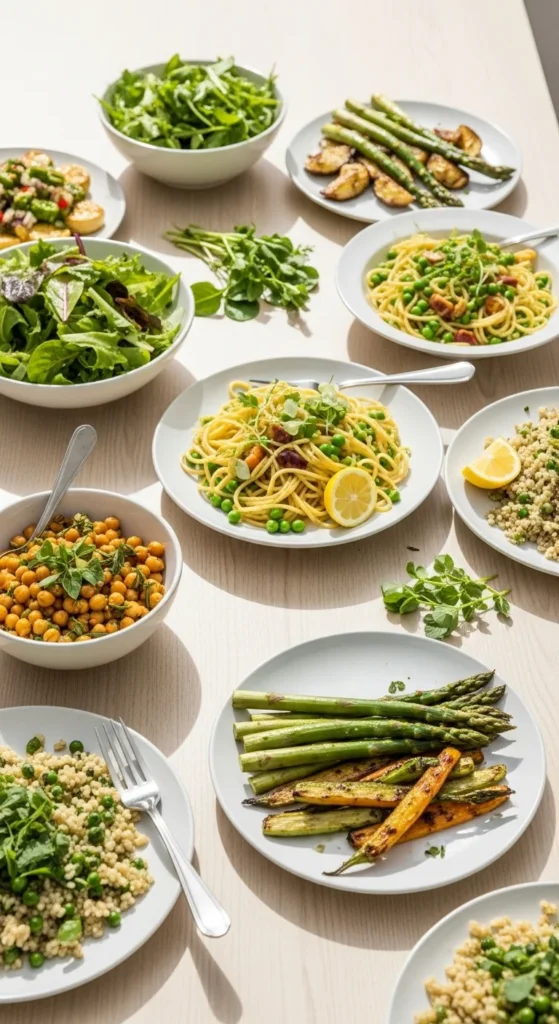
Spring is the time when heavy food stops making sense. You want meals that feel fresh, colorful, and satisfying without sitting heavy afterward. These spring vegan recipes are built around real spring produce, simple cooking methods, and flavors that stay clean and bright. Whether you’re planning a vegan spring dinner or just need easy spring plant based meals for the week, these recipes are meant to fit naturally into everyday cooking.
1. Lemon Asparagus Quinoa Salad with Fresh Herbs
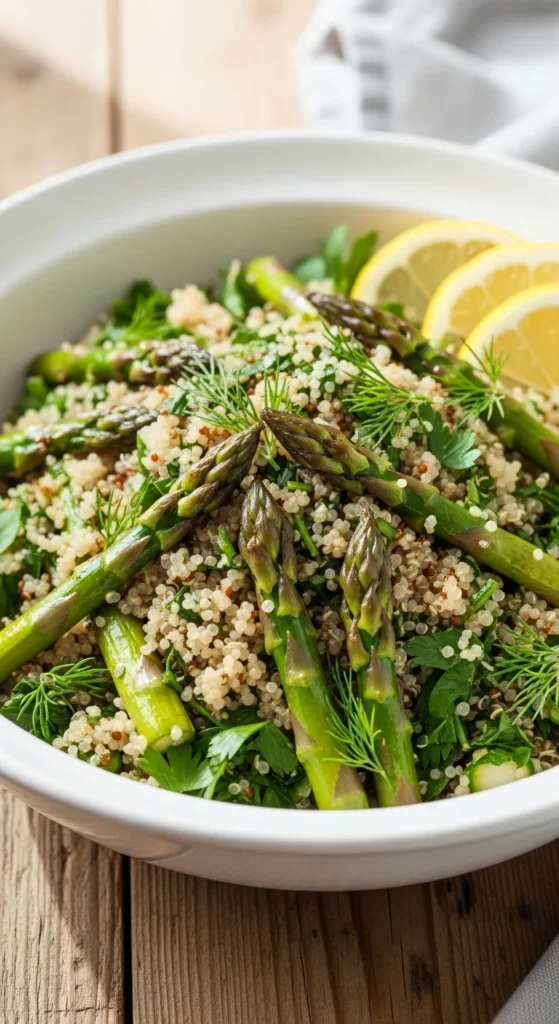
This is the kind of salad you make when you want something light but still filling. Quinoa gives you enough protein to make it work as a main dish, while asparagus and herbs keep everything fresh. It’s ideal for spring vegetarian meals that can be eaten warm or cold without losing texture.
Ingredients
- Quinoa
- Fresh asparagus
- Olive oil
- Lemon zest and lemon juice
- Fresh parsley
- Fresh dill
- Salt
- Black pepper
Instructions
- Rinse quinoa and cook it according to package instructions. Set aside to cool slightly.
- Trim asparagus and cut into bite-sized pieces. Toss with olive oil and a pinch of salt.
- Roast asparagus at 200°C (400°F) for 12–15 minutes until tender but still bright.
- In a large bowl, combine cooked quinoa and roasted asparagus.
- Add lemon zest, lemon juice, chopped herbs, salt, and pepper. Toss gently to combine.
How to Serve
Serve this salad slightly warm or fully chilled. If serving for dinner, portion it into shallow bowls and finish with extra herbs and a squeeze of lemon. For meal prep, store it in airtight containers and refresh with lemon juice before eating.
2. Chickpea and Radish Spring Power Salad
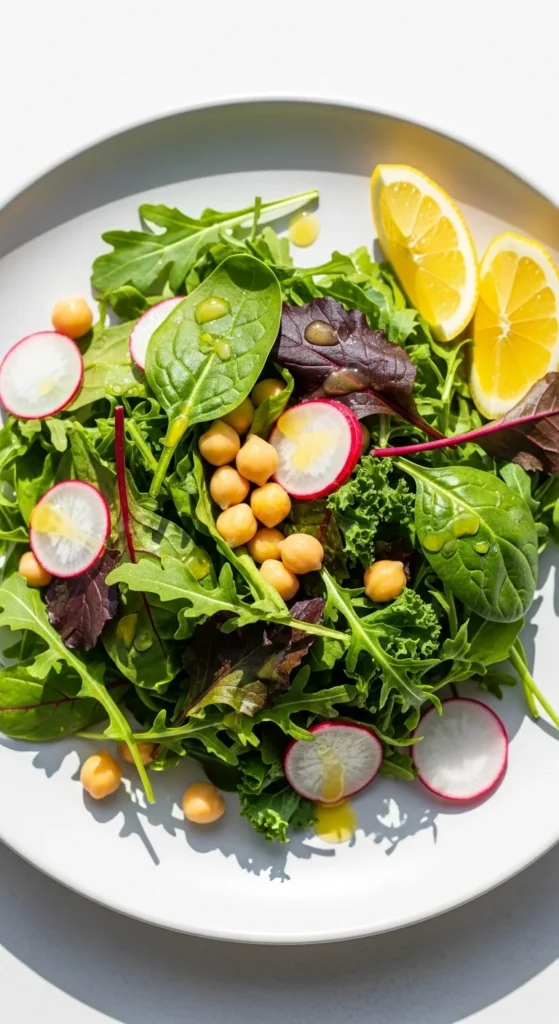
This salad is crunchy, filling, and fast. Chickpeas give it substance, while radishes add that sharp spring bite that keeps things interesting. It’s one of those vegan spring recipes that works when you’re tired of leafy salads that don’t keep you full.
Ingredients
- Cooked chickpeas
- Fresh radishes
- Mixed spring greens
- Olive oil
- Lemon juice
- Dijon mustard
- Salt
- Black pepper
Instructions
- Slice radishes thinly and rinse under cold water to keep them crisp.
- In a small bowl, whisk olive oil, lemon juice, Dijon mustard, salt, and pepper.
- In a large bowl, combine chickpeas, radishes, and greens.
- Pour dressing over the salad and toss gently until coated.
How to Serve
Serve immediately after dressing so the greens stay crisp. This works well as a light vegan spring dinner with crusty bread or as a side alongside other spring plant based meals.
3. Zucchini Noodle Bowl with Lemon Garlic Dressing
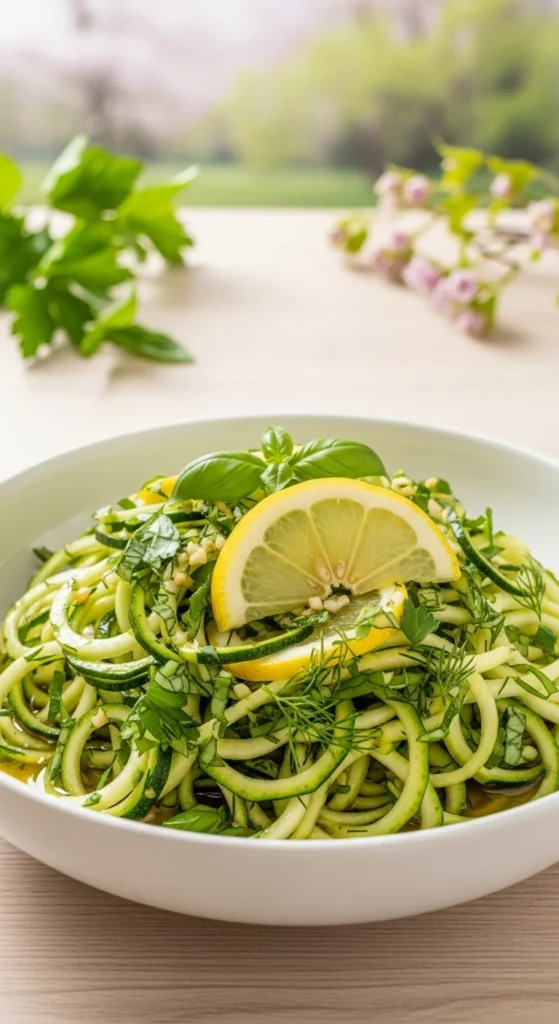
This is one of those springtime vegan recipes you turn to when you want something refreshing instead of cooked-heavy. The lemon garlic dressing keeps it sharp and clean, while zucchini noodles stay light and easy to digest.
Ingredients
- Zucchini (spiralized)
- Olive oil
- Fresh lemon juice
- Garlic, finely grated
- Salt
- Black pepper
- Fresh basil or parsley
Instructions
- Spiralize zucchini and place in a colander. Sprinkle lightly with salt and let sit for 10 minutes.
- Gently pat dry with a towel to remove excess moisture.
- In a small bowl, whisk olive oil, lemon juice, garlic, salt, and pepper.
- Toss zucchini noodles with the dressing just before serving.
- Finish with chopped fresh herbs.
How to Serve
Serve immediately after tossing. Use wide bowls and twirl the noodles gently so they don’t break. This is best eaten fresh and not stored once dressed.
4. Roasted Carrot and Lentil Salad with Dill Vinaigrette
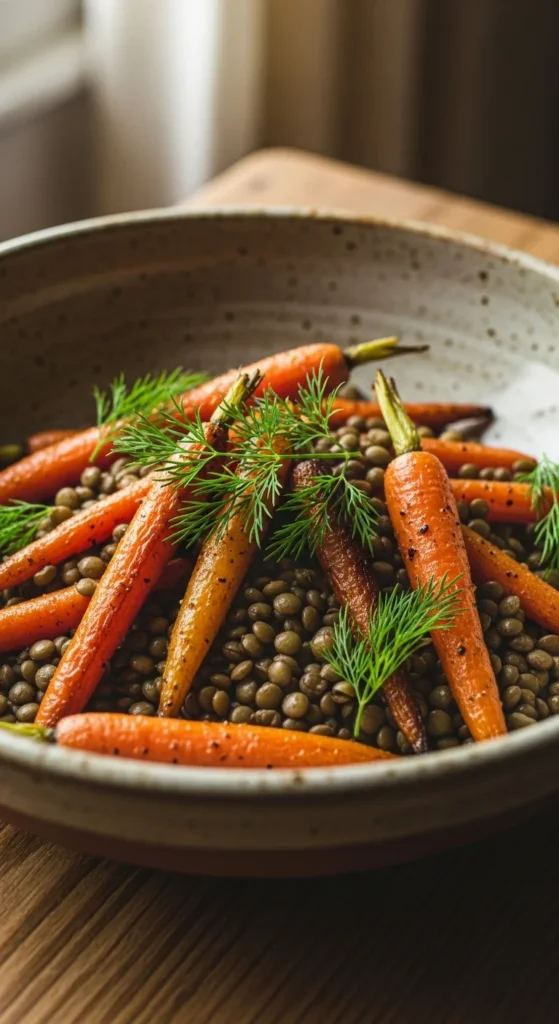
This salad is perfect when you want spring vegetarian meals that still feel grounding. Lentils make it satisfying, while dill and vinegar keep the flavors light and sharp instead of earthy and heavy.
Ingredients
- Carrots
- Cooked green lentils
- Olive oil
- Fresh dill
- Apple cider vinegar or lemon juice
- Salt
- Black pepper
Instructions
- Peel and slice carrots lengthwise. Toss with olive oil and salt.
- Roast at 200°C (400°F) for 20–25 minutes until tender and lightly caramelized.
- In a bowl, whisk olive oil, vinegar or lemon juice, salt, and pepper.
- Combine warm carrots and lentils.
- Add chopped dill and toss gently with dressing.
How to Serve
Serve warm for dinner or room temperature for lunch. Spoon onto plates rather than bowls so the carrots stay visible and don’t get crushed.
5. Spinach Strawberry Salad with Citrus Tahini Dressing
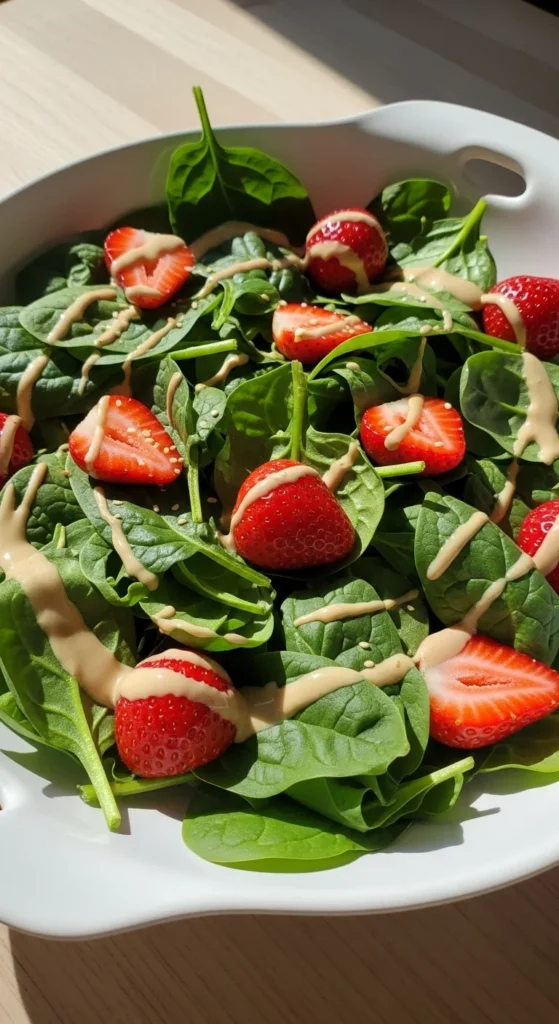
This salad works because it balances sweet, bitter, and creamy without being heavy. It’s a classic choice for vegan spring dinner recipes when you want something fresh but still complete.
Ingredients
- Fresh spinach
- Strawberries, sliced
- Tahini
- Lemon or orange juice
- Maple syrup
- Salt
Instructions
- Wash and dry spinach thoroughly.
- Slice strawberries and set aside.
- Whisk tahini, citrus juice, maple syrup, and salt until smooth.
- Toss spinach lightly with dressing.
- Add strawberries on top and gently fold once.
How to Serve
Serve immediately after assembling. Plate it flat so the strawberries stay on top. This pairs well with warm bread or as part of a larger vegan spring meal spread.
6. Herbed Farro Salad with Peas and Green Onions
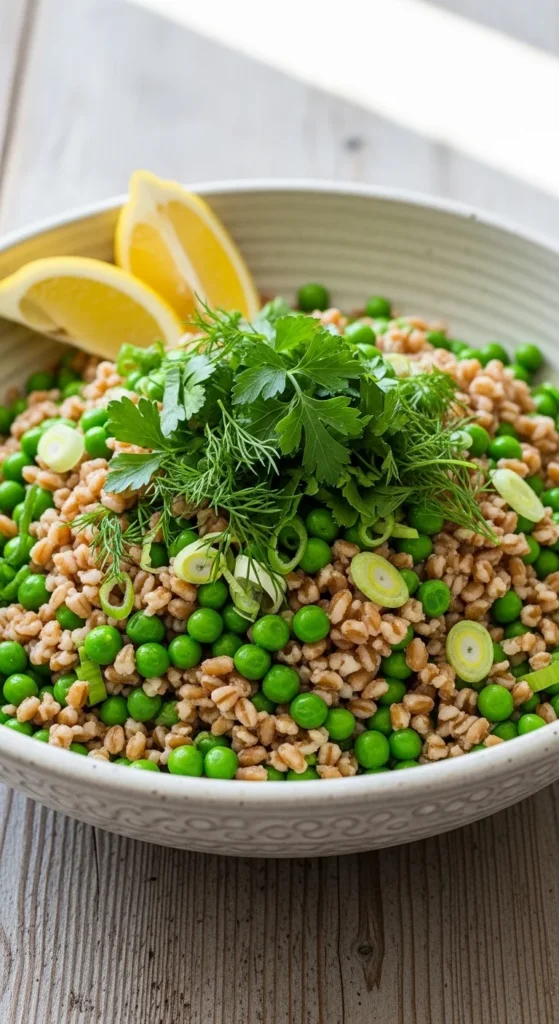
This is the kind of spring plant-based meal you make when you want something filling but not heavy. Farro has a chewy texture that makes this salad feel like a real meal, not a side pretending to be dinner. The peas add sweetness, the herbs keep it fresh, and the lemon ties everything together. It works well for lunch, dinner, or meal prep when you want spring vegetarian meals that actually satisfy.
Ingredients
- 1 cup dry farro
- 3 cups water or vegetable broth
- 1 cup green peas (fresh or frozen)
- 3 green onions, thinly sliced
- ¼ cup fresh parsley, finely chopped
- 2 tablespoons fresh dill or mint, chopped
- Zest of 1 lemon
- 3 tablespoons olive oil
- 2 tablespoons fresh lemon juice
- Salt and black pepper, to taste
Instructions
- Rinse the farro under cold water. Add it to a saucepan with water or vegetable broth and bring to a boil.
- Reduce heat to a gentle simmer, cover, and cook for 25–30 minutes until tender but still chewy.
- Drain any excess liquid and spread the farro on a plate to cool slightly. This prevents the salad from becoming mushy.
- If using frozen peas, rinse them under warm water until thawed, then drain well. Fresh peas can be added directly.
- In a large bowl, combine farro, peas, green onions, parsley, and dill.
- Add lemon zest, lemon juice, olive oil, salt, and black pepper. Toss gently until everything is evenly coated.
- Taste and adjust seasoning before serving.
How to Serve
Serve this salad slightly warm or at room temperature, not straight from the fridge. Spoon it into a shallow bowl so the herbs stay visible on top. If you’re serving it as a vegan spring dinner, pair it with roasted vegetables or grilled tofu. For meal prep, portion it into containers and add a fresh squeeze of lemon just before eating to wake everything up again.
7. Vegan Potato Salad with Mustard Lemon Dressing
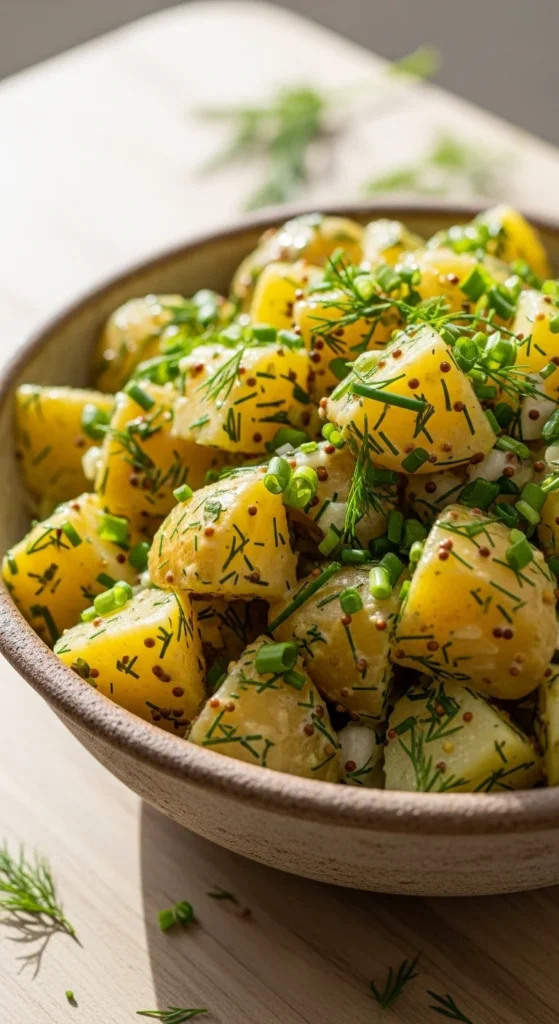
This potato salad skips the heavy mayo and goes for brightness instead. The mustard and lemon keep it sharp and fresh, making it fit perfectly into spring vegan recipes where you still want comfort without feeling weighed down. It’s familiar, but lighter, and works well for gatherings or simple dinners.
Ingredients
- 1½ pounds baby potatoes, halved
- ¼ cup olive oil
- 2 tablespoons Dijon mustard
- 2 tablespoons fresh lemon juice
- 1 teaspoon maple syrup
- 2 tablespoons chopped fresh chives or green onions
- 2 tablespoons fresh parsley, chopped
- Salt and black pepper, to taste
Instructions
- Place potatoes in a large pot and cover with cold salted water.
- Bring to a boil, then simmer for 12–15 minutes until fork-tender but not falling apart.
- Drain well and let the potatoes steam dry for 5 minutes.
- In a small bowl, whisk olive oil, mustard, lemon juice, maple syrup, salt, and pepper until smooth.
- Transfer warm potatoes to a mixing bowl and pour the dressing over them while they’re still warm.
- Gently fold to coat without breaking the potatoes.
- Add herbs and adjust seasoning to taste.
How to Serve
Serve this potato salad slightly warm or fully cooled. If you’re serving guests, spoon it into a wide bowl and sprinkle extra herbs on top so it looks fresh, not flat. This works well alongside grilled vegetables, veggie burgers, or as part of a larger spread of springtime vegan recipes.
8. Creamy Avocado and White Bean Spring Salad
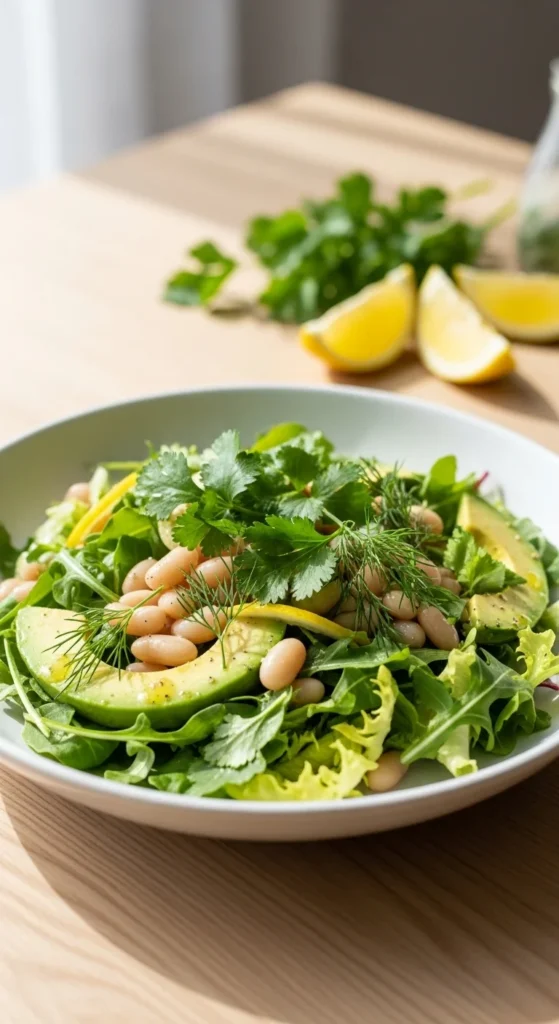
This is a great option when you want a creamy salad without adding dairy or heavy sauces. The avocado blends into the dressing, the white beans give it protein, and the whole thing comes together fast. It’s ideal for vegan spring dinners when you don’t want to cook much but still want something filling.
Ingredients
- 1 can white beans, drained and rinsed
- 1 ripe avocado
- 2 tablespoons lemon juice
- 2 tablespoons olive oil
- 1 small garlic clove, grated
- 2 cups mixed spring greens
- 2 tablespoons chopped fresh parsley or basil
- Salt and black pepper, to taste
Instructions
- In a bowl, mash the avocado with lemon juice, olive oil, garlic, salt, and pepper until mostly smooth.
- Add white beans and gently fold them into the dressing so they stay intact.
- Add spring greens and herbs, tossing gently to coat everything evenly.
- Taste and adjust seasoning if needed.
How to Serve
Serve immediately after mixing, but plate it intentionally. Spread it across a wide plate instead of piling it up so the beans and greens stay visible. This salad pairs well with crusty bread or as a side to other spring plant based meals.
9. Fresh Spring Vegetable Sushi Rolls
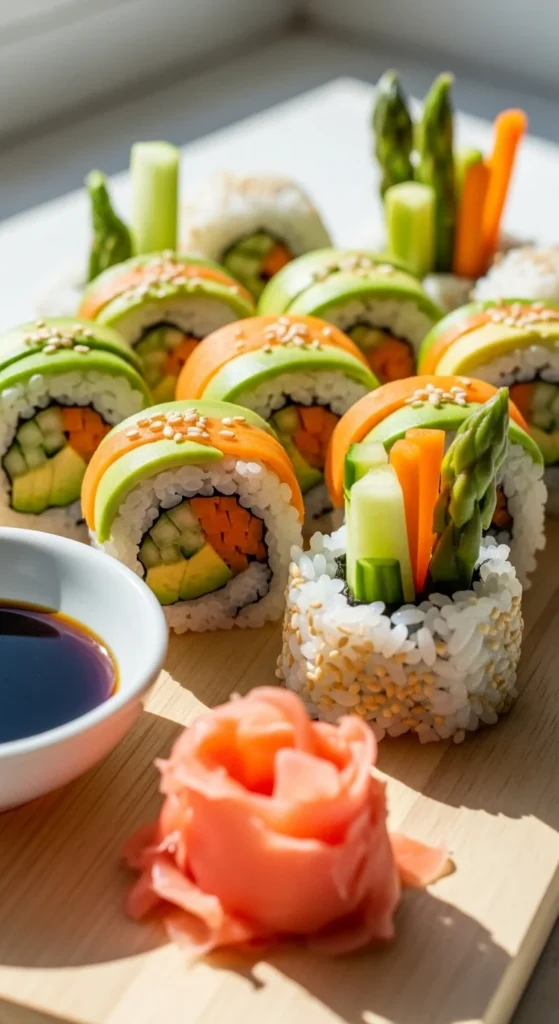
Vegetarian sushi is one of those spring vegetarian meals that feels fresh, clean, and fun to eat. You don’t need fancy skills to make it at home. Focus on neat slicing and balanced filling, not perfection. These rolls are light but satisfying and work well for lunch or a casual dinner.
Ingredients
- 1 cup sushi rice
- 1¼ cups water
- 2 tablespoons rice vinegar
- 1 teaspoon sugar
- ½ teaspoon salt
- Nori sheets
- Cucumber, julienned
- Carrot, julienned
- Asparagus, blanched and cooled
- Avocado, sliced
Instructions
- Rinse sushi rice until water runs clear. Cook with water according to package instructions.
- Mix rice vinegar, sugar, and salt. Fold into warm rice and let cool to room temperature.
- Place a nori sheet on a bamboo mat. Spread rice evenly, leaving a border at the top.
- Arrange vegetables in a thin line across the center.
- Roll tightly using the mat, pressing gently as you go.
- Slice with a sharp, damp knife.
How to Serve
Arrange the rolls cut-side up on a flat platter so the colors show. Serve with soy sauce, pickled ginger, and wasabi on the side. These are best served shortly after rolling, but you can prep the vegetables ahead to make assembly quickly.
10. Raw Asparagus Salad with Lemon and Almonds
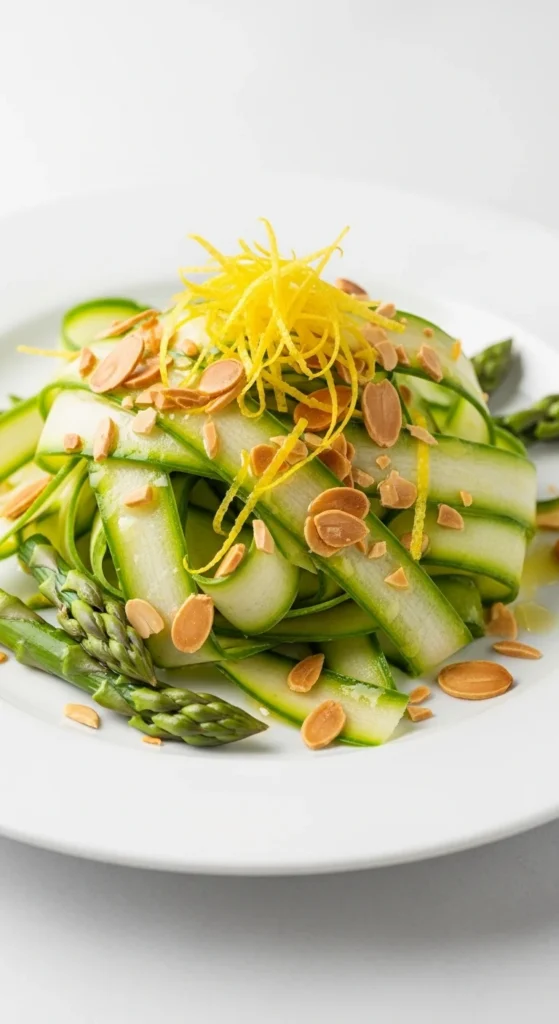
Raw asparagus stays crisp and slightly sweet, which makes this salad feel extra fresh. This works well when asparagus is in season and you want something quick that doesn’t require cooking. It’s simple, but when done right, it doesn’t feel plain.
Ingredients
- 1 bunch asparagus, trimmed
- 2 tablespoons lemon juice
- 1 tablespoon olive oil
- Zest of ½ lemon
- ¼ cup toasted almonds, sliced
- Salt and black pepper
Instructions
- Use a vegetable peeler to shave asparagus into thin ribbons.
- Place in a bowl and add lemon juice, olive oil, zest, salt, and pepper.
- Toss gently and let sit for 5 minutes to soften slightly.
- Add almonds just before serving.
How to Serve
Serve this salad chilled or at room temperature. Spread it across a plate rather than stacking it. This works well as a starter or alongside other vegan spring dinner recipes.
11. Pesto Primavera Pasta with Seasonal Greens
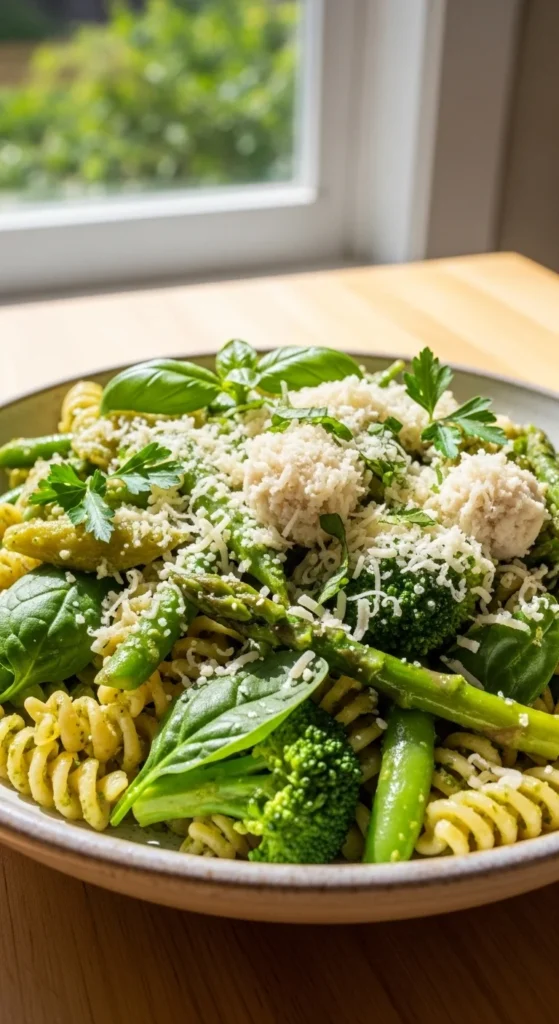
This pasta is one of those vegan spring recipes you’ll come back to all season. It’s quick, flexible, and lets spring vegetables shine. You can swap the greens depending on what’s available, which makes it practical as well as comforting.
Ingredients
- 12 oz pasta of choice
- 2 cups mixed spring vegetables (peas, asparagus, spinach)
- ½ cup vegan pesto
- ¼ cup pasta cooking water
- Olive oil, if needed
- Salt and black pepper
Instructions
- Cook pasta in salted boiling water until al dente. Reserve ½ cup pasta water before draining.
- Add vegetables during the last 2–3 minutes of cooking.
- Drain and return pasta and vegetables to the pot.
- Stir in pesto and a splash of pasta water until coated.
- Season to taste.
How to Serve
Serve warm in shallow bowls so the vegetables stay visible. Finish with cracked pepper and extra pesto on top. Pair it with a simple salad if serving as a full vegan spring dinner.
12. Lemon Dill Pasta with Peas and Olive Oil
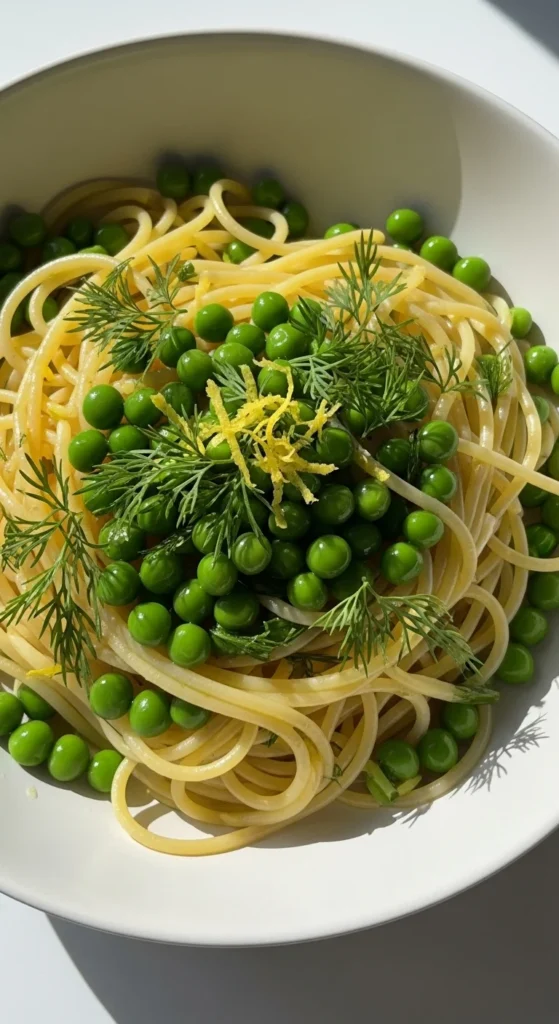
This is the kind of spring vegan pasta you make when you want something light but still satisfying. Lemon and dill keep it fresh, peas add sweetness and texture, and olive oil brings everything together without weighing the dish down. It works well as a quick vegan spring dinner and also holds up nicely if you want leftovers for the next day.
Ingredients
- 12 oz spaghetti or linguine
- 1 cup frozen or fresh green peas
- ⅓ cup extra-virgin olive oil
- Zest of 1 lemon
- 2 tbsp fresh lemon juice
- ¼ cup fresh dill, finely chopped
- 2 cloves garlic, finely grated
- Salt, to taste
- Black pepper, to taste
Instructions
- Bring a large pot of well-salted water to a boil and cook the pasta until al dente.
- During the last 2 minutes of cooking, add the peas to the pasta water.
- Reserve ¾ cup of the pasta cooking water, then drain the pasta and peas.
- In a large bowl, combine olive oil, lemon zest, lemon juice, garlic, dill, salt, and black pepper.
- Add the hot pasta and peas to the bowl and toss gently.
- Add pasta water a little at a time until the sauce lightly coats the noodles without pooling.
- Taste and adjust seasoning with more lemon or salt if needed.
How to Serve
Serve this pasta warm in wide bowls so the dill and lemon aroma comes through immediately. Pair it with a simple green salad or roasted vegetables if you want a fuller meal. If serving later, refresh it with a small drizzle of olive oil and a squeeze of lemon before bringing it to the table.
13. Creamy Coconut Pea Curry with Spinach
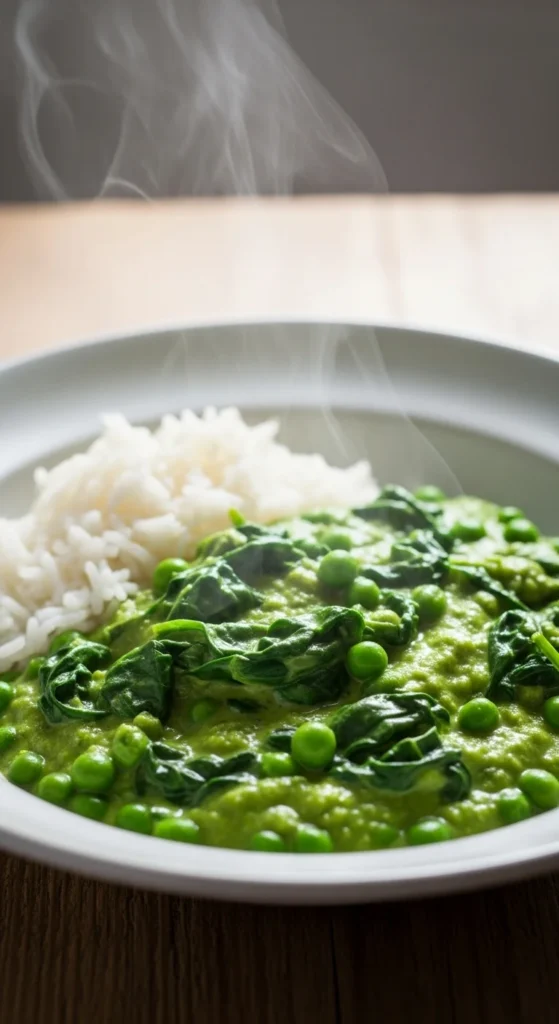
This is a gentle, comforting curry that still feels right for spring. Coconut milk gives it creaminess without heaviness, peas keep it sweet and bright, and spinach melts in softly at the end. It’s a reliable plant-based spring meal that doesn’t need complicated spices to taste good.
Ingredients
- 1 tbsp coconut oil or neutral oil
- 1 small onion, finely chopped
- 3 cloves garlic, minced
- 1 tbsp fresh ginger, grated
- 1 tsp ground coriander
- ½ tsp turmeric
- 1 cup frozen or fresh peas
- 1 can (400 ml) full-fat coconut milk
- 2 cups fresh spinach
- Salt, to taste
- Lime juice, to taste
Instructions
- Heat oil in a saucepan over medium heat. Add onion and cook until soft and translucent, about 5 minutes.
- Stir in garlic and ginger and cook for 30 seconds until fragrant.
- Add coriander and turmeric and stir briefly to bloom the spices.
- Add peas and coconut milk, stirring well. Bring to a gentle simmer.
- Cook uncovered for 8–10 minutes until peas are tender and the sauce thickens slightly.
- Stir in spinach and cook just until wilted.
- Season with salt and finish with lime juice.
How to Serve
Serve over warm basmati rice or jasmine rice so the sauce soaks in properly. For a lighter option, serve it with steamed greens or flatbread. Let it sit for a few minutes before serving so the flavors settle and the curry thickens naturally.
14. Vegan Spring Vegetable Stir-Fry with Ginger Soy Sauce
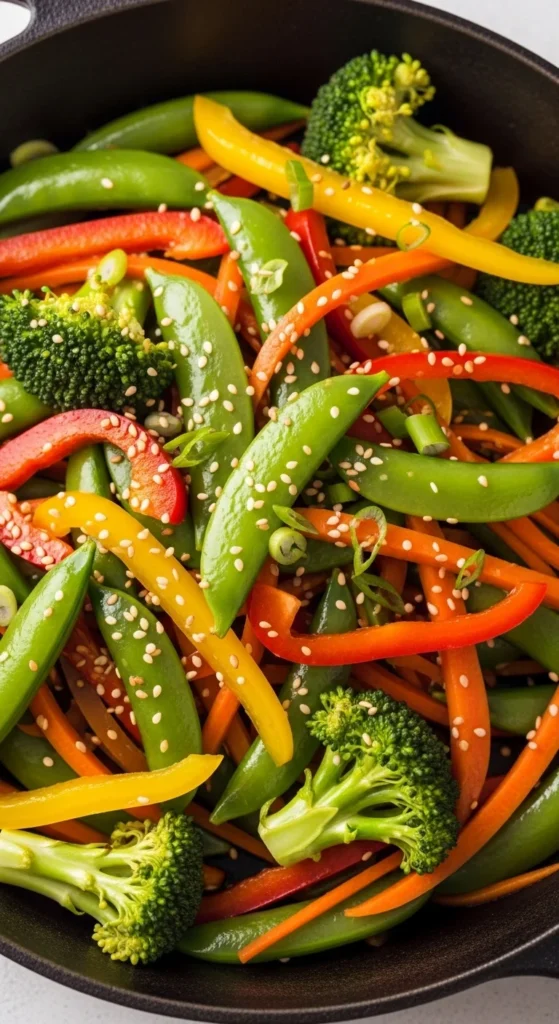
This stir-fry is fast, fresh, and flexible, which makes it ideal for springtime vegan recipes. Ginger adds warmth, soy sauce adds depth, and crisp vegetables keep the dish lively instead of heavy. It’s the kind of meal you make when you want dinner on the table quickly but still balanced.
Ingredients
- 1 tbsp sesame oil or neutral oil
- 1 tbsp fresh ginger, grated
- 2 cloves garlic, minced
- 1 cup snap peas
- 1 red bell pepper, sliced
- 1 cup broccoli florets
- 2 tbsp soy sauce or tamari
- 1 tbsp rice vinegar
- 1 tsp maple syrup
- Black pepper, to taste
Instructions
- Heat oil in a large pan or wok over medium-high heat.
- Add ginger and garlic and stir for 20 seconds until fragrant.
- Add vegetables and stir-fry for 4–5 minutes until crisp-tender.
- In a small bowl, mix soy sauce, rice vinegar, and maple syrup.
- Pour sauce into the pan and toss quickly to coat vegetables evenly.
- Cook for 1–2 more minutes until glossy and well combined.
- Season lightly with black pepper.
How to Serve
Serve immediately over hot rice or noodles so the sauce stays balanced and doesn’t thicken too much. If serving as part of a larger spread, keep it slightly undercooked so the vegetables stay crisp when reheated.
15. Pan-Roasted Broccoli with Chili and Lemon
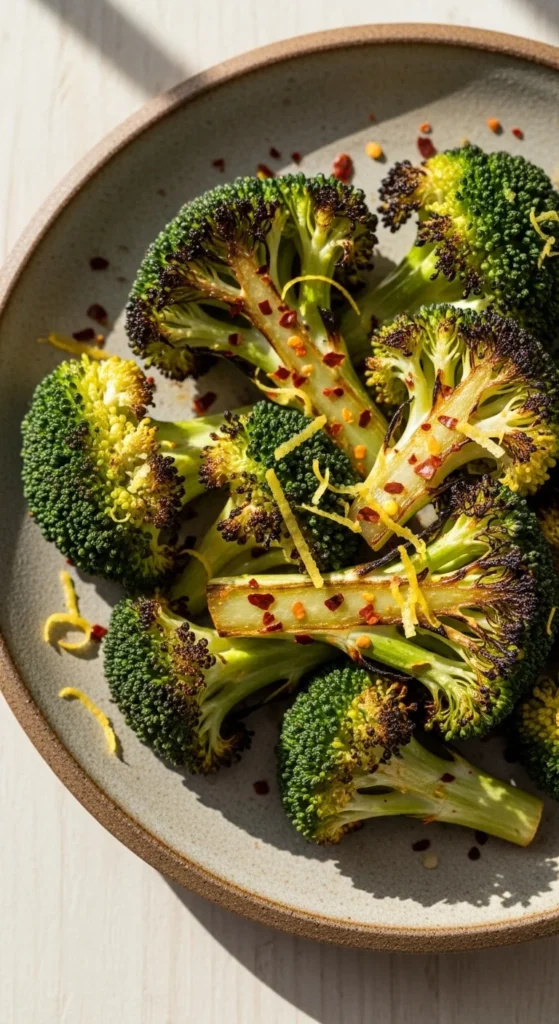
This is a simple spring vegetarian side that delivers big flavor. High heat gives the broccoli crisp edges, chili adds warmth, and lemon keeps everything fresh. It works just as well next to grains as it does on its own.
Ingredients
- 2 heads broccoli, cut into florets
- 2 tbsp olive oil
- ½ tsp chili flakes
- Zest of 1 lemon
- Lemon juice, to taste
- Salt, to taste
Instructions
- Heat a large pan over medium-high heat and add olive oil.
- Add broccoli in a single layer and let it cook undisturbed for 2–3 minutes.
- Stir and continue cooking until browned and tender, about 6–8 minutes total.
- Add chili flakes and toss briefly.
- Remove from heat and add lemon zest and lemon juice.
- Season with salt and toss again.
How to Serve
Serve this broccoli hot as a side for pasta, grain bowls, or chickpea burgers. If serving later, reheat in a hot pan instead of the microwave to bring back the crisp edges.
16. Chickpea Burger with Fresh Herb Slaw
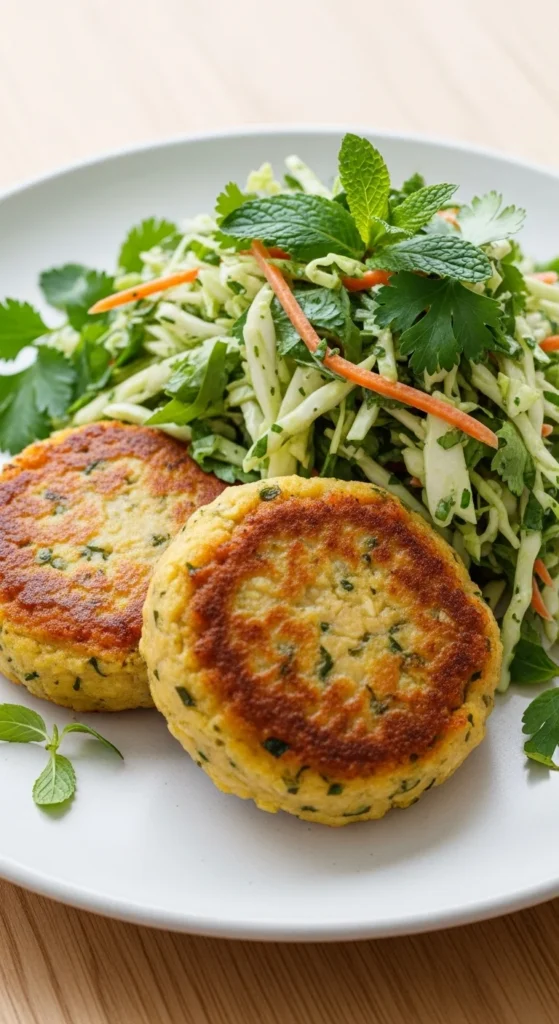
This chickpea burger is hearty without feeling heavy, making it ideal for spring plant based meals. The fresh herb slaw keeps it balanced and adds crunch, so the burger never feels dry or dense.
Ingredients
For the burger
- 2 cups cooked chickpeas
- ½ cup breadcrumbs
- 2 tbsp olive oil
- 1 clove garlic, minced
- 1 tsp ground cumin
- Salt and black pepper
For the herb slaw
- Shredded cabbage
- Fresh parsley and dill, chopped
- Lemon juice
- Olive oil
- Salt
Instructions
- Mash chickpeas roughly, leaving some texture.
- Mix in breadcrumbs, olive oil, garlic, cumin, salt, and pepper.
- Form into patties and chill for 15 minutes to firm up.
- Pan-cook patties over medium heat for 4–5 minutes per side until golden.
- Toss slaw ingredients together just before serving.
How to Serve
Serve the burger warm with the slaw piled on top so the contrast stays fresh and crisp. It works well on a bun, wrapped in lettuce, or plated with roasted potatoes for a full vegan spring dinner.
17. Herbed Quinoa Bowl with Roasted Spring Vegetables
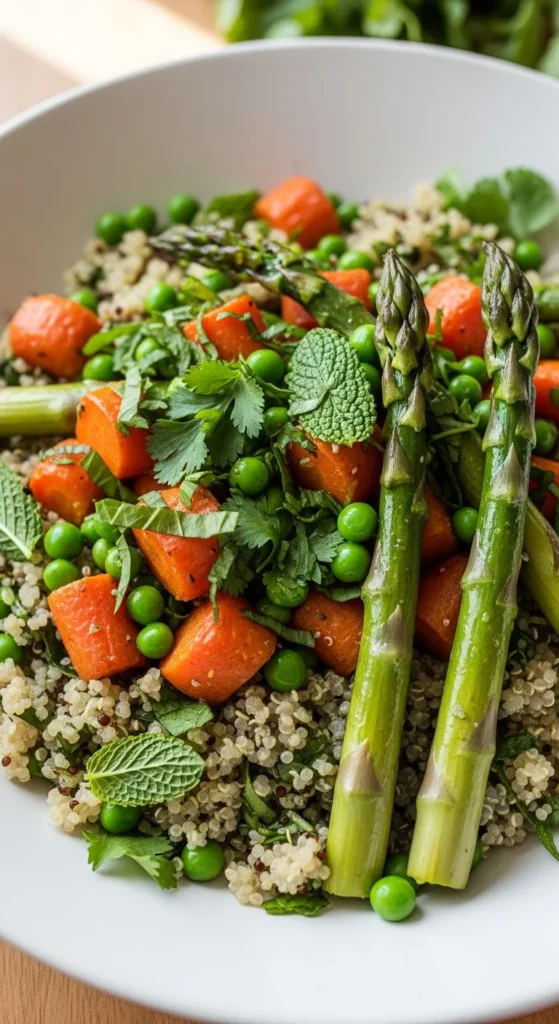
This quinoa bowl is filling, flexible, and perfect for spring vegetarian meals. Fresh herbs keep it lively, roasted vegetables add depth, and quinoa provides enough protein to make it satisfying without heaviness.
Ingredients
- 1 cup quinoa
- 2 cups water or vegetable broth
- Assorted spring vegetables (carrots, asparagus, peas)
- 2 tbsp olive oil
- Fresh parsley and mint, chopped
- Lemon juice, to taste
- Salt and black pepper
Instructions
- Rinse quinoa and cook with water or broth according to package instructions.
- Roast vegetables at 200°C (400°F) with olive oil and salt for 20–25 minutes.
- Fluff quinoa and season with salt, pepper, and lemon juice.
- Fold in fresh herbs gently.
- Top with roasted vegetables.
How to Serve
Serve warm or slightly room temperature so the herbs stay aromatic. This bowl works well for meal prep; store components separately and assemble just before eating to keep textures fresh.
18. Vegan Feta and Tomato Spring Flatbread
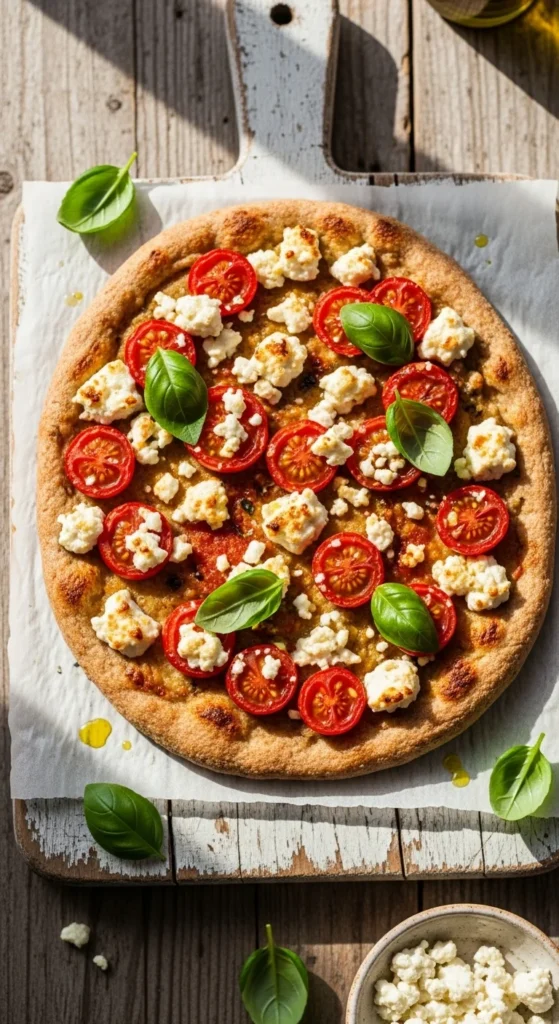
This flatbread is for days when you want something that feels homemade but not heavy. The salty vegan feta balances the sweet acidity of tomatoes, and the flatbread stays crisp instead of doughy. It works as a light dinner, a shared lunch, or something you slice up and put in the middle of the table without overthinking it.
Ingredients
- Flatbread or naan
- Vegan feta cheese, crumbled
- Cherry tomatoes, sliced
- Olive oil
- Garlic, finely grated
- Salt and black pepper
- Fresh basil or parsley
Instructions
- Preheat the oven to 220°C (425°F). Place the flatbread directly on a baking tray.
- Brush the surface lightly with olive oil and spread a small amount of grated garlic evenly.
- Scatter vegan feta over the flatbread, keeping some space so it doesn’t melt into one solid layer.
- Add sliced tomatoes evenly across the top and season lightly with salt and black pepper.
- Bake for 10–12 minutes until the edges are crisp and the tomatoes soften slightly.
- Remove from the oven and finish with fresh herbs and a light drizzle of olive oil.
How to Serve
Cut this into wide slices rather than small squares so each piece holds its topping. Bring it to the table on a wooden board and let people grab slices casually. If this is dinner, add a simple green salad or a bowl of olives alongside so it feels complete without adding heaviness.
19. Tofu and Snap Pea Stir-Fry with Garlic Lime Sauce
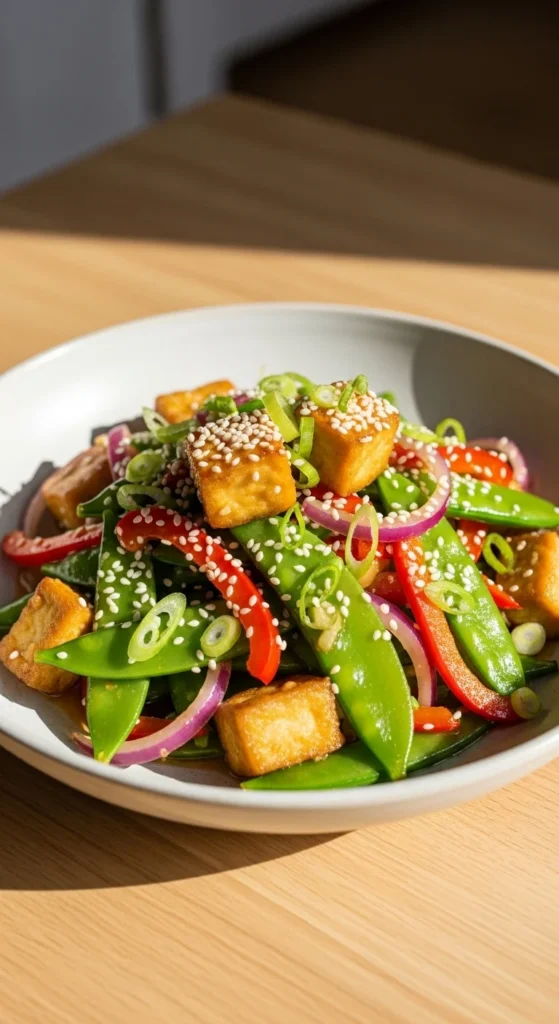
This is the kind of stir-fry that stays fresh instead of greasy. The snap peas keep their crunch, the tofu absorbs the sauce, and the lime cuts through everything. It’s quick, but it doesn’t taste rushed.
Ingredients
- Firm tofu, pressed and cubed
- Snap peas, trimmed
- Garlic, minced
- Fresh lime juice and zest
- Soy sauce or tamari
- Olive or neutral oil
- Sesame seeds (optional)
- Green onions, sliced
Instructions
- Heat a wide pan over medium heat with oil. Add tofu and cook until golden on multiple sides. Remove and set aside.
- In the same pan, add a little more oil and sauté garlic briefly until fragrant.
- Add snap peas and stir-fry for 2–3 minutes so they stay bright and crisp.
- Return tofu to the pan. Add soy sauce, lime juice, and zest.
- Toss everything together for 1–2 minutes until the sauce coats evenly.
- Taste and adjust with more lime or soy sauce if needed.
How to Serve
Spoon this into shallow bowls so the sauce spreads instead of pooling. Add green onions and sesame seeds at the table, not earlier, so they stay fresh and aromatic. If you’re serving guests, place rice or noodles in a separate bowl so everyone can build their plate the way they like.
20. Spring Vegetable Fried Rice with Fresh Herbs
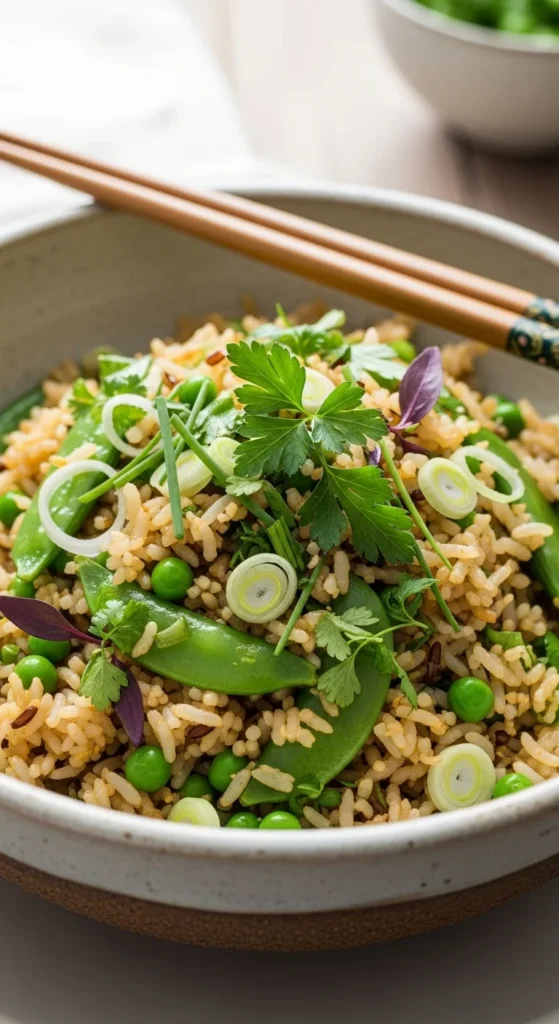
This fried rice is lighter than the usual takeout version. Fresh herbs lift the whole dish, and the vegetables keep it from feeling heavy. It’s ideal when you want something comforting that still fits into spring vegan meals.
Ingredients
- Cooked rice, cooled
- Green peas or mixed spring vegetables
- Garlic, minced
- Soy sauce or tamari
- Olive or sesame oil
- Fresh herbs (parsley, cilantro, or dill)
- Green onions
Instructions
- Heat oil in a large pan over medium-high heat. Add garlic and cook briefly.
- Add vegetables and cook until just tender.
- Add rice and spread it out so it reheats evenly. Let it sit for a minute before stirring.
- Stir in soy sauce and toss until everything is evenly coated.
- Remove from heat and fold in chopped fresh herbs and green onions.
- Taste and adjust seasoning.
How to Serve
Serve this family-style in a wide serving bowl so the herbs stay visible and vibrant. Bring chili oil, lemon wedges, or extra herbs to the table so people can adjust flavors themselves. This works especially well alongside a simple salad or grilled vegetables.
21. No-Cook Tomato and White Bean Salad
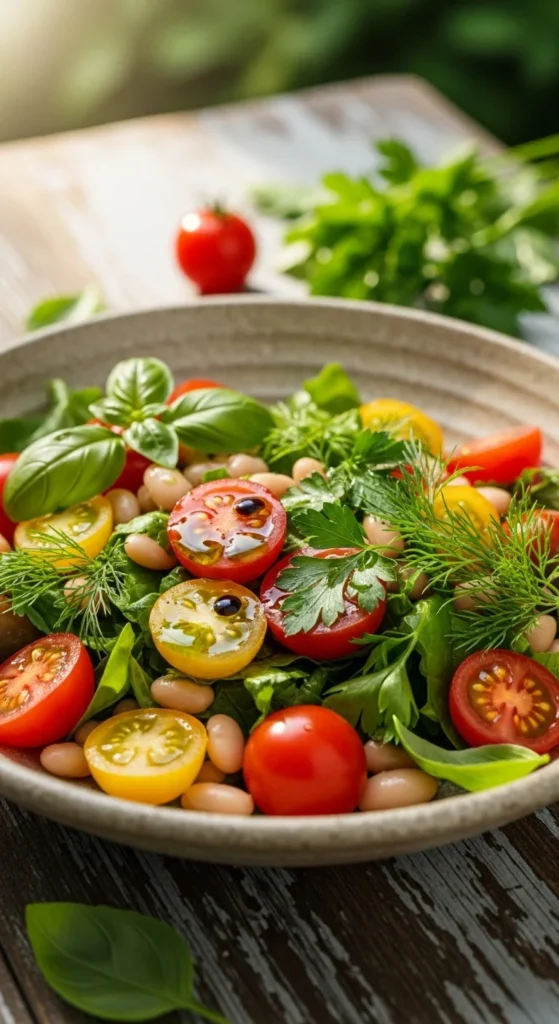
This salad is proof that simple ingredients can still feel intentional. The beans make it filling, the tomatoes bring freshness, and there’s no cooking involved. It’s especially useful when you want something light but not forgettable.
Ingredients
- White beans, drained and rinsed
- Ripe tomatoes, chopped
- Olive oil
- Lemon juice
- Garlic, finely grated
- Fresh herbs
- Salt and black pepper
Instructions
- Add beans and tomatoes to a large bowl.
- Whisk olive oil, lemon juice, garlic, salt, and pepper in a small bowl.
- Pour dressing over the salad and toss gently.
- Fold in chopped herbs just before serving.
- Taste and adjust seasoning.
How to Serve
Use a wide bowl so the beans and tomatoes aren’t stacked on top of each other. Let it sit on the table for a few minutes before eating so the flavors settle. Serve with crusty bread so people can scoop everything together instead of eating it piece by piece.
22. Grilled Asparagus and Mushroom Plate with Lemon
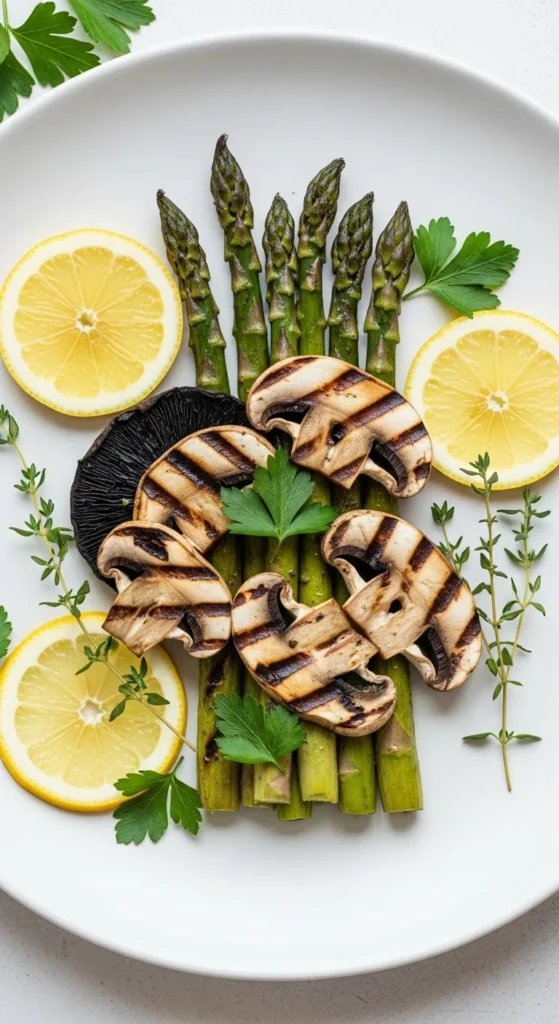
This dish is simple but satisfying. Grilling brings depth without heaviness, and lemon keeps everything fresh. It works equally well as a main plate or as part of a larger spread.
Ingredients
- Asparagus, trimmed
- Mushrooms, halved
- Olive oil
- Lemon zest and juice
- Garlic powder or fresh garlic
- Salt and black pepper
Instructions
- Preheat a grill pan or outdoor grill to medium-high heat.
- Toss vegetables with olive oil, garlic, salt, and pepper.
- Grill asparagus and mushrooms until lightly charred and tender.
- Transfer to a plate and finish with lemon zest and juice.
- Taste and adjust seasoning.
How to Serve
Lay everything out on a large plate instead of piling it up so the vegetables stay crisp. Add lemon wedges to the side so people can brighten their own portion. This pairs well with grains, flatbread, or a protein-heavy salad if you want to turn it into a full spring vegan dinner.
23. Zesty Cucumber, Mint, and Chickpea Salad
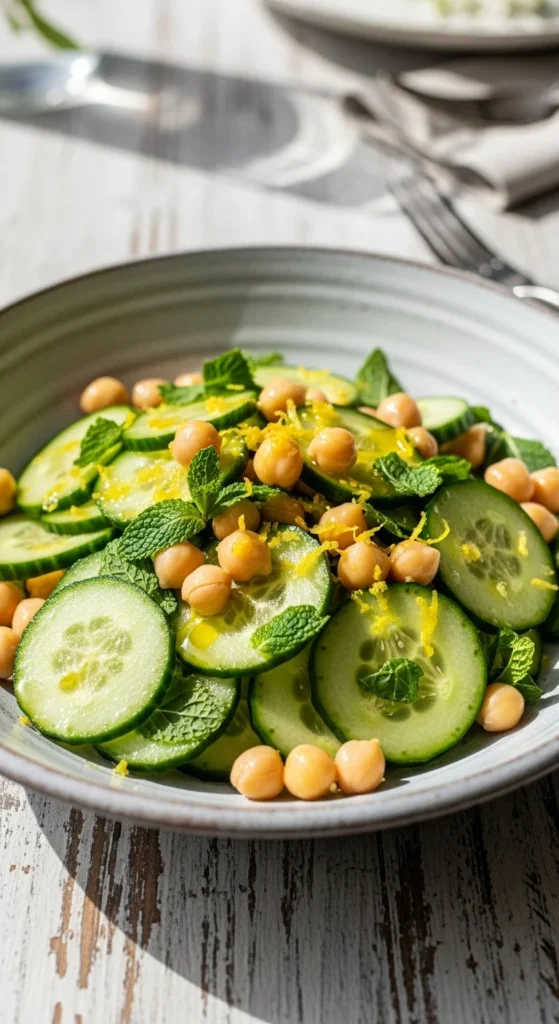
This is the kind of salad you make when you want something cold, crisp, and actually refreshing, not limp or overdressed. The chickpeas make it filling enough to matter, while cucumber and mint keep it light. It’s quick, but it doesn’t feel lazy, and it works especially well when the rest of the meal is warm or rich.
Ingredients
- Canned chickpeas, drained and rinsed
- English cucumber, diced
- Fresh mint leaves, finely chopped
- Fresh lemon juice
- Lemon zest
- Extra-virgin olive oil
- Salt
- Black pepper
Instructions
- Add the chickpeas to a large bowl and lightly mash a few of them with the back of a spoon. This helps the dressing cling instead of sliding off.
- Add the diced cucumber and chopped mint.
- In a small bowl, whisk lemon juice, lemon zest, olive oil, salt, and black pepper until balanced and bright.
- Pour the dressing over the salad and toss gently until everything is evenly coated.
- Taste and adjust with more lemon or salt if needed. The flavor should feel clean and sharp, not oily.
How to Serve
Spoon this into a wide, shallow bowl so the cucumbers stay crisp instead of sinking into dressing. Put it next to grilled vegetables, flatbreads, or a warm grain dish. If you’re serving a spring vegan dinner, this works best as the fresh counterpoint to something roasted or creamy.
24. Vegan Succotash with Herbs and Citrus
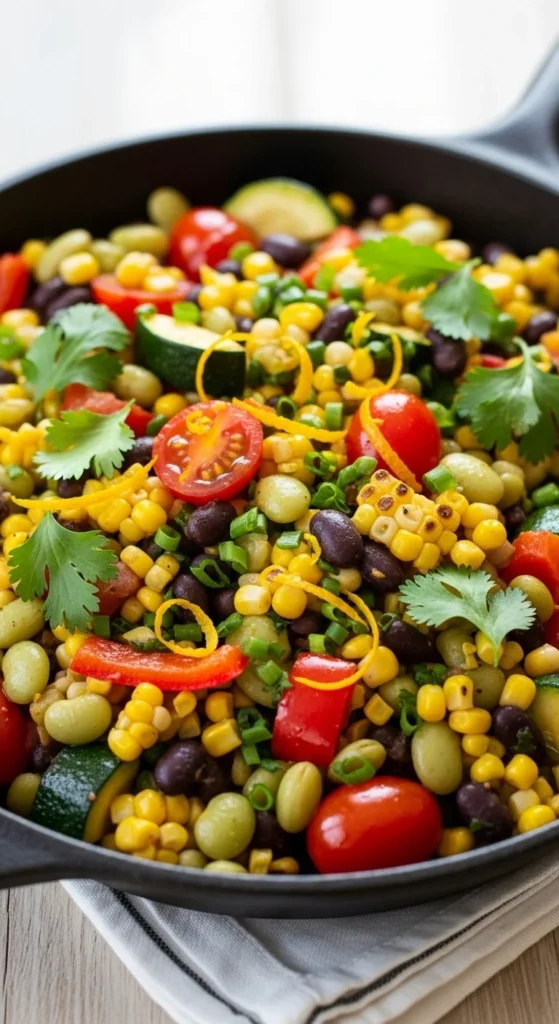
This is not a heavy side dish. It’s bright, slightly sweet, and herby, and it makes vegetables feel generous instead of restrictive. Succotash works because it’s familiar but flexible, and the citrus keeps it from tasting flat or starchy.
Ingredients
- Corn kernels, fresh or frozen
- Cooked beans (lima beans or white beans)
- Olive oil
- Garlic, finely minced
- Lemon or lime zest
- Fresh lemon or lime juice
- Fresh herbs (parsley, basil, or dill), chopped
- Salt
- Black pepper
Instructions
- Heat olive oil in a wide pan over medium heat.
- Add garlic and cook just until fragrant, about 30 seconds. Do not let it brown.
- Add corn and cook until heated through and lightly glossy.
- Stir in the beans and cook for another 2–3 minutes until everything is warm.
- Remove from heat and add citrus zest, juice, herbs, salt, and pepper.
- Stir gently and taste. The final dish should feel fresh, not buttery or heavy.
How to Serve
Serve this warm, not piping hot. Let it sit for a minute so the herbs stay bright. It works best spooned next to grilled mains, roasted potatoes, or as part of a spring plant-based meal spread. If you’re serving multiple dishes, this is your color and freshness anchor.
25. Light Green Goddess Salad with Mixed Spring Greens
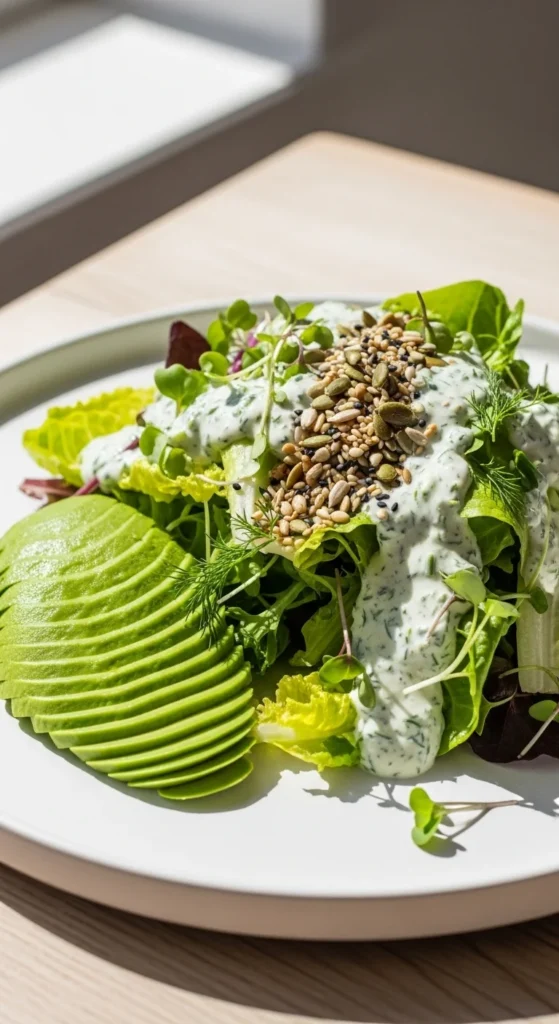
This salad is about balance. It’s creamy without being heavy, green without tasting grassy, and filling enough to stand on its own if needed. The dressing is where this lives or dies, so take your time blending it smooth and tasting as you go.
Ingredients
- Mixed spring greens
- Avocado
- Fresh herbs (parsley, chives, basil)
- Lemon juice
- Olive oil
- Garlic
- Plant-based yogurt or soaked cashews (for creaminess)
- Salt
- Black pepper
- Optional seeds for topping
Instructions
- Add herbs, lemon juice, garlic, yogurt or cashews, olive oil, salt, and pepper to a blender.
- Blend until smooth and pale green. Taste and adjust acidity and salt.
- Wash and dry the greens thoroughly so the dressing coats instead of sliding off.
- Toss greens lightly with just enough dressing to coat, not drown.
- Add sliced avocado and gently fold it in.
How to Serve
Serve this in a large bowl so the greens stay loose and airy. This works best as the main salad on the table, especially alongside roasted vegetables or a grain-based vegan spring dinner. If you’re plating it, finish with seeds for texture right before serving.
Conclusion
Spring food should feel easy to come back to. These recipes are here for days when you want something fresh, filling, and plant-based without turning cooking into a project. Use them as anchors, mix them with what you already like, and adjust as you go. Once you make a few of these, you’ll know exactly which ones fit your routine and which ones become your go-to spring meals.
Leave a Reply