

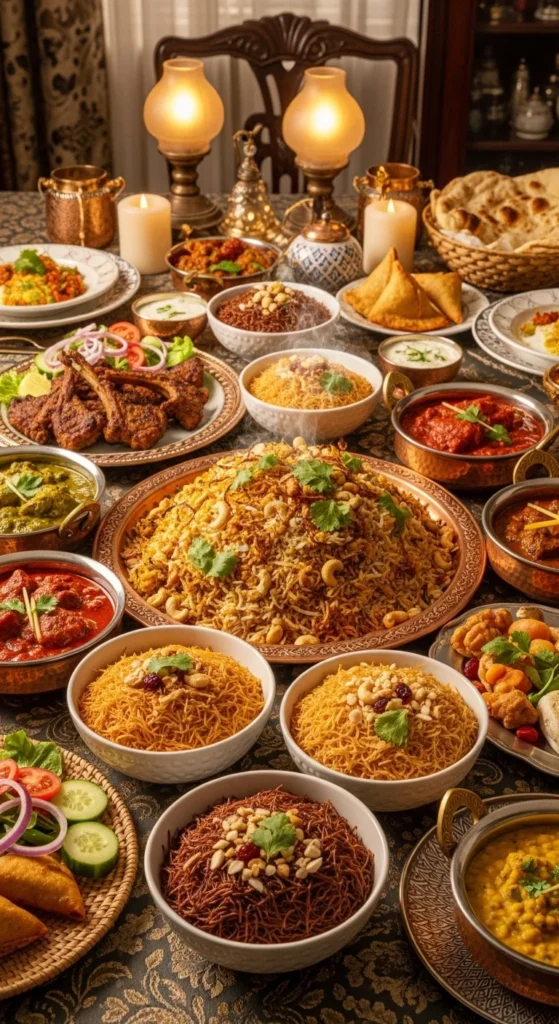
Some Eid dishes are more than just food. They bring back memories of childhood mornings, busy kitchens, and family gathered around the table. The smell of milk simmering with cardamom or ghee warming in a pan can instantly feel familiar.
This series is about those comfort foods many of us connect with Eid at home. Simple, traditional, and full of nostalgia. We will begin with three sweet classics that often appear first on the Eid table.
1. Sheer Khurma
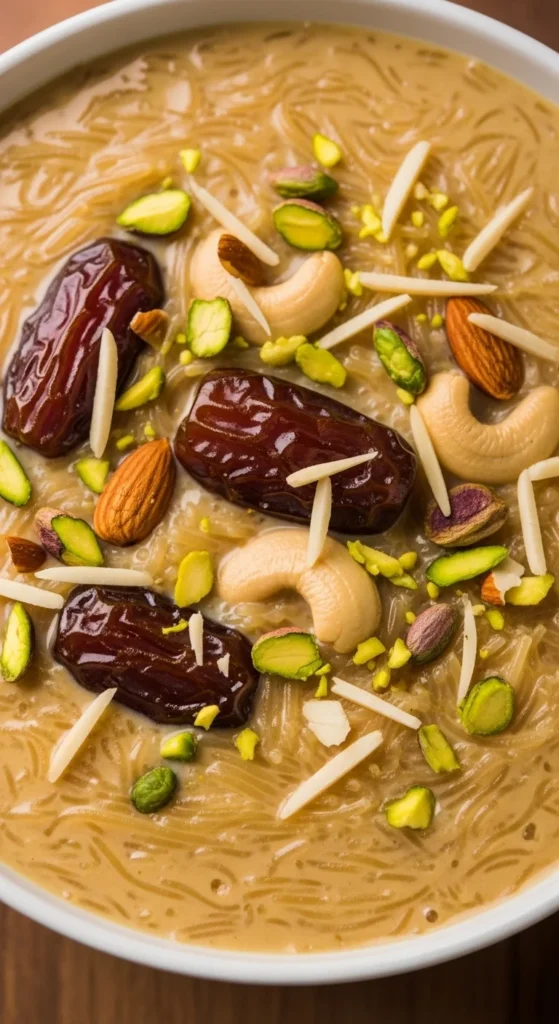
Sheer khurma is one of the most recognized Eid desserts in South Asian homes. Many families start Eid morning with a bowl of it. The mix of milk, dates, nuts, and vermicelli gives it a rich but comforting taste. Every household has a slightly different version, which makes it personal.
Ingredients
- 1 liter full-fat milk
- ½ cup thin vermicelli
- 2 tbsp ghee
- 8–10 dates, chopped
- 2–3 tbsp sugar (to taste)
- 2–3 tbsp mixed nuts (almonds, pistachios, cashews)
- ½ tsp cardamom powder
Instructions
- Heat ghee in a pot and roast vermicelli until light golden.
- Add milk and bring to a gentle boil.
- Add dates, sugar, nuts, and cardamom.
- Simmer for 12–15 minutes until slightly thick.
- Stir occasionally to avoid sticking.
How to Serve It
Serve warm on Eid morning or chilled later in the day. Garnish with extra nuts. Small bowls are traditional since they are rich.
2. Meethi Seviyan
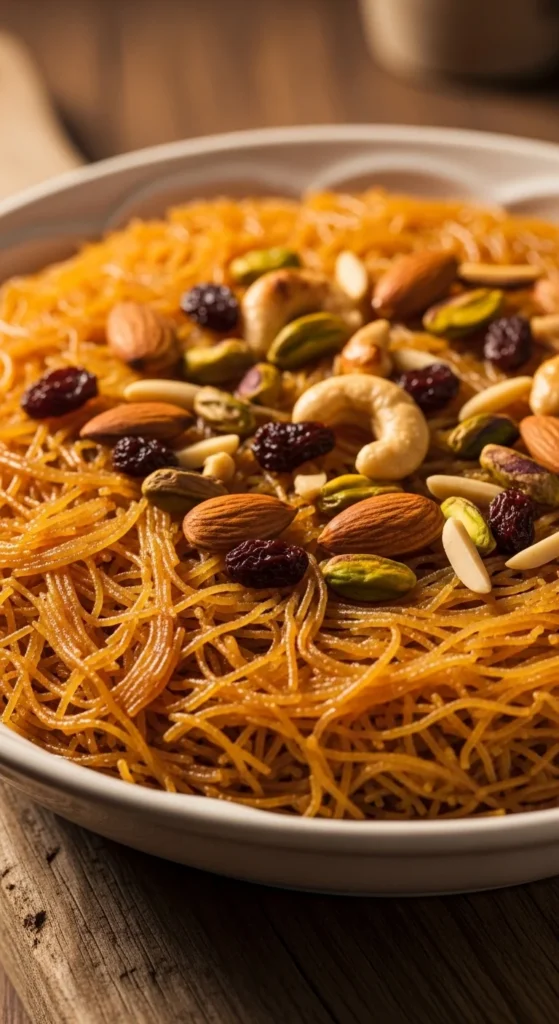
Meethi seviyan is a quicker, drier version of sweet vermicelli. It is common in homes where a lighter sweet is preferred. The ghee-roasted vermicelli and sugar give a simple, familiar flavor. It is often made in large batches for guests.
Ingredients
- 2 cups thin vermicelli
- 3 tbsp ghee
- ½ cup sugar
- ¼ cup mixed nuts and raisins
- ½ tsp cardamom powder
- 1 cup water
Instructions
- Heat ghee and roast vermicelli until golden.
- Add nuts and raisins; sauté briefly.
- Add water and sugar.
- Cook on low until water absorbs and vermicelli softens.
- Sprinkle cardamom and mix.
How to Serve It
Serve warm or at room temperature. Fluff gently before serving. Often paired with tea when guests visit.
3. Zarda Sweet Rice
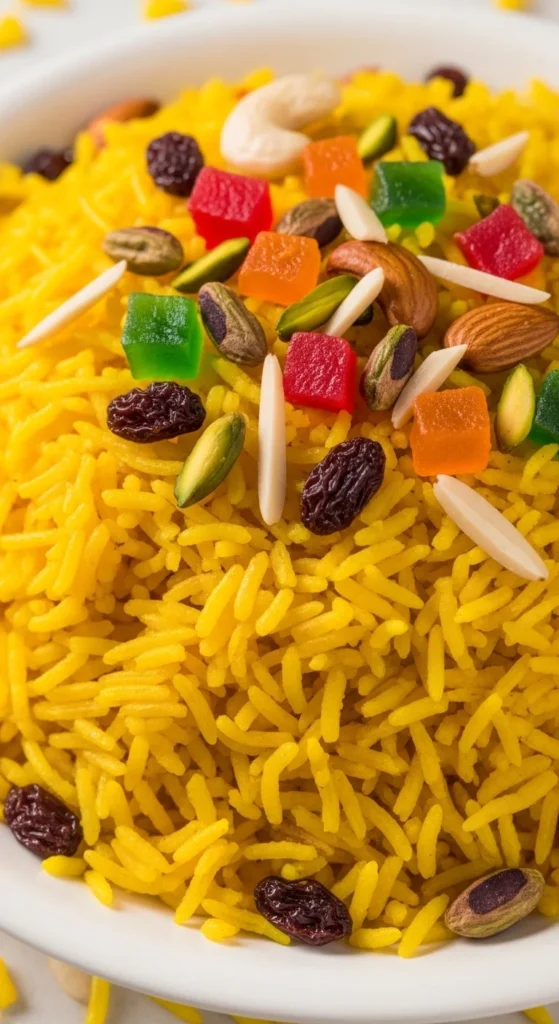
Zarda is known for its bright color and festive look. It is sweet rice flavored with cardamom and sugar, often decorated with nuts and candied fruit. Many families prepare it for large Eid gatherings. Its appearance alone makes the table feel celebratory.
Ingredients
- 2 cups basmati rice
- ¾ cup sugar
- 3 tbsp ghee
- 2–3 tbsp mixed nuts and raisins
- ½ tsp cardamom powder
- Yellow food color (small pinch, optional)
- 3–4 cups water
Instructions
- Boil rice with water and a pinch of color until about 90% cooked. Drain.
- Heat ghee in a pot, add rice and sugar.
- Add nuts and cardamom.
- Cover and cook on very low heat 8–10 minutes until sugar melts and coats rice.
How to Serve It
Serve warm in a wide dish. Garnish with extra nuts. Small portions are common since it is sweet.
4. Gajar Ka Halwa
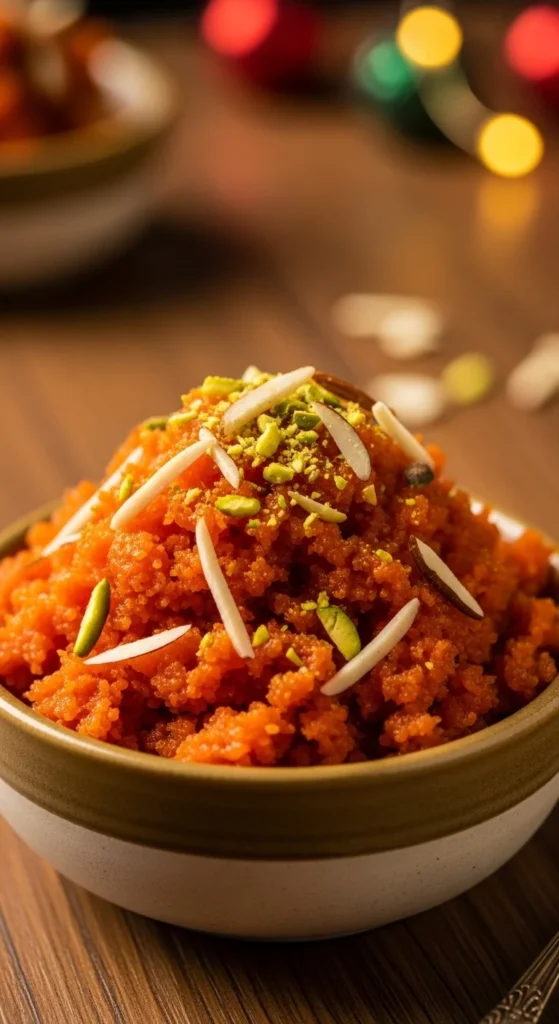
Gajar ka halwa is a winter favorite that often finds its way onto Eid tables too. The slow cooking of carrots in milk and ghee gives it a deep, homely taste. Many people connect it with family gatherings and special days. It is simple but always appreciated.
Ingredients
- 1 kg carrots, grated
- 1 liter full-fat milk
- 4–5 tbsp sugar (to taste)
- 3 tbsp ghee
- 2–3 tbsp mixed nuts
- ½ tsp cardamom powder
Instructions
- Add grated carrots and milk to a pot.
- Cook on medium heat until milk reduces, stirring occasionally.
- Add sugar and cook until moisture mostly dries.
- Stir in ghee, nuts, and cardamom.
- Cook a few more minutes until glossy.
How to Serve It
Serve warm for the best taste. Garnish with nuts. Many enjoy it with a small scoop of cream on top.
5. Kheer (Rice Pudding)
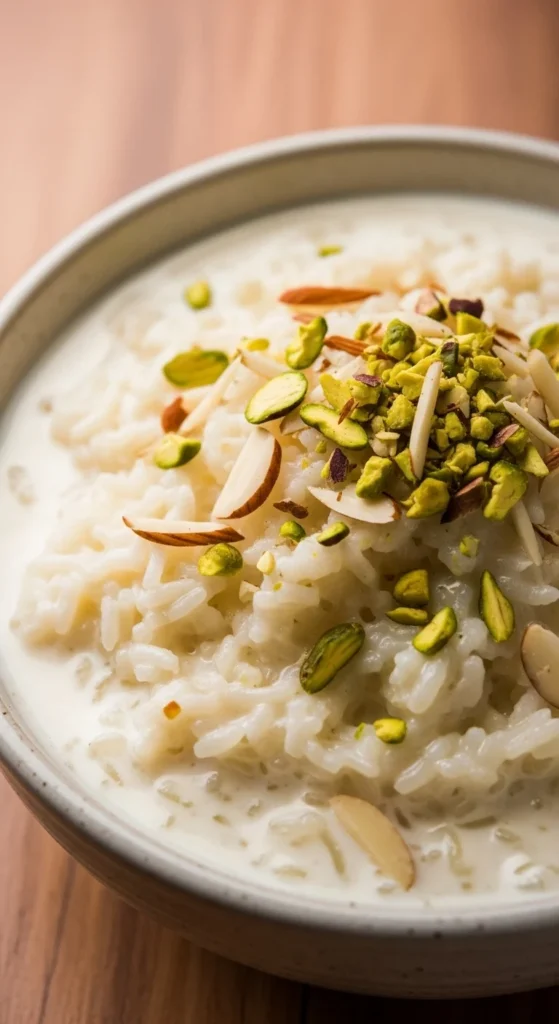
Rice kheer is one of the most comforting desserts in many homes. The gentle flavor of milk and cardamom makes it familiar. It does not require fancy ingredients. It is often made for both religious and family occasions.
Ingredients
- 1 liter full-fat milk
- 3 tbsp rice (washed and soaked 20 minutes)
- 3–4 tbsp sugar (to taste)
- 2 tbsp mixed nuts
- ½ tsp cardamom powder
Instructions
- Bring milk to a boil.
- Add soaked rice and cook on low.
- Stir often so it does not stick.
- When thick, add sugar, nuts, and cardamom.
- Simmer for a few more minutes.
How to Serve It
Serve warm or chilled. Garnish with nuts. It thickens more as it cools, so adjust consistency before serving.
6. Shahi Tukra
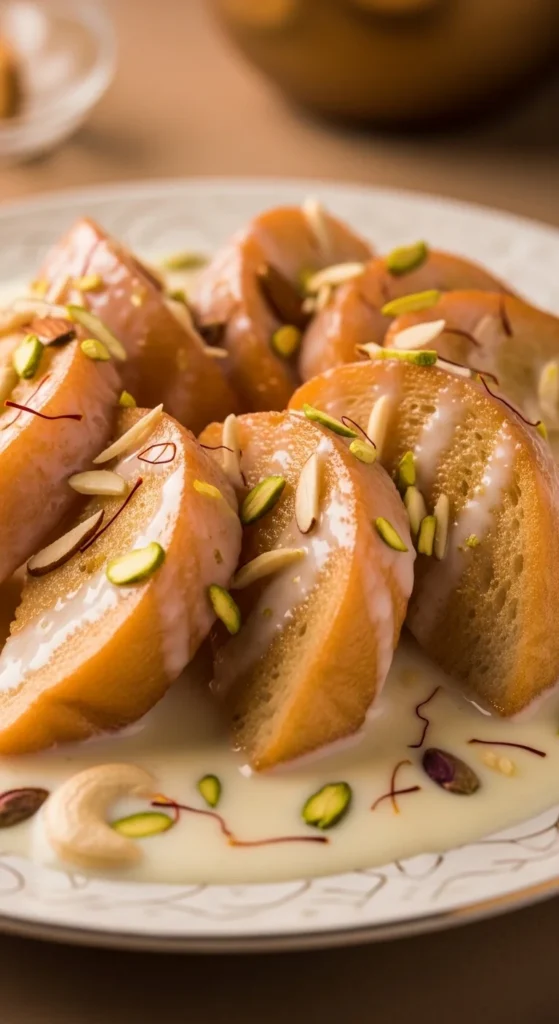
Shahi tukra is a royal-style dessert made from fried bread and sweet milk. It is rich and often served at special gatherings. The combination of crisp bread and creamy topping gives a nice contrast. It is a classic choice for festive meals.
Ingredients
- 4–6 bread slices
- Oil or ghee for frying
- 2 cups milk
- 3–4 tbsp sugar
- 2 tbsp condensed milk (optional)
- ½ tsp cardamom powder
- 2 tbsp mixed nuts
Instructions
- Cut bread edges and fry slices until golden.
- Boil milk with sugar and cardamom until slightly thick.
- Add condensed milk if using.
- Place fried bread in a dish and pour milk mixture over.
- Sprinkle nuts on top.
How to Serve It
Serve slightly warm or chilled. Let the bread soak a bit before serving. Small portions are best since they are rich.
7. Phirni
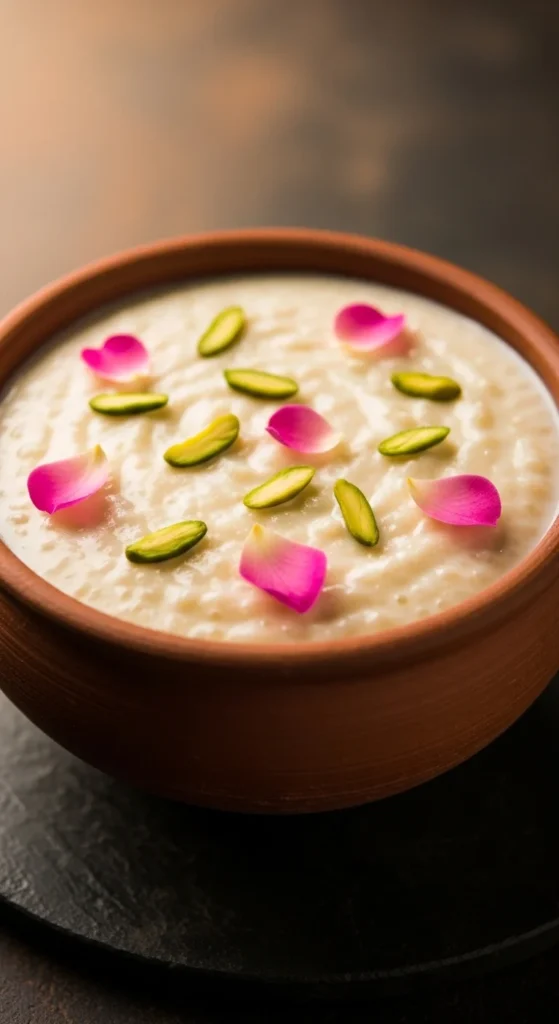
Phirni is a close cousin of kheer but has its own special place on festive tables. It is made with ground rice, which gives it a smoother texture. Many families serve it in clay bowls, which add a traditional touch. Its mild sweetness and cardamom aroma feel very familiar on Eid.
Ingredients
- 1 liter full-fat milk
- 3 tbsp rice (soaked 30 minutes and ground to a paste)
- 3–4 tbsp sugar (to taste)
- ½ tsp cardamom powder
- 2 tbsp chopped nuts
Instructions
- Bring milk to a boil.
- Stir in ground rice paste slowly.
- Cook on low heat, stirring, until thick and creamy.
- Add sugar and cardamom.
- Cook for a few more minutes, then turn off the heat.
How to Serve It
Pour into small bowls and chill. Garnish with nuts before serving. Traditionally served cold for a refreshing finish.
8. Badam Halwa
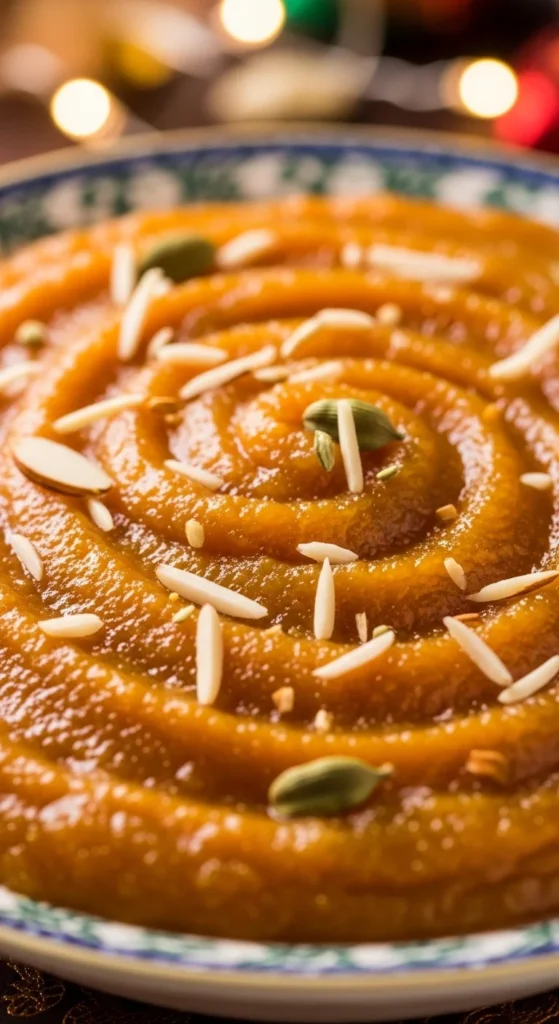
Badam halwa is known for its rich taste and soft texture. It is often made for special guests or big family gatherings. The almond base gives it a naturally creamy feel. Even small servings feel satisfying because it is rich.
Ingredients
- 1 cup almonds (soaked overnight, peeled)
- ½ cup sugar
- ¼–⅓ cup ghee
- ½ cup milk
- ½ tsp cardamom powder
- A few saffron strands (optional)
Instructions
- Blend soaked almonds with milk into a thick paste.
- Heat ghee in a pan and add almond paste.
- Cook on medium-low, stirring continuously.
- Add sugar and cardamom.
- Cook until mixture thickens and leaves the sides of the pan.
How to Serve It
Serve warm for the best flavor. Garnish with almond slivers. Small portions are ideal since they are rich.
9. Mutton Korma
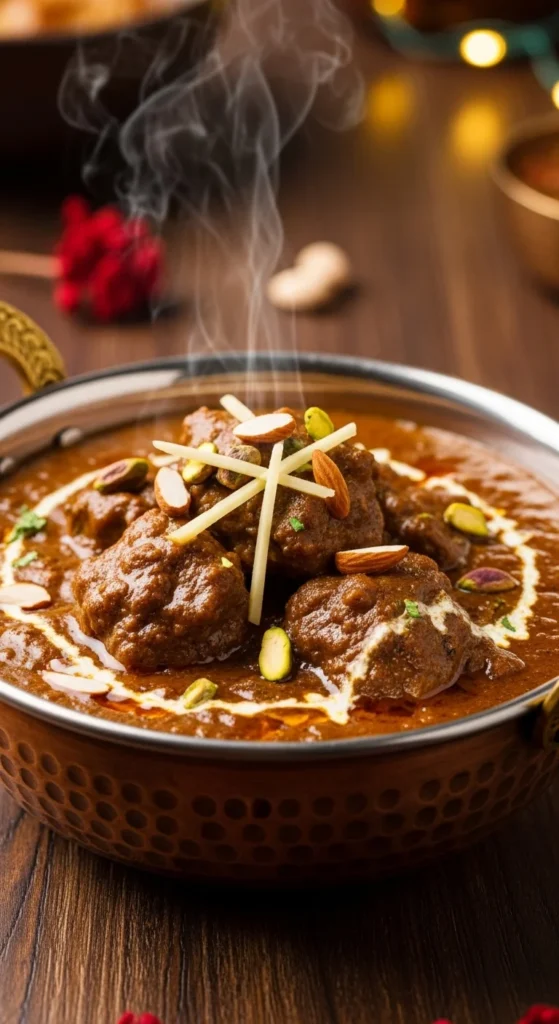
Mutton korma is one of those dishes that many people associate with big Eid lunches. The slow cooking and yogurt-based gravy give it a deep, comforting flavor. It is often prepared when special guests are coming. The aroma alone can fill the whole home.
Ingredients
- 800 g mutton
- 2 onions, thinly sliced
- ½ cup yogurt
- 4 tbsp oil or ghee
- 1 tbsp ginger garlic paste
- 1 tsp coriander powder
- ½ tsp turmeric
- 1 tsp chili powder
- Salt to taste
- ½ tsp garam masala
- 2 tbsp ground nuts or cashew paste (optional)
Instructions
- Fry onions in oil until golden; remove and crush half.
- In the same pot add mutton and ginger garlic paste, cook for a few minutes.
- Add yogurt, spices, salt, and fried onions.
- Cover and cook on low until the meat
- is tender.
- Stir in nut paste and garam masala; simmer for 5–10 minutes.
How to Serve It
Serve hot with naan or sheermal. Garnish lightly with nuts. This dish tastes even better after resting a bit.
10. Beef Nihari
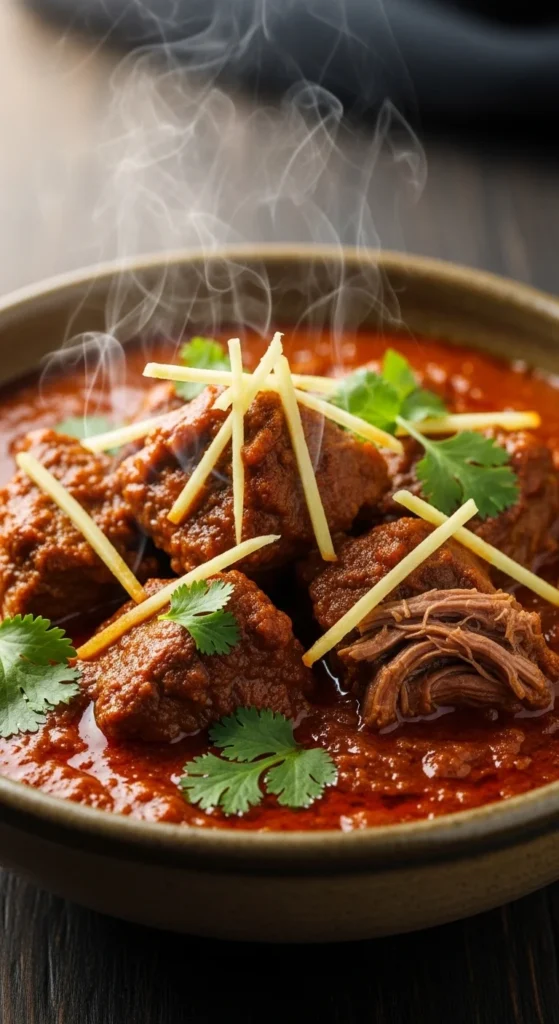
Beef nihari is a classic slow-cooked stew often enjoyed on special mornings. Many families prepare it overnight so it is ready by Eid day. The long cooking gives it a deep, homely taste. It is filling and very traditional.
Ingredients
- 1 kg beef (shank or stew cuts)
- 4 tbsp oil or ghee
- 1 onion, sliced
- 1 tbsp ginger garlic paste
- 2 tbsp nihari masala
- Salt to taste
- 6–7 cups water
- 1–2 tbsp flour mixed in water (optional, for thickening)
Instructions
- Heat oil and fry onions until golden.
- Add beef and ginger garlic paste, cook for a few minutes.
- Add nihari masala, salt, and water.
- Cover and cook on very low heat 2–3 hours until tender.
- Add flour slurry if thicker gravy is desired.
How to Serve It
Serve hot with naan. Garnish with ginger, lemon, and cilantro. Many enjoy it as a main Eid brunch dish.
11. Chicken Karahi
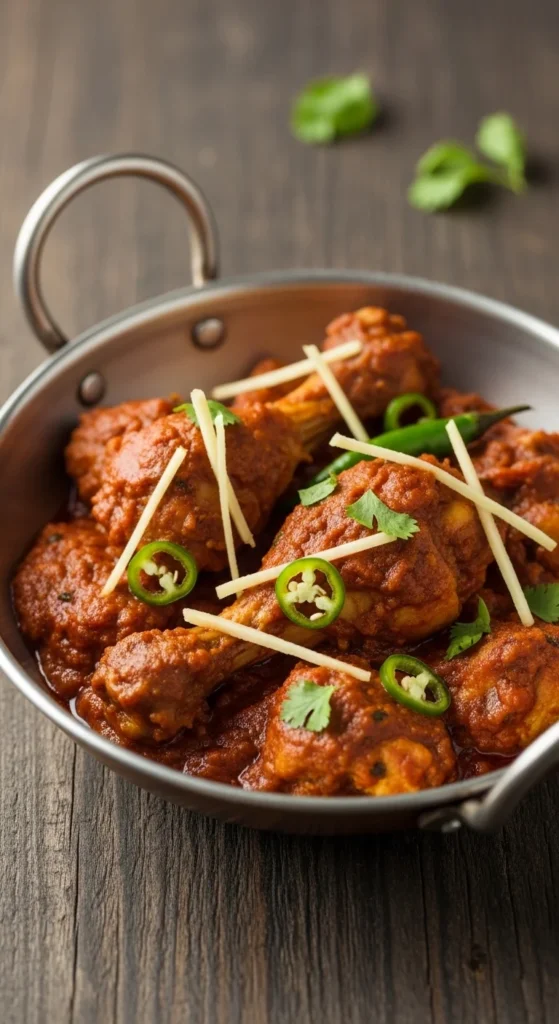
Chicken karahi is a staple in many Eid meals. It uses simple ingredients but gives bold flavor. Fresh tomatoes and green chilies are key. It cooks faster than many curries, which helps on busy days.
Ingredients
- 700 g chicken pieces
- 4 tomatoes, chopped
- 3 tbsp oil
- 1 tbsp ginger garlic paste
- 1 tsp chili powder
- Salt to taste
- 2–3 green chilies
- 1 tsp garam masala
- Ginger strips and cilantro
Instructions
- Heat oil and add chicken; cook until it changes color.
- Add ginger garlic paste and tomatoes.
- Add salt and chili powder; cook until tomatoes break down.
- Cook until oil appears on top.
- Add green chilies and garam masala.
How to Serve It
Serve hot right from the pan. Garnish with ginger and cilantro. Best enjoyed with naan.
12. Mutton Kunna
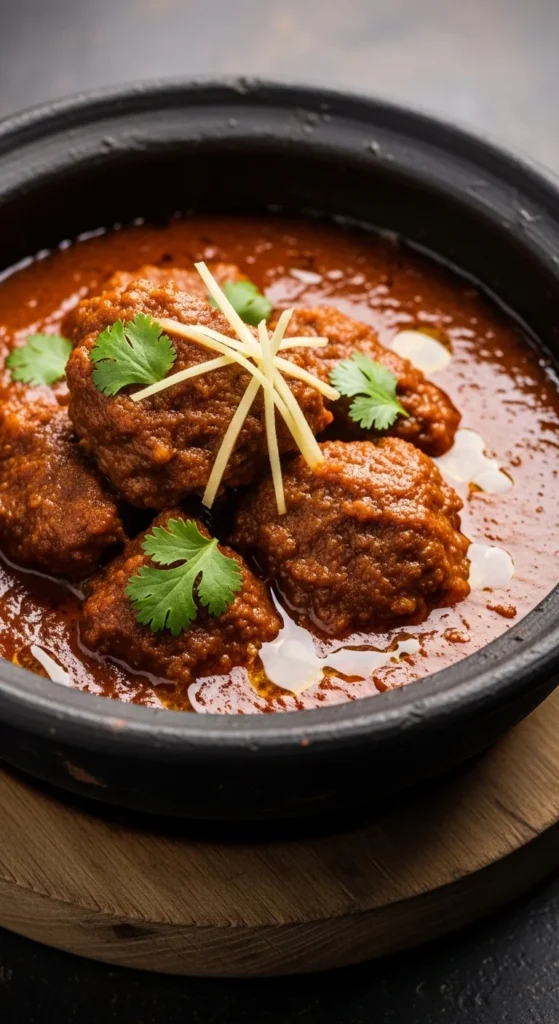
Mutton kunna is a traditional slow-cooked dish known in parts of Pakistan. It is usually cooked in a clay pot, which gives it a unique taste. The gravy is thick and deeply spiced. It is often made for large family gatherings.
Ingredients
- 1 kg mutton
- ½ cup yogurt
- 4 tbsp oil or ghee
- 2 onions, sliced
- 1 tbsp ginger garlic paste
- 1 tsp coriander powder
- 1 tsp chili powder
- Salt to taste
- ½ tsp garam masala
Instructions
- Fry onions in oil until golden.
- Add mutton and ginger garlic paste; cook well.
- Add yogurt, spices, and salt.
- Cover and cook on low heat until the meat is tender and gravy thick.
- Stir occasionally to prevent sticking.
How to Serve It
Serve hot with naan. Keep portions moderate since it is rich. Often placed as a centerpiece dish.
13. Haleem
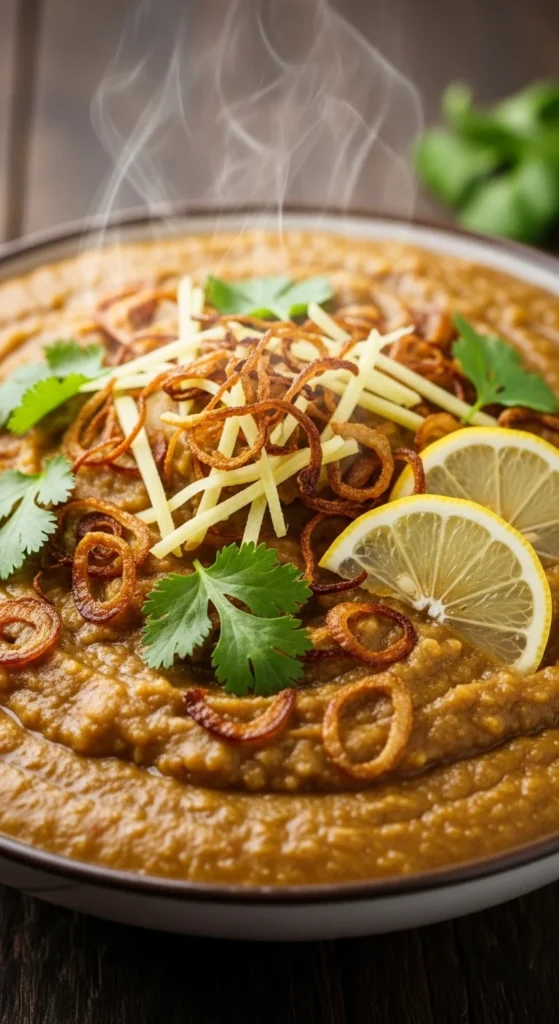
Haleem is a slow-cooked dish many families connect with Ramadan and Eid. The mix of grains, lentils, and meat creates a rich, comforting meal. It takes time but much of it is gentle simmering. Many homes prepare a large pot to share with relatives.
Ingredients
- 500 g beef or mutton (boneless)
- ½ cup wheat or barley
- ¼ cup chana dal
- ¼ cup masoor dal
- 1 onion, sliced
- 3–4 tbsp oil or ghee
- 1 tbsp ginger garlic paste
- 2 tsp haleem masala
- Salt to taste
- 6–7 cups water
Instructions
- Soak grains and lentils for 1 hour.
- Cook meat with ginger garlic paste, salt, and spices until tender.
- Cook soaked grains and lentils until soft.
- Blend grains lightly and mix with meat.
- Simmer together until thick, stirring often.
How to Serve It
Top with fried onions, ginger, cilantro, and lemon. Serve hot with naan. Small bowls work well since it is filling.
14. Aloo Gosht
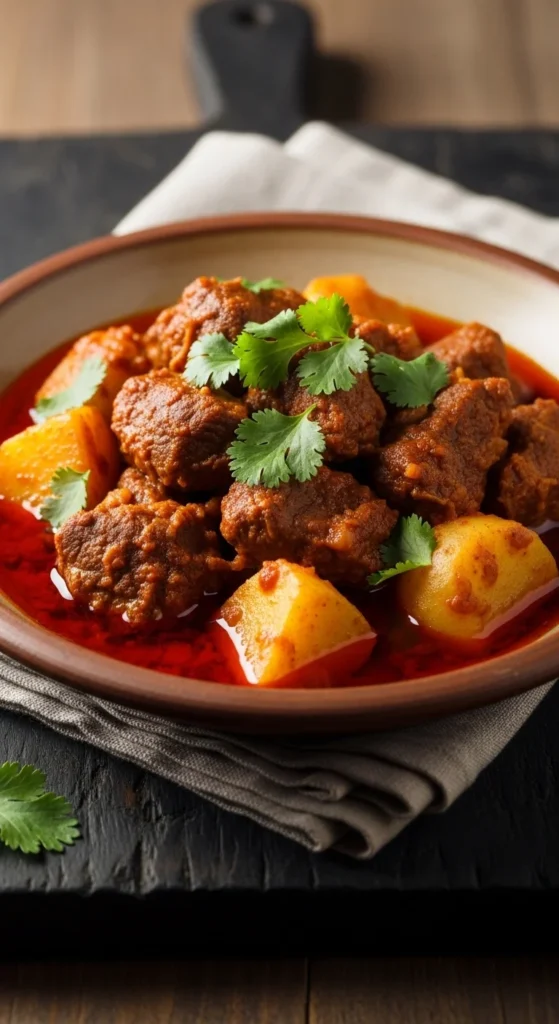
Aloo gosht is a familiar home-style curry in many households. Potatoes absorb the gravy and stretch the dish for bigger families. It uses basic spices and one pot. Many people associate it with everyday comfort and Eid lunches alike.
Ingredients
- 700 g mutton or beef
- 3 potatoes, peeled and cubed
- 1 onion, chopped
- 3 tbsp oil
- 1 tbsp ginger garlic paste
- 1 tsp turmeric
- 1 tsp chili powder
- 1 tsp coriander powder
- Salt to taste
- 3–4 cups water
Instructions
- Fry onion in oil until golden.
- Add meat and ginger garlic paste; cook for a few minutes.
- Add spices, salt, and water.
- Cover and cook until the meat is nearly tender.
- Add potatoes and cook until soft.
How to Serve It
Serve hot with roti or rice. Garnish with cilantro. Tastes even better after resting.
15. Kaleji Masala
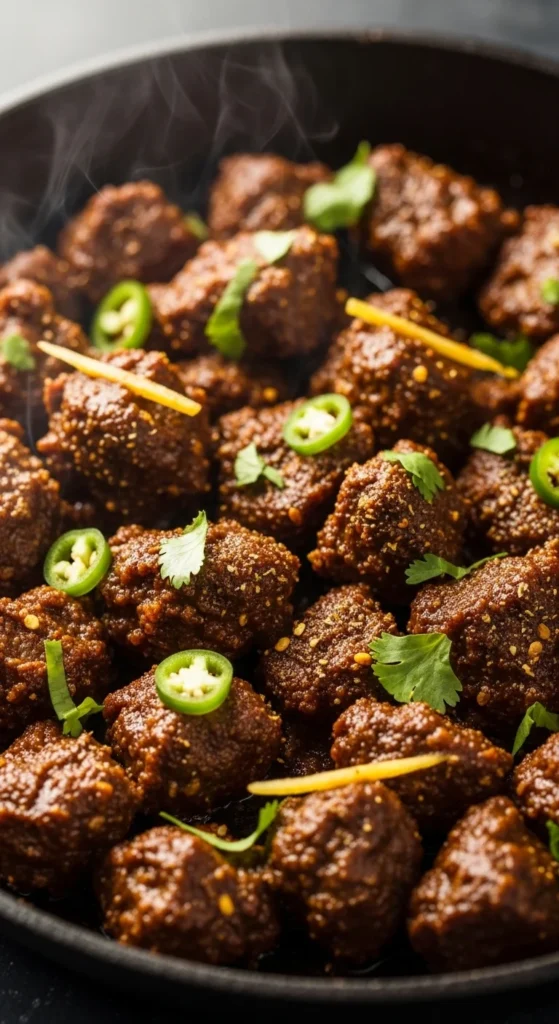
Kaleji masala is a traditional dish many families prepare on special days. It cooks quickly compared to other meats. The spices are bold and warming. It is often enjoyed by those who like strong flavors.
Ingredients
- 500 g liver (goat or beef), cubed
- 1 onion, chopped
- 3 tbsp oil
- 1 tbsp ginger garlic paste
- 2 tomatoes, chopped
- 1 tsp chili powder
- 1 tsp coriander powder
- Salt to taste
- ½ tsp garam masala
Instructions
- Heat oil and sauté onions until light golden.
- Add ginger garlic paste and tomatoes; cook softly.
- Add spices and salt.
- Add liver and cook for 6–8 minutes until just done.
- Sprinkle garam masala at the end.
How to Serve It
Serve hot with roti. Do not overcook to keep liver tender. Garnish with cilantro or green chilies.
16. Lahori Chargha
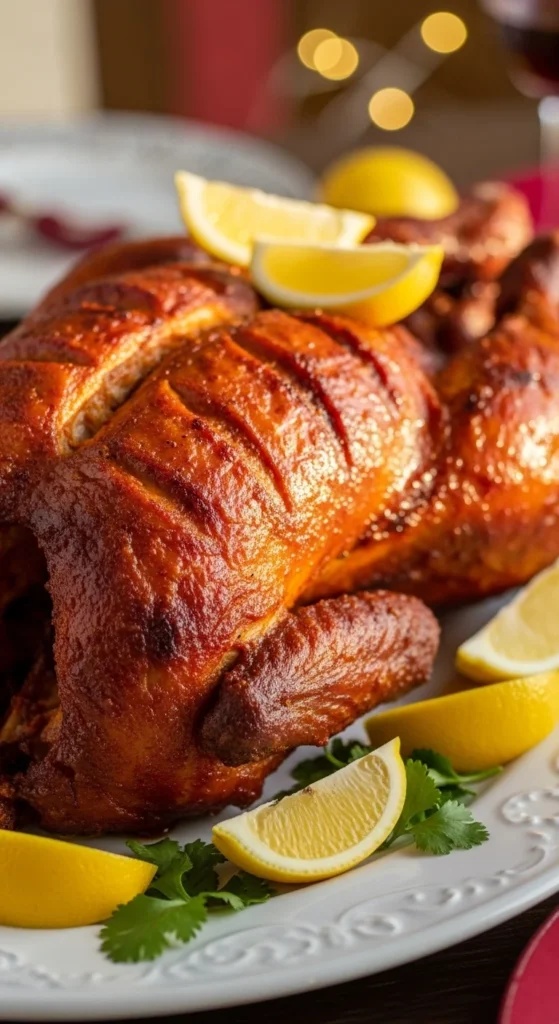
Lahori chargha is a celebratory chicken dish known for its bold spices and crisp exterior. It is often made for gatherings and special meals. Though it looks impressive, the steps are straightforward. The marinade gives most of the flavor.
Ingredients
- 1 whole chicken (about 1–1.2 kg)
- 4 tbsp yogurt
- 1½ tbsp ginger garlic paste
- 1 tbsp lemon juice
- 1 tsp chili powder
- 1 tsp cumin powder
- ½ tsp turmeric
- Salt to taste
- 2–3 tbsp oil
Instructions
- Mix all marinade ingredients.
- Make deep cuts in chicken and coat well.
- Marinate at least 2–4 hours.
- Steam or boil chicken until nearly cooked.
- Fry or bake until the outer layer is crisp and golden.
How to Serve It
Serve whole on a platter, then cut. Add lemon wedges. Often paired with naan and salad.
17. Hyderabadi Biryani
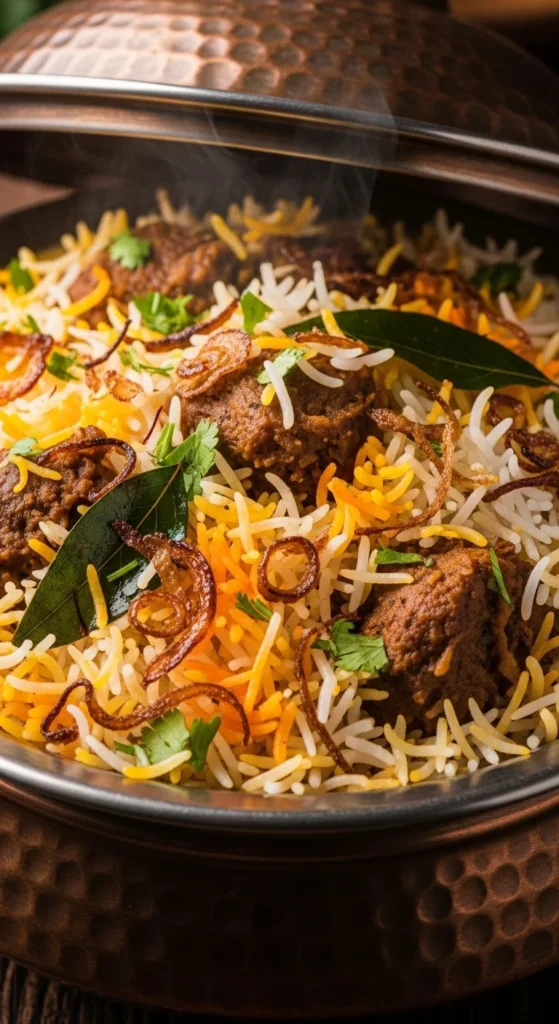
Hyderabadi biryani is known for its deep aroma and layered cooking style. Many families save it for special days like Eid. The combination of yogurt, spices, and fried onions gives it a rich, homely taste. Opening the pot feels like a moment everyone waits for.
Ingredients
- 2 cups basmati rice
- 600 g chicken or mutton
- 1 cup yogurt
- 2 onions, thinly sliced and fried
- 1½–2 tbsp biryani masala
- 1 tbsp ginger garlic paste
- Salt to taste
- 3–4 tbsp oil or ghee
- Saffron soaked in 2 tbsp warm milk (optional)
- Fresh mint and cilantro
Instructions
- Marinate meat with yogurt, ginger garlic paste, salt, and masala 1–2 hours.
- Parboil rice with salt until 70–80% cooked.
- Layer marinated meat and rice in a pot.
- Top with fried onions, herbs, and saffron milk.
- Cover tightly and cook on low heat for 20–25 minutes.
How to Serve It
Gently lift rice to keep layers visible. Serve with raita and salad. A wide dish helps for family-style serving.
18. Mutton Pulao
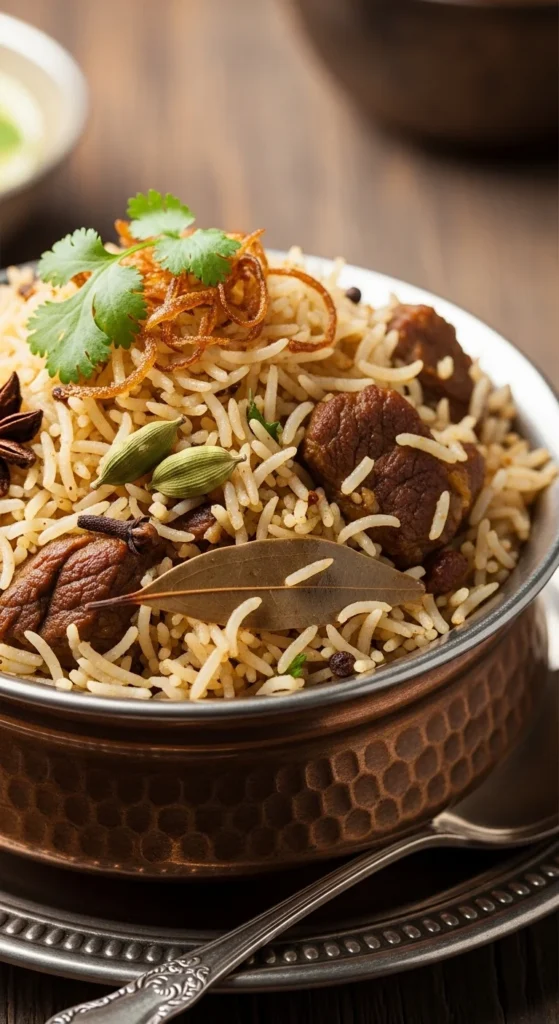
Mutton pulao is simpler than biryani but still festive. The flavor comes from meat stock and whole spices. Many homes prefer it when they want something lighter but still traditional. It is comforting and familiar.
Ingredients
- 2 cups basmati rice
- 700 g mutton
- 1 onion, sliced
- 3 tbsp oil or ghee
- 1 tbsp ginger garlic paste
- 1 tsp cumin seeds
- 2–3 cloves and cardamom
- Salt to taste
- 4–5 cups water
Instructions
- Fry onion in oil until light golden.
- Add mutton and ginger garlic paste; cook a few minutes.
- Add whole spices, salt, and water.
- Cover and cook until meat is tender.
- Add soaked rice and cook until rice is done.
How to Serve It
Serve hot with yogurt or salad. Garnish lightly with cilantro. Good for large family meals.
19. Chicken Yakhni Pulao
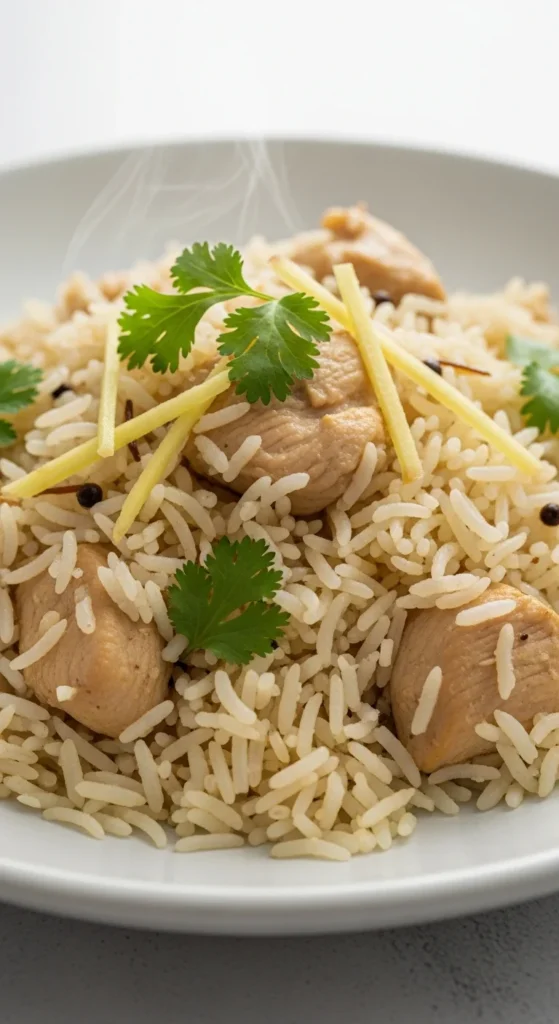
Chicken yakhni pulao is known for its mild, soothing flavor. The rice cooks in chicken broth, which gives it depth without heavy spices. Many families serve it for guests who prefer less heat. It feels light yet satisfying.
Ingredients
- 2 cups basmati rice
- 600 g chicken
- 1 onion, sliced
- 2–3 tbsp oil
- 1 tbsp ginger garlic paste
- 1 tsp cumin seeds
- 2 cardamom and 2 cloves
- Salt to taste
- 4 cups water
Instructions
- Cook chicken with ginger garlic paste, salt, and whole spices in water to make broth.
- In another pot, fry onions lightly.
- Add chicken and measured broth.
- Add soaked rice.
- Cover and cook on low until done.
How to Serve It
Serve warm with raita. Keep spices mild for a traditional taste. Fluff rice gently before serving.
20. Kabuli Pilaf
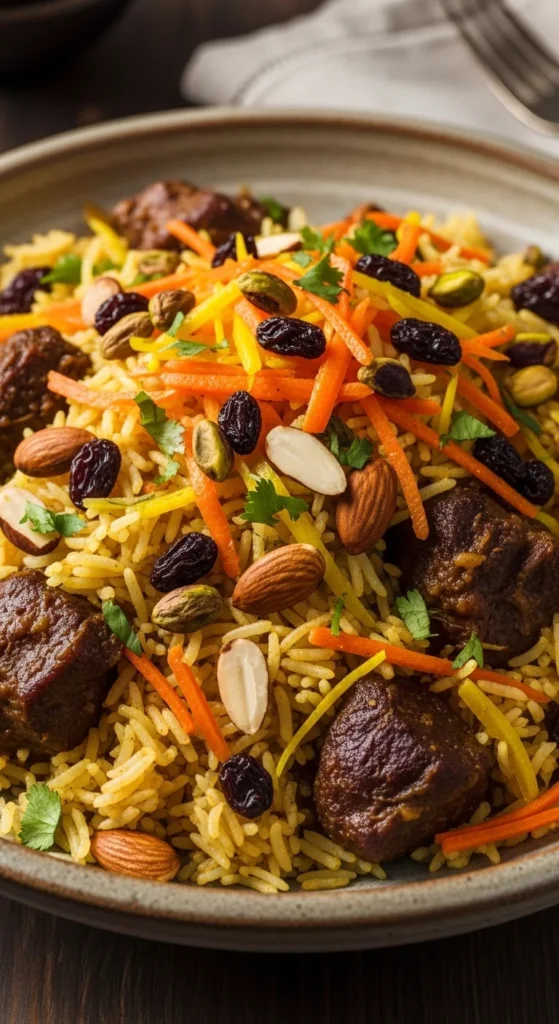
Kabuli pilaf brings a slightly sweet and aromatic touch to the table. The carrot and raisin topping makes it unique. It is popular in many regions for celebrations. The mix of sweet and savory feels festive.
Ingredients
- 2 cups basmati rice
- 600 g mutton or chicken
- 1 onion, sliced
- 3 tbsp oil
- 1 tbsp ginger garlic paste
- Salt to taste
- 1 carrot, cut into thin strips
- 2 tbsp raisins
- 2 tbsp nuts
- 1 tsp cumin seeds
Instructions
- Cook meat with ginger garlic paste, salt, and cumin until tender.
- Add rice and measured water; cook until done.
- Fry carrot strips, raisins, and nuts lightly in oil.
- Spread carrot-raisin mix on top of rice.
How to Serve It
Serve on a large platter with topping visible. Do not mix too much so the topping stands out. Pairs well with yogurt.
21. Shami Kebabs
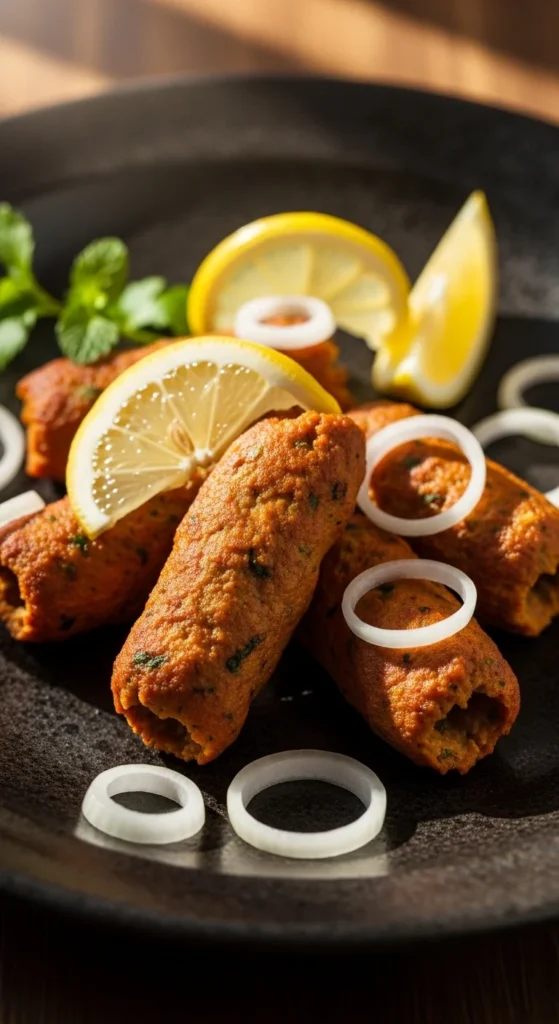
Shami kebabs are a classic snack many families prepare ahead of Eid. They are soft inside and lightly crisp outside. The mix of meat and lentils gives them a balanced texture. Many households keep them in the freezer and fry when guests arrive.
Ingredients
- 500 g beef or mutton (boneless)
- ¼ cup chana dal (soaked 30 minutes)
- 1 onion, chopped
- 1 tbsp ginger garlic paste
- 1 tsp cumin powder
- 1 tsp chili powder
- Salt to taste
- 1 egg
- Oil for shallow frying
Instructions
- Boil meat and dal with spices and a little water until soft and dry.
- Cool and grind to a thick paste.
- Mix in egg and shape patties.
- Shallow fry on medium heat until golden on both sides.
How to Serve It
Serve hot with chutney. Add lemon wedges and onion rings. Great as a starter or in sandwiches.
22. Seekh Kebabs
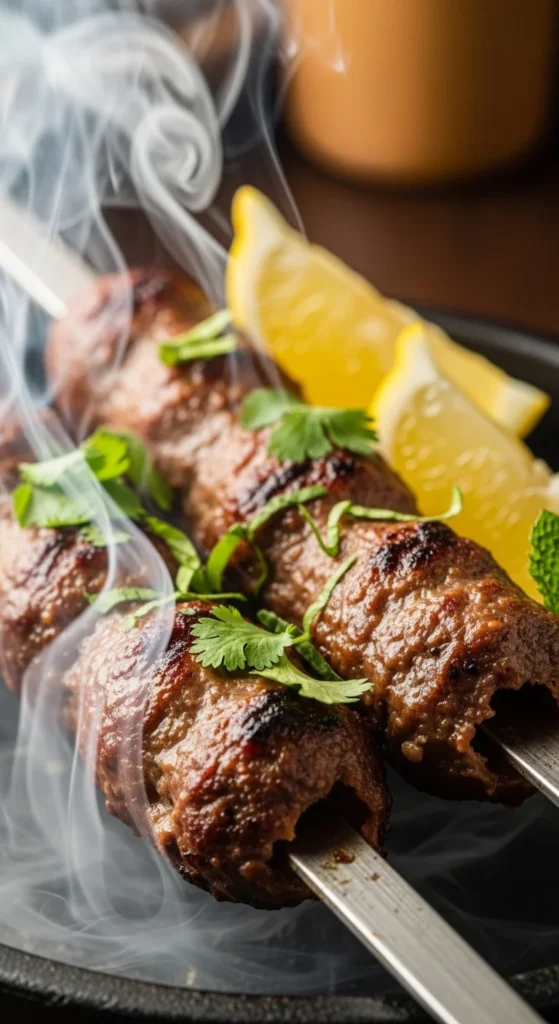
Seekh kebabs are popular at many Eid gatherings. The spiced minced meat cooks quickly and has a smoky taste. They look impressive on a platter but are simple to shape. They can be baked, grilled, or pan-cooked.
Ingredients
- 500 g minced beef or chicken
- 1 onion, very finely chopped
- 1 tbsp ginger garlic paste
- 1 tsp cumin powder
- 1 tsp chili flakes
- Salt to taste
- 2 tbsp chopped cilantro
- 1 egg (if needed for binding)
Instructions
- Mix all ingredients well.
- Shape mixture onto skewers with wet hands.
- Grill, bake at 200°C, or pan-cook until fully done and browned.
- Turn occasionally for even cooking.
How to Serve It
Serve hot off the heat. Add lemon juice on top. Pair with naan and mint chutney.
23. Chapli Kebabs
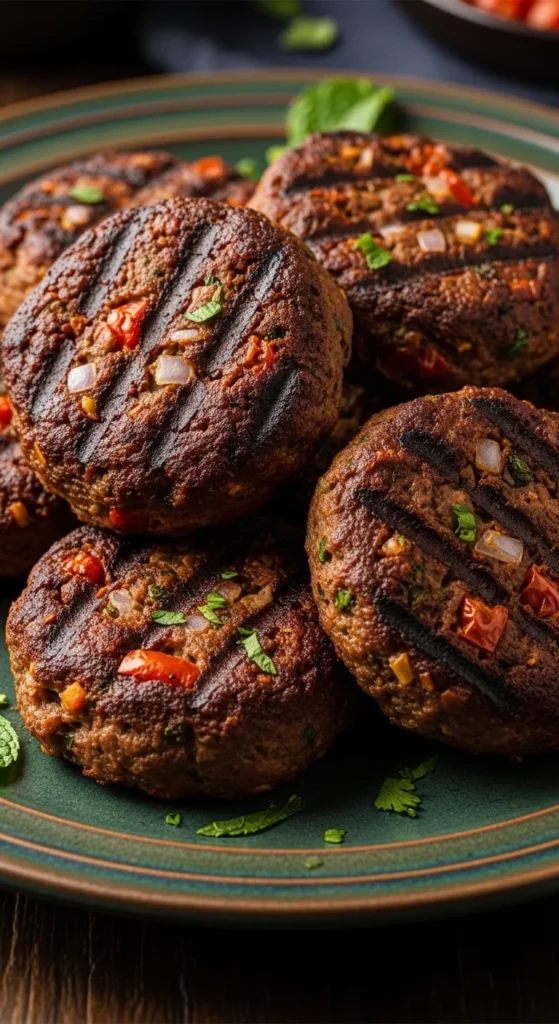
Chapli kebabs are known for their bold flavor and slightly crisp edges. They are thicker and more rustic than other kebabs. Many people enjoy their juicy texture. They are filling and work well for bigger gatherings.
Ingredients
- 500 g minced beef or mutton
- 1 tomato, finely chopped
- 1 onion, chopped
- 1 tsp crushed coriander seeds
- 1 tsp cumin powder
- 1 tsp chili flakes
- Salt to taste
- 2 tbsp cilantro
- Oil for frying
Instructions
- Mix all ingredients thoroughly.
- Shape into flat round patties.
- Shallow fry on medium heat until well browned and cooked inside.
- Flip carefully to keep shape.
How to Serve It
Serve hot with naan or pita. Add yogurt dip on the side. Onion salad pairs well.
24. Samosas

Samosas are almost always present at festive tables. Their crisp shell and savory filling make them a favorite for all ages. They can be prepared earlier and fried when needed. They disappear quickly at gatherings.
Ingredients
- 12 samosa wrappers
- 2 potatoes, boiled and mashed
- ½ cup peas
- 1 tsp cumin seeds
- 1 tsp chili powder
- Salt to taste
- 2 tbsp chopped cilantro
- Oil for frying
Instructions
- Cook cumin in a little oil, add potatoes, peas, spices, and salt.
- Let the filling cool.
- Fill wrappers, seal edges with water.
- Deep fry on medium heat until golden and crisp.
How to Serve It
Serve hot and crisp. Pair with tamarind or mint chutney. Best served fresh for crunch.
25. Sheermal
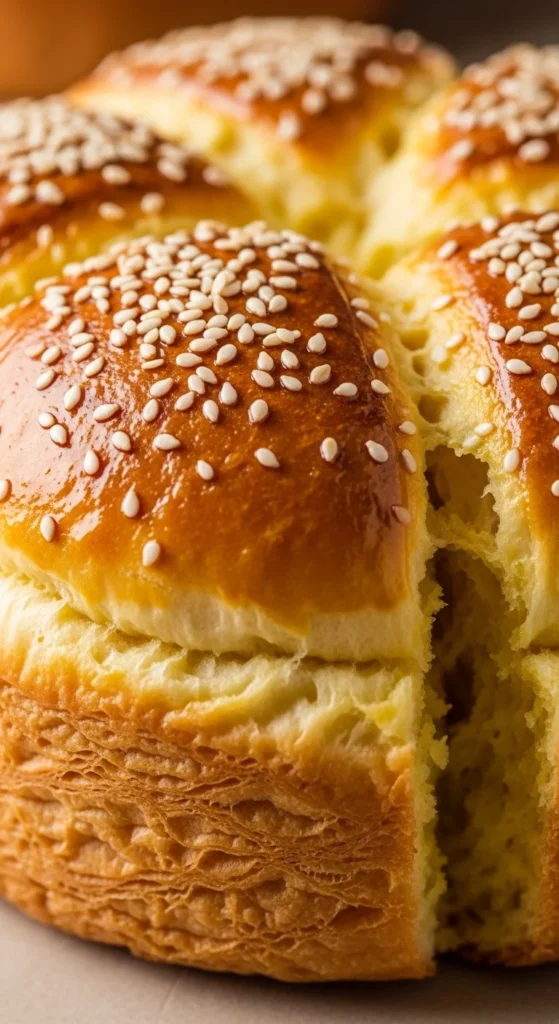
Sheermal is a slightly sweet, saffron-kissed flatbread often seen on festive tables. Many families pair it with korma or kebabs on Eid. Its soft texture and mild sweetness make it stand out from regular naan. It feels special without being complicated.
Ingredients
- 2 cups all-purpose flour
- 2 tbsp sugar
- 3 tbsp ghee
- ½ cup warm milk
- 1 tsp yeast
- 2 tbsp yogurt
- Pinch of salt
- Few saffron strands in 1 tbsp warm milk (optional)
- Sesame seeds (optional)
Instructions
- Mix yeast in warm milk with a pinch of sugar; rest 10 minutes.
- Combine flour, sugar, salt, ghee, yogurt, and yeast milk.
- Knead into a soft dough; rest covered 1–2 hours.
- Roll into flat rounds, brush with saffron milk.
- Bake at 180°C for 12–15 minutes or cook on a pan until done.
How to Serve It
Serve warm. Brush lightly with ghee for shine. Perfect with korma or tea.
26. Roghni Naan
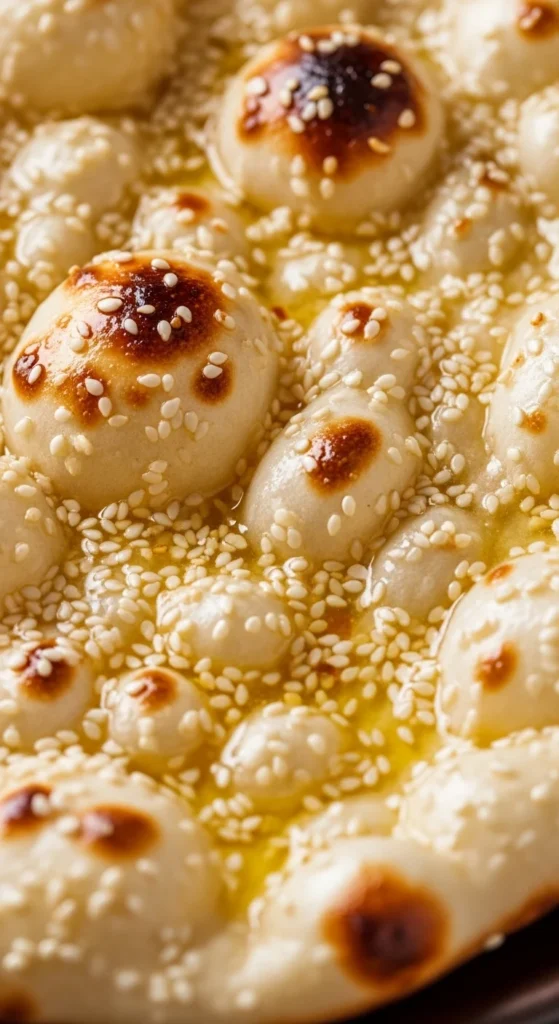
Roghni naan is rich, soft, and slightly chewy. It is often served in restaurants during special meals. The milk and egg in the dough give it a tender bite. Many families love it with rich gravies on Eid.
Ingredients
- 2 cups all-purpose flour
- 1 tsp yeast
- 1 tsp sugar
- 3 tbsp yogurt
- 2 tbsp oil or melted butter
- 1 egg
- ½ tsp salt
- Warm water or milk as needed
- Sesame seeds
Instructions
- Activate yeast in warm water with sugar.
- Mix flour, salt, yogurt, egg, oil, and yeast mixture.
- Knead into soft dough; rest 1–2 hours.
- Divide, roll into ovals, sprinkle sesame seeds.
- Bake at 200°C for 10–12 minutes or cook on a hot pan.
How to Serve It
Serve hot with butter brushed on top. Best with karahi, korma, or kebabs.
27. Paratha
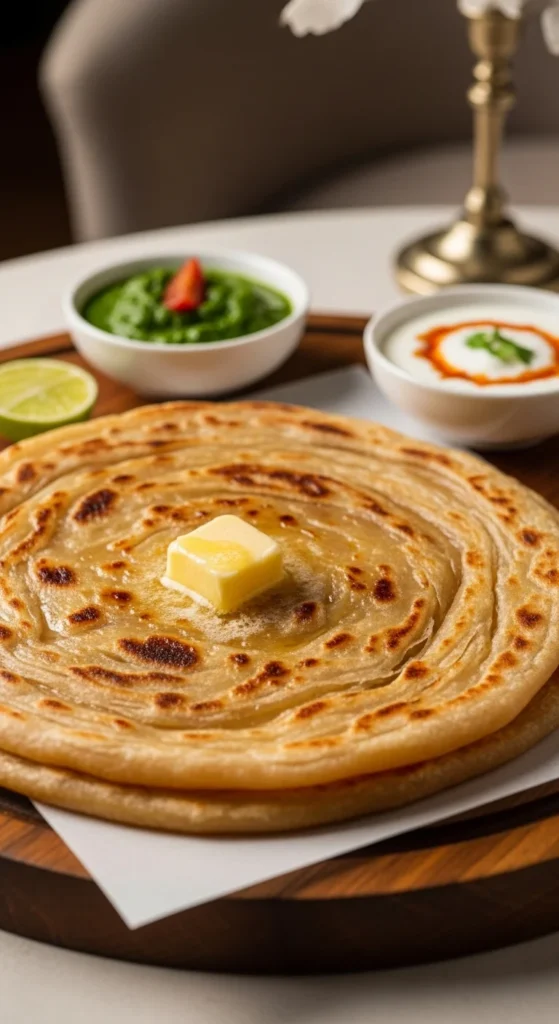
Paratha is one of the most familiar breads in many homes. It is simple, filling, and loved by all ages. Some families serve it for Eid breakfast, others alongside curries. Its flaky layers and buttery taste always feel comforting.
Ingredients
- 2 cups whole wheat flour
- 1 tsp salt
- 1 tbsp oil or ghee
- Water as needed
- Extra ghee or oil for cooking
Instructions
- Mix flour, salt, and oil; add water to form dough.
- Knead until smooth; rest 20–30 minutes.
- Roll, fold with a little ghee, and roll again for layers.
- Cook on a hot pan with ghee until golden on both sides.
How to Serve It
Serve hot with curry, yogurt, or pickle. A small butter topping adds extra comfort.
Conclusion
Now you have a full spread that truly feels like home. These are the dishes people recognize the moment they see them on the table, the ones that bring back memories of family, laughter, and full plates passed around. Pick a few or go all out, mix breads with curries, add a sweet at the end, and your Eid table will feel complete. Save this list, share it with family, and enjoy cooking food that brings everyone closer.

Leave a Reply