

Cooking with cast iron can feel intimidating at first, but professional chefs rely on it for one simple reason. When used correctly, it delivers unmatched heat retention, deep browning, and a naturally non-stick surface that improves with time. From searing steak to baking cornbread, a well-maintained skillet becomes better every year you own it. The secret lies in proper seasoning, controlled heat, smart cleaning habits, and consistent long-term care.
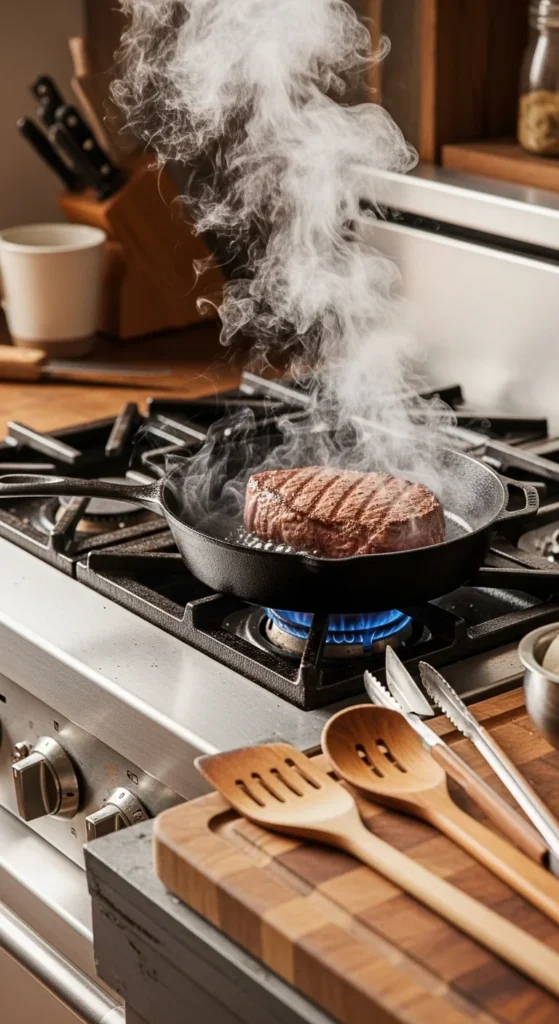
Season Like a Foundry Professional
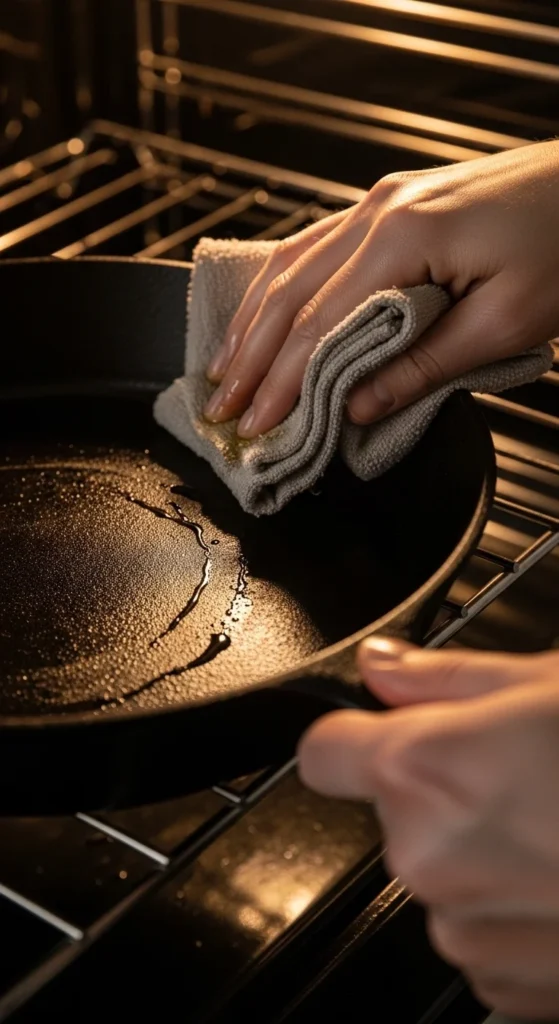
Seasoning is not simply oiling the pan. It is a heat-driven process where oil polymerizes and bonds to the iron surface, forming a durable coating that protects against rust while creating natural non-stick performance.
Many modern skillets arrive pre-seasoned, but adding extra layers early improves durability and cooking results quickly.
Follow these essentials:
- Wash and completely dry the skillet before seasoning.
- Apply a very thin layer of high smoke-point oil such as soybean, flaxseed, or avocado oil.
- Avoid butter or olive oil because their lower smoke points cause burning instead of bonding.
- Place the skillet upside down in a 350°F to 450°F oven for one hour.
- Repeat the process two or three times to build a stronger base layer.
Some professionals follow the Jeff Rogers method using shortening at lower oven temperatures while wiping away excess oil to achieve an exceptionally smooth finish.
Cooking fatty foods such as bacon or steak afterward strengthens seasoning naturally. Regular cooking becomes ongoing maintenance.
Master Preheating for Stick Free Cooking
Most sticking problems begin before food even touches the pan. Cast iron requires gradual heating so the metal expands evenly and absorbs oil properly.
Place the skillet over low to medium heat for three to five minutes before cooking. The water drop test works well here. A droplet should sizzle and glide across the surface instead of evaporating instantly.
Add oil only once the skillet is properly heated.
Professional habits to follow:
- Use neutral oils or butter immediately before adding food.
- Cook delicate foods like eggs or fish at medium heat rather than high heat.
- Allow food to release naturally instead of forcing it.
Patience creates the deep golden crust associated with restaurant-quality cooking.
Heat Control Makes the Biggest Difference
Cast iron stores heat exceptionally well. Turning the burner high rarely improves results and often leads to burned oil or uneven cooking.
Start lower than you think you need. Once hot, the skillet maintains temperature efficiently.
Keep these professional rules in mind:
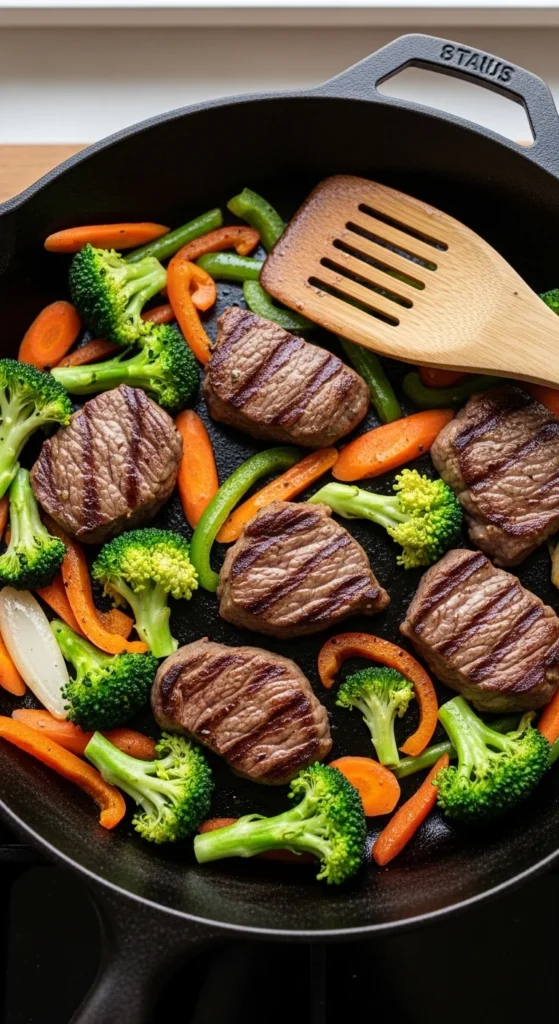
- Avoid overcrowding because trapped steam prevents proper browning.
- Leave space between ingredients for airflow and searing.
- Let food cook undisturbed instead of flipping repeatedly.
If oil begins smoking aggressively, reduce the heat slightly. Consistent temperature always produces better results than fast cooking.
The Simple Three Step Cleaning Routine
Cleaning cast iron is easier than most beginners expect. Modern guidance confirms that mild soap can be used occasionally, although harsh detergents remain unnecessary.
Clean the skillet while it is still warm because residue releases more easily.
Follow this routine:
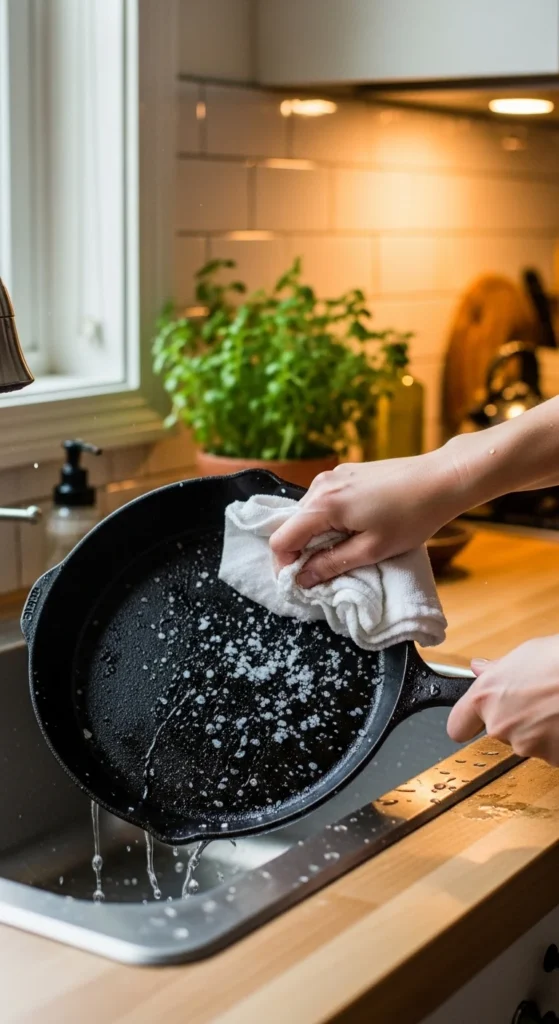
Step1: Rinse with hot water and scrub stuck food using kosher salt or a chainmail scrubber.
Step 2: For stubborn residue, simmer a small amount of water and gently scrape.
Step 3: Dry immediately on the stovetop or inside a warm oven until completely moisture-free.
Finish by wiping on a very thin layer of oil. The coating should look almost invisible. Excess oil becomes sticky instead of protective.
Never place cast iron in a dishwasher.
Rust Rescue Protocol
Rust usually develops when moisture remains on the surface too long. Fortunately, cast iron is extremely forgiving and most pans can be restored completely.
If rust appears:
- Scrub affected areas using steel wool or soap.
- Heavy rust may require oven cleaner applied outdoors in a ventilated area.
- Vintage pans sometimes benefit from light sanding before reseasoning.
After cleaning, repeat the full seasoning process.
Store your skillet with a paper towel inside to absorb humidity and protect the cooking surface between uses.
Tools and Habits That Extend Skillet Life
A few simple tools make cast iron ownership easier without adding unnecessary complexity.
Recommended essentials:
- Chainmail scrubber for stubborn residue removal.
- Wooden or silicone utensils to protect seasoning layers.
- Paper towels placed inside during storage to reduce moisture buildup.
New skillets benefit from cooking fatty foods early. Bacon, steak, or roasted potatoes help build seasoning faster than acidic dishes.
If weight becomes uncomfortable, some cooks transition to carbon steel for similar performance with less heaviness. However, cast iron remains unmatched for durability and heat retention.
Final Thoughts
Professional cast iron cooking is not about complicated techniques. It comes down to consistent habits. Preheat patiently, cook with enough fat, clean while warm, and keep moisture away. Over time the skillet develops a dark, smooth surface that performs better than many modern non-stick pans.
Treat it properly and it can last generations, just as cast iron cookware has done for more than a thousand years.

Leave a Reply