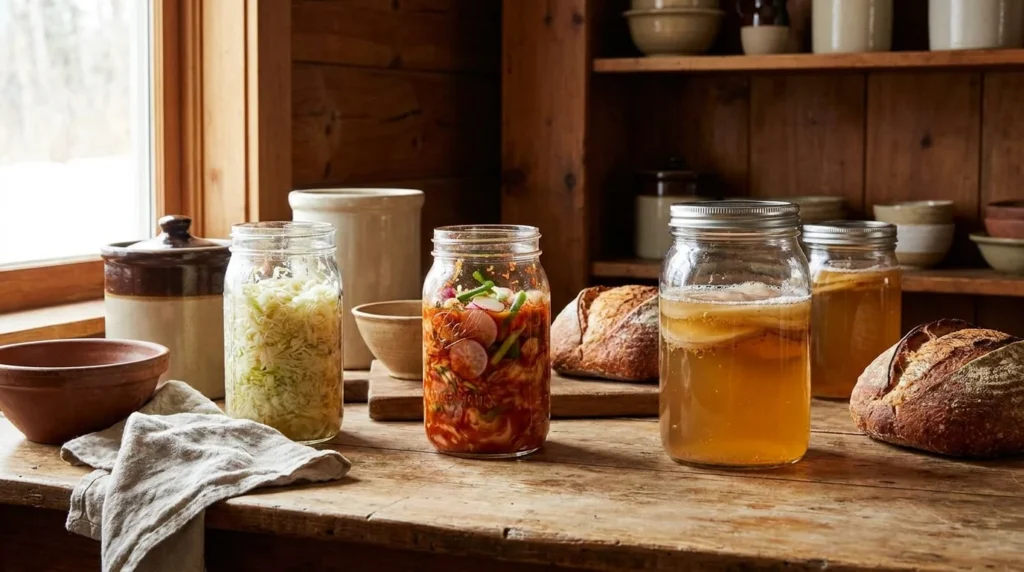
Fermentation changes ordinary ingredients into foods that contain live beneficial bacteria. These microbes support the gut microbiome, which plays a role in digestion, immune response, and bowel regularity.
The process itself is simple, but results depend on salt balance, temperature, and proper storage. When these parts are handled correctly, fermented foods develop tangy flavor, natural preservation, and active cultures without complicated equipment.
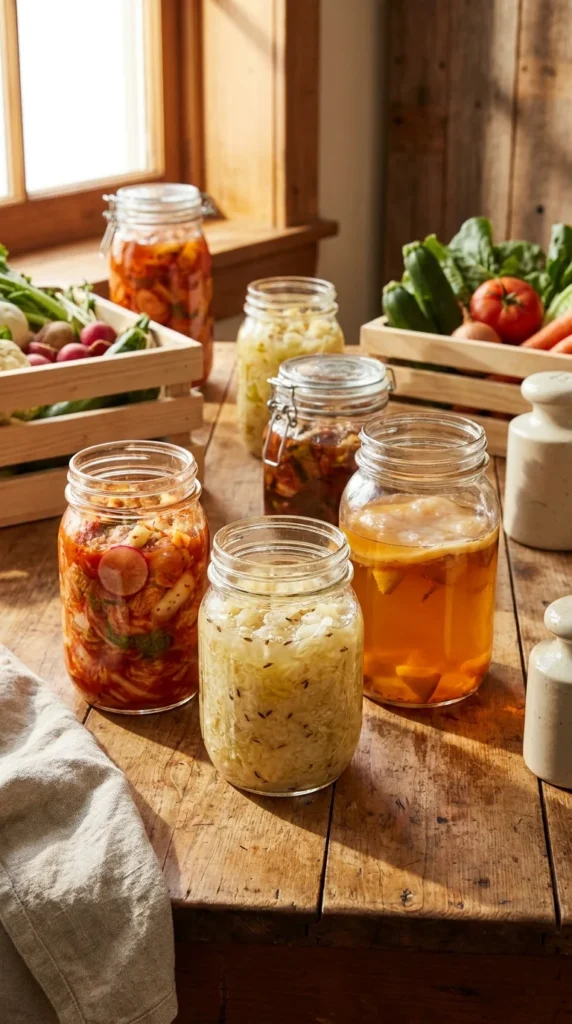
What Fermentation Does Inside Food
Fermentation happens when beneficial bacteria break down sugars and starches naturally present in food.
During this process:
- Acids develop naturally
- Flavor becomes deeper and tangier
- Beneficial bacteria multiply
- Texture changes gradually over time
This is different from vinegar-based pickling. Naturally fermented foods contain live cultures, while many vinegar pickles do not.
Best Fermented Foods For Gut Microbiome Support
Different fermented foods provide different bacterial strains and textures.
Sauerkraut
Fermented cabbage is one of the easiest starting points for beginners. It contains lactic acid bacteria and has been linked to digestive support in gut health research.
Kefir
Kefir is a fermented milk drink containing multiple strains of beneficial bacteria and yeast. Many people use it because it is drinkable and easy to consume in small portions.
Kimchi
Kimchi combines fermented vegetables with garlic, chili, and aromatics. It is often discussed for microbial diversity and digestive support.
Kombucha
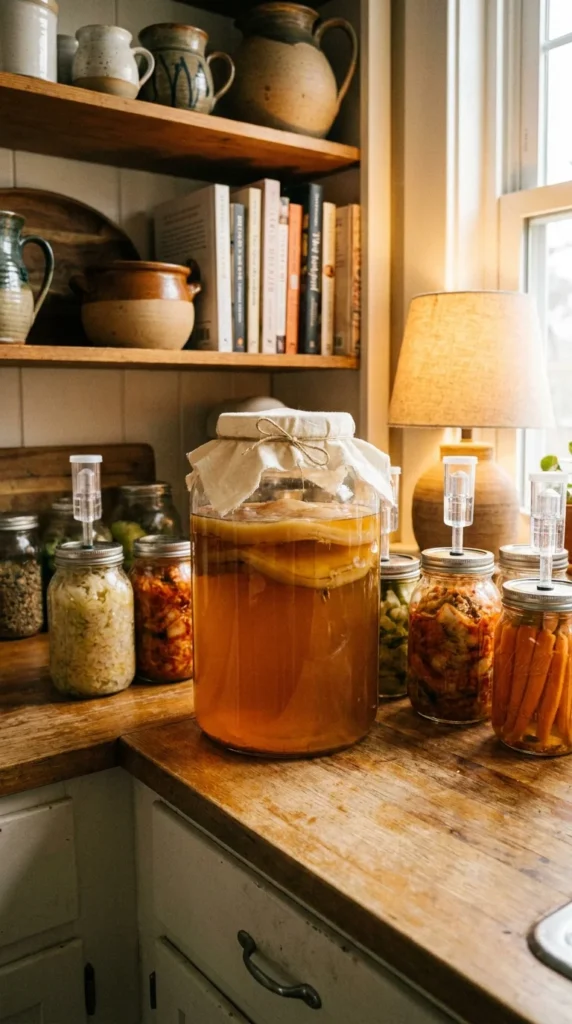
This fermented tea uses a SCOBY culture to create acidity and carbonation naturally.
Tempeh
Tempeh provides both fermentation benefits and plant protein, making it useful in vegetarian meals.
Start Slowly To Avoid Digestive Discomfort
Large portions too early often cause bloating or gas.
Begin With Small Amounts
Start with:
- 1 to 2 tablespoons of sauerkraut or kimchi
- Small servings of kefir or kombucha
Gradually increase portions over several days instead of adding multiple fermented foods at once.
Watch How Your Body Responds
Some people tolerate dairy ferments better, while others prefer vegetable-based options.
How To Ferment Vegetables At Home
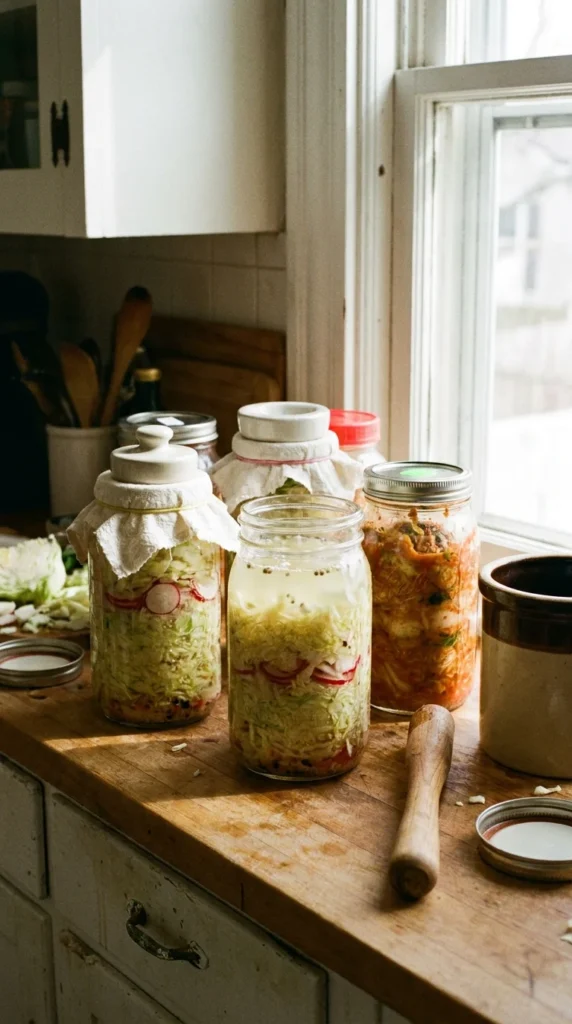
Vegetable fermentation depends on salt, submersion, and airflow control.
Use The Correct Salt Ratio
Salt helps control unwanted bacteria while encouraging beneficial fermentation. Too little salt can cause sliminess, while too much slows the process excessively.
Keep Vegetables Fully Submerged
Vegetables exposed to air are more likely to develop mold. Use fermentation weights or tightly packed layers to keep everything below the brine.
Store In A Warm Dark Area
Most beginner vegetable ferments develop well in a moderately warm space away from direct sunlight.
A typical starting timeline:
- Day 1–2: mild activity
- Day 3–5: stronger sourness develops
- After 1 week: deeper fermented flavor
Naturally Fermented Vs Vinegar Pickles
This distinction matters for probiotic content.
Naturally Fermented Foods
These develop through bacterial activity over time and usually contain live cultures.
Vinegar Pickles
These rely mainly on vinegar for acidity and preservation. Many do not contain active probiotic bacteria.
Checking labels for phrases like “live cultures” or “naturally fermented” helps identify probiotic products more accurately.
Common Problems During Fermentation
Mold On Top
This usually happens when vegetables rise above the liquid level.
Slimy Texture
Often linked to incorrect salt balance or excessive heat.
Strong Unpleasant Smell
A sour smell is normal. Rotten or extremely foul odors usually indicate spoilage.
Fruit Flies Around Kombucha
Cover kombucha containers with breathable cloth secured tightly around the opening.
The Science Behind Fermented Foods And Gut Health
Research around fermented foods has expanded significantly in recent years.
Some studies suggest fermented foods may:
- Increase microbial diversity
- Support bowel regularity
- Reduce certain inflammatory markers
- Produce short-chain fatty acids linked to gut barrier function
A Stanford study frequently referenced in gut health discussions found fermented foods increased microbial diversity while lowering several inflammation-related proteins over time.
Research is still evolving, but the connection between fermented foods and gut microbiome activity continues to receive attention.
Fermented Foods That Fit Daily Meals Easily
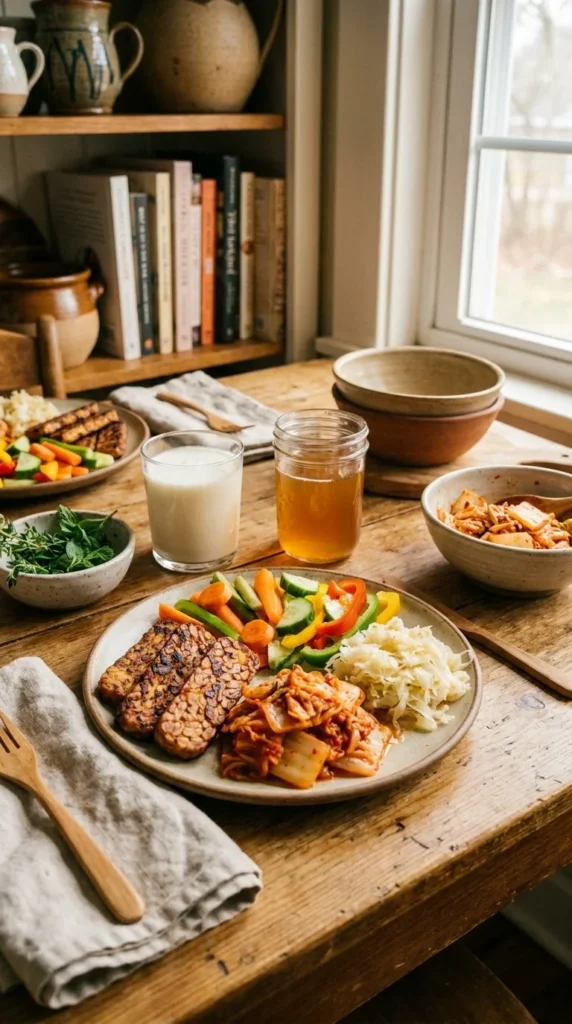
Fermentation becomes more practical when integrated into regular meals.
Easy Ways To Use Ferments
- Add sauerkraut beside grilled foods
- Use kimchi with rice or eggs
- Drink kefir with breakfast
- Add tempeh to bowls or stir-fries
- Serve pickled fermented vegetables with sandwiches or wraps
Small consistent portions are usually easier to maintain than occasional large servings.
Low-Sodium And Beginner-Friendly Adjustments
Some fermented foods naturally contain high sodium levels.
To reduce intensity:
- Rinse small portions lightly before eating
- Use lower-salt recipes carefully
- Balance ferments with fresh vegetables and proteins
Beginners often do better starting with milder ferments before stronger flavors like heavily spiced kimchi.
Final Thoughts
Fermentation works through consistency rather than complexity. Salt balance, proper submersion, moderate temperature, and patience all influence how fermented foods develop.
Once the basic process becomes familiar, different vegetables, drinks, and flavor combinations can be adjusted while still supporting texture, safety, and beneficial bacterial growth.