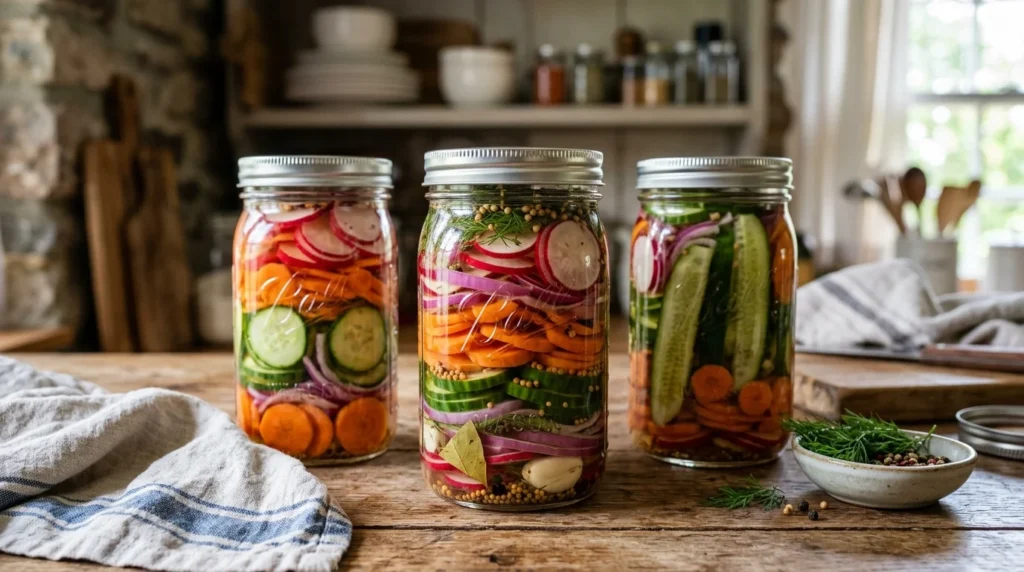
Quick pickling is one of the fastest ways to add sharpness, crunch, and contrast to everyday meals without waiting days for fermentation. Instead of long curing methods, this process uses a hot vinegar brine that flavors vegetables within hours.
The key is not complexity. Fast pickles work because of thin slicing, balanced brine ratios, and proper cooling. Once those parts are handled correctly, the vegetables stay crisp while absorbing flavor quickly.
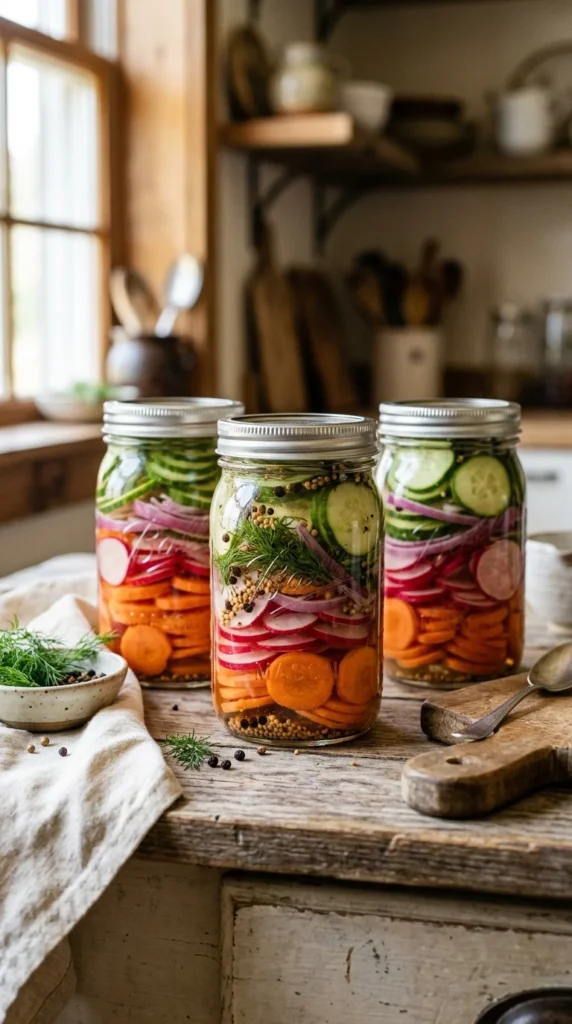
The Fast Refrigerator Pickle Method
This method is designed for refrigerator pickles, not long fermentation or water-bath canning.
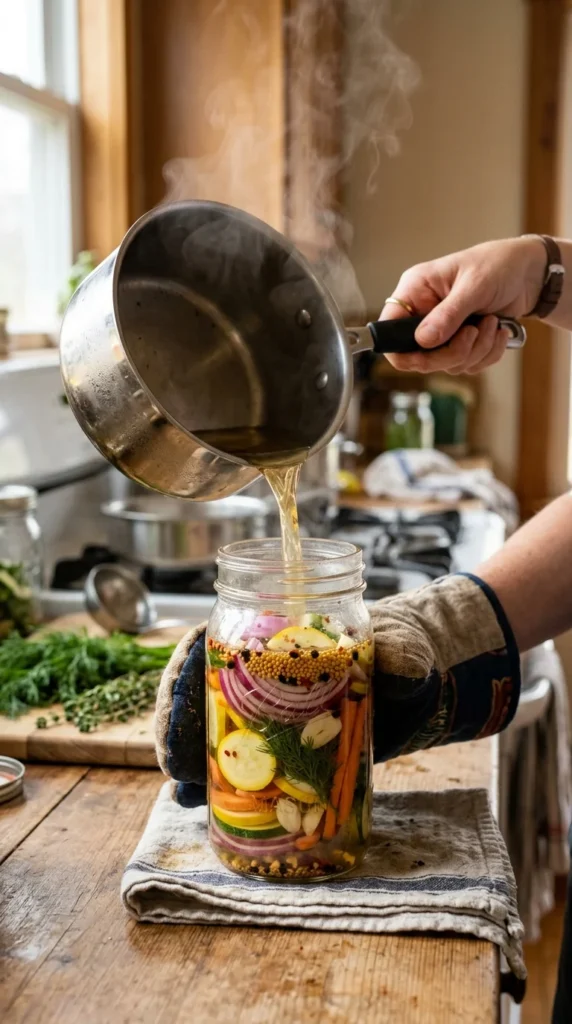
The process follows three stages:
- Slice the vegetables
- Heat the brine
- Pour, cool, and refrigerate
Because the vegetables are not cooked directly, they keep more crunch while still absorbing flavor rapidly.
How To Make A Universal Pickling Brine
A simple brine works for most vegetables.
Basic Brine Formula
- 1 cup vinegar
- 1 cup water
- 1 tablespoon salt
- 1 to 2 teaspoons sugar if needed
Heat everything just until dissolved.
This creates a balanced base that can be adjusted depending on how sharp, salty, or lightly sweet you want the pickles.
Why Thin Slices Pickle Faster
Surface area changes how quickly vegetables absorb flavor.
Slice Firm Vegetables Thinly
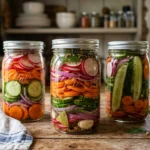
Carrots, radishes, onions, and cucumbers pickle much faster when cut into thin rounds or strips.
Using a mandoline helps keep slices even, which means the texture and flavor stay consistent throughout the jar.
Keep Softer Vegetables Larger
Bell peppers or cauliflower can stay slightly thicker because they absorb brine more easily.
Best Vegetables For Quick Pickled Vegetables
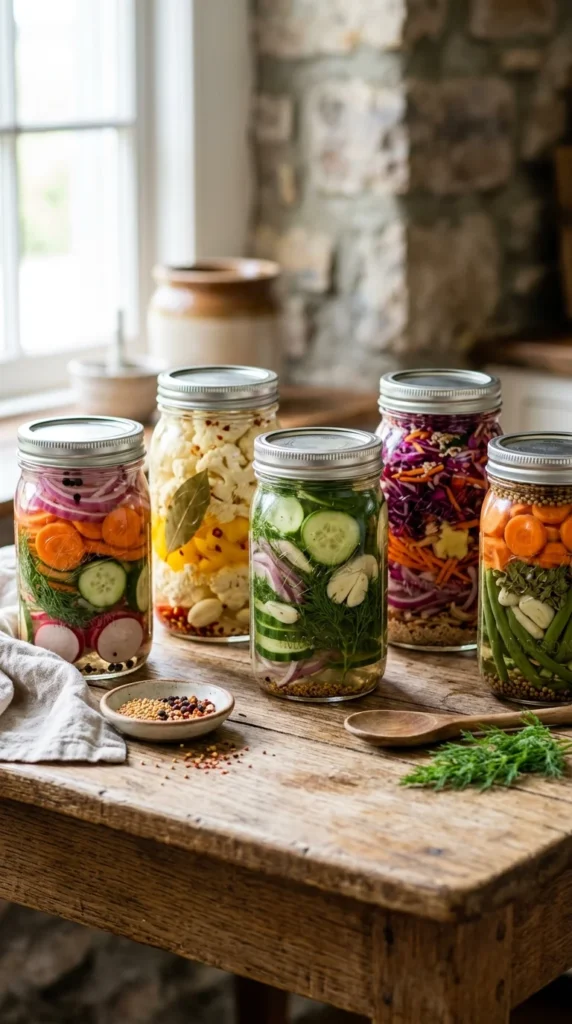
Firm vegetables produce the best texture after a few hours.
Vegetables That Stay Crunchy Well
- Cucumbers
- Carrots
- Red onions
- Radishes
- Green beans
- Cauliflower
- Bell peppers
These hold their structure while still absorbing the vinegar mixture quickly.
Vegetables That Need More Care
Very soft vegetables can become limp if left too long in hot brine. Keeping them thicker helps maintain texture.
Use Whole Spices For Better Flavor
Whole spices flavor the brine without making it cloudy.
Good combinations include:
- Mustard seeds for sharpness
- Coriander seeds for warmth
- Peppercorns for mild heat
- Dill for classic pickle flavor
- Garlic or ginger for stronger depth
Powdered spices often settle unevenly and affect texture.
How To Cook Refrigerator Pickles Safely
Quick-process pickling still needs proper acidity.
Check Vinegar Strength
Use vinegar labeled at 5% acidity. This is the standard level used in most safe refrigerator pickle recipes.
Use Clean Glass Jars
Mason jars or tightly sealed glass containers work best because they do not react with vinegar.
Leave Cooling Time
Let the jars cool before sealing fully and refrigerating.
Quick Pickle Flavor Variations
One base brine can create multiple styles.
Mediterranean Style
Add dill, garlic, and red wine vinegar.
Asian-Inspired Version
Use rice vinegar with ginger and chili flakes.
Sweet-Sharp Version
Increase sugar slightly and add mustard seeds.
Sour-Forward Version
Skip sugar completely for a cleaner acidic taste.
How Long Quick Pickles Need Before Eating
The flavor changes over time.
- Around 30 minutes gives light surface flavor
- 4 to 6 hours creates stronger tang
- Overnight produces deeper flavor balance
Most vegetables taste better after resting longer because the vinegar penetrates further into the center.
How To Keep Pickled Vegetables Crunchy
Texture problems usually come from heat or vegetable quality.
Start With Firm Vegetables
Soft produce becomes mushy quickly in brine.
Avoid Overheating The Brine
The liquid should be hot enough to dissolve salt and sugar, not aggressively boiling for long periods.
Do Not Overpack The Jar
The brine needs room to move around the vegetables evenly.
Quick Pickled Vegetables For Meals And Snacks
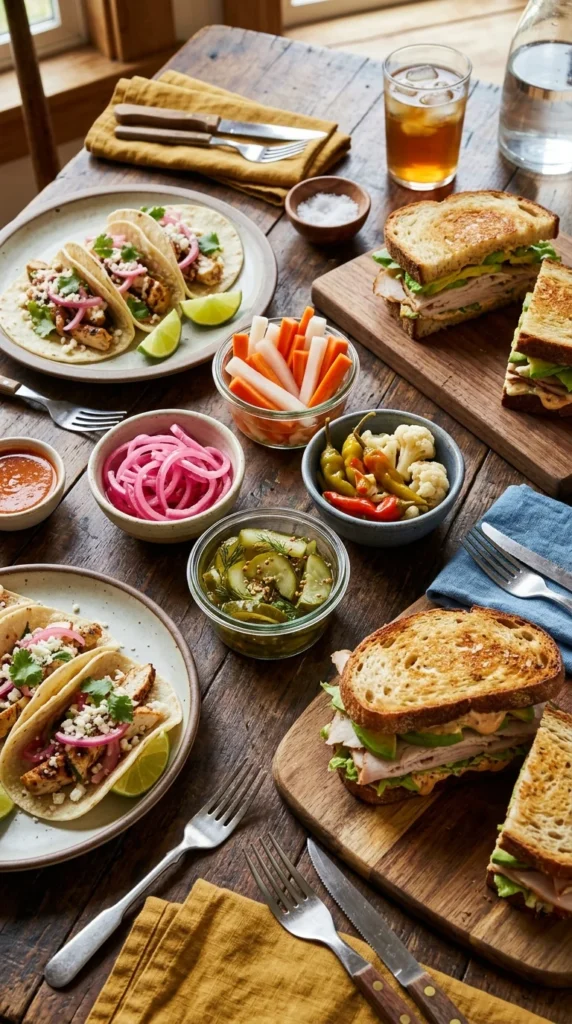
These pickles are usually used as toppings rather than side dishes.
They work especially well with:
- Sandwiches
- Grain bowls
- Burgers
- Tacos
- Rice dishes
- Salads
The acidity helps cut through heavier foods and adds contrast to simple meals.
Storage Tips For Refrigerator Pickles
Most quick pickled vegetables stay fresh in the refrigerator for about 1 to 2 weeks, depending on the vegetable and salt level.
For better storage:
- Keep vegetables fully submerged
- Use sealed jars
- Always use clean utensils when removing pickles
Some firmer vegetables may last longer, but texture gradually softens over time.
Common Mistakes That Ruin Quick Pickles
Using Thick Vegetable Pieces
Large cuts slow down flavor absorption and leave the center bland.
Weak Brine Ratios
Too much water reduces flavor intensity and affects preservation.
Using Powdered Spices
These create cloudy brine and uneven flavor distribution.
Refrigerating Immediately While Extremely Hot
Sudden temperature changes can affect texture and condensation inside the jar.
Final Thoughts
Quick pickling works best when the process stays simple. Thin slicing, balanced vinegar ratios, and proper cooling all influence how the vegetables taste and feel after only a few hours.
Once the base method becomes familiar, different vegetables, herbs, and spice combinations can be adjusted easily without changing the overall technique.