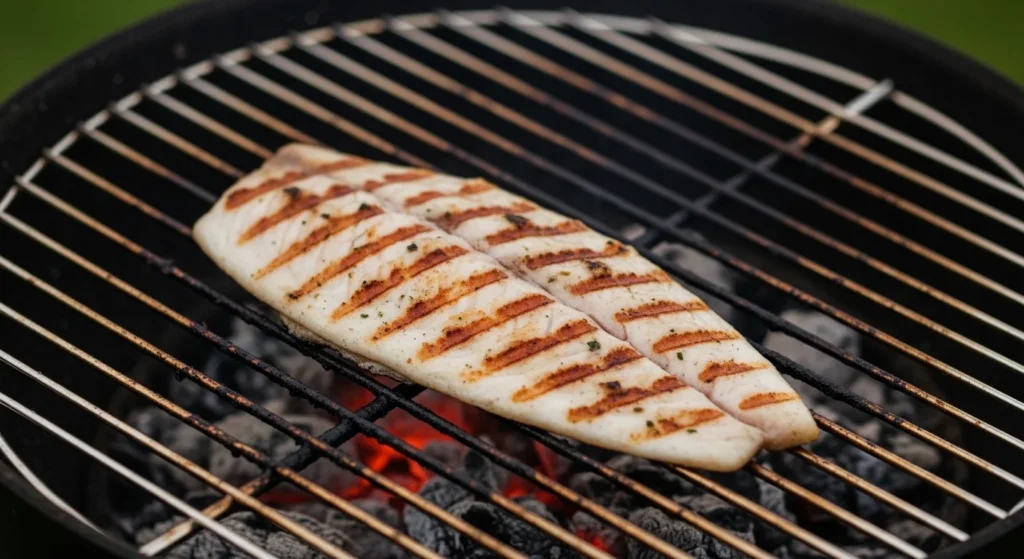
Grilling fish can feel unpredictable. It sticks, tears, or falls apart right when you try to flip it. Most of the time, this is not about skill, it comes down to a few small steps that are either skipped or done too quickly.
A well-grilled fish should lift cleanly, hold its shape, and develop a light crust on the outside while staying soft inside. That result depends on heat, surface preparation, and timing working together. When those are handled correctly, grilling fish becomes much easier and repeatable.
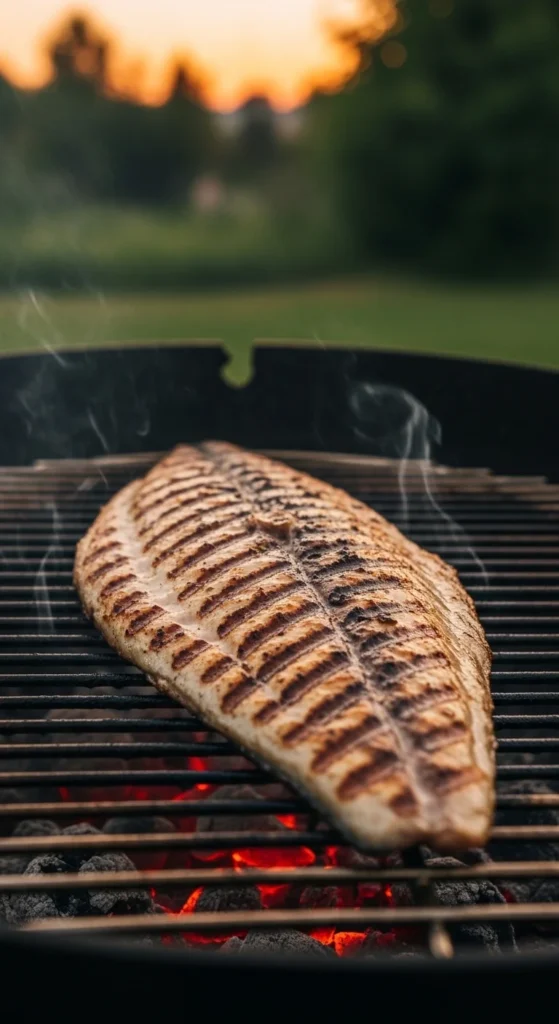
What Actually Causes Fish to Stick
Fish sticks when the surface cannot form a proper sear.
- A grill that is not fully heated creates weak contact
- Moisture on the fish turns into steam instead of browning
- Moving the fish too early breaks the surface before it sets
Once the surface cooks properly, the fish releases naturally without force.
Prepare the Grill So It Doesn’t Grab the Fish
Heat The Grill Properly
Turn the grill on and let it heat for 10 to 15 minutes. Medium-high heat works best, roughly in the 375°F to 450°F range.
A simple check is to bring your hand close to the grates. You should only be able to hold it there for 2 to 3 seconds.
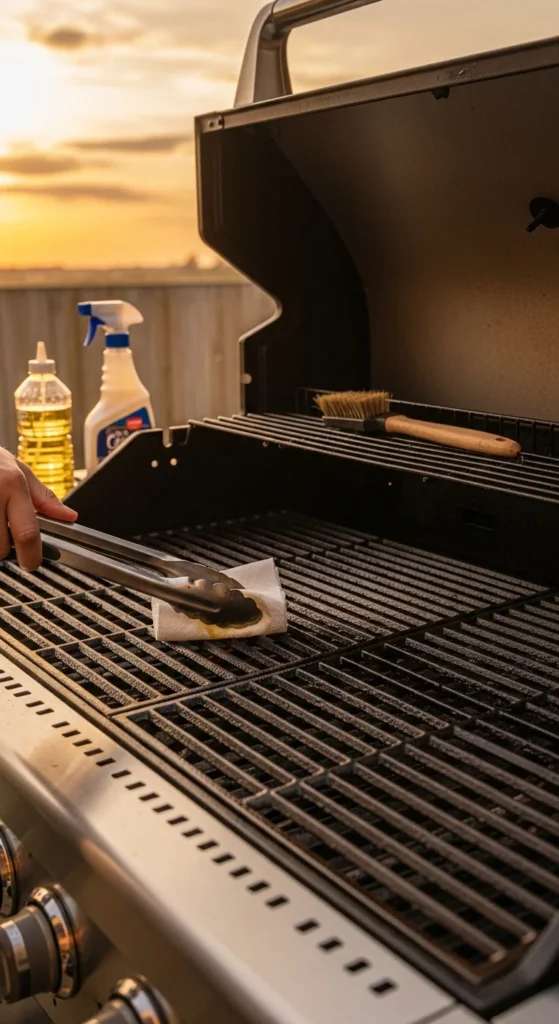
Clean The Grates While Hot
Brush off any residue. Even small bits left behind can catch the fish and cause tearing.
Oil The Surface Lightly
Dip a folded paper towel in oil and rub it across the hot grates using tongs. This creates a thin, even coating that helps prevent sticking.
Prepare the Fish Before It Goes on the Grill
Dry The Surface Completely
Use paper towels and remove all visible moisture. This step is critical. A wet surface will steam instead of sear.
Add A Light Oil Layer
Brush a thin coat of oil over the fish. This acts as a barrier between the fish and the grill.
Season After Oiling
Salt and spices stick better once the surface has oil on it, so apply them at this stage.
Choose Fish That Holds Together Well
Some types are easier to grill because they stay firm.
- Salmon works well because of its skin and structure
- Tuna behaves more like a steak and flips easily
- Swordfish stays intact under high heat
- Mahi-mahi is firm and forgiving
Very thin or delicate fish can still be used, but they require more control or support.
Place the Fish Correctly on the Grill
Start With The Skin Side Down
If the fish has skin, place that side first. It protects the flesh and helps build a crisp base.
Angle The Fish Slightly
Position the fillet diagonally across the grates. This reduces sticking points and makes it easier to lift later.
Let the Surface Set Before You Touch It
This is the step where most mistakes happen.
Place the fish and leave it alone for about 3 to 5 minutes depending on thickness. During this time, the surface firms up and forms a light crust.
Trying to move it earlier will cause it to tear.
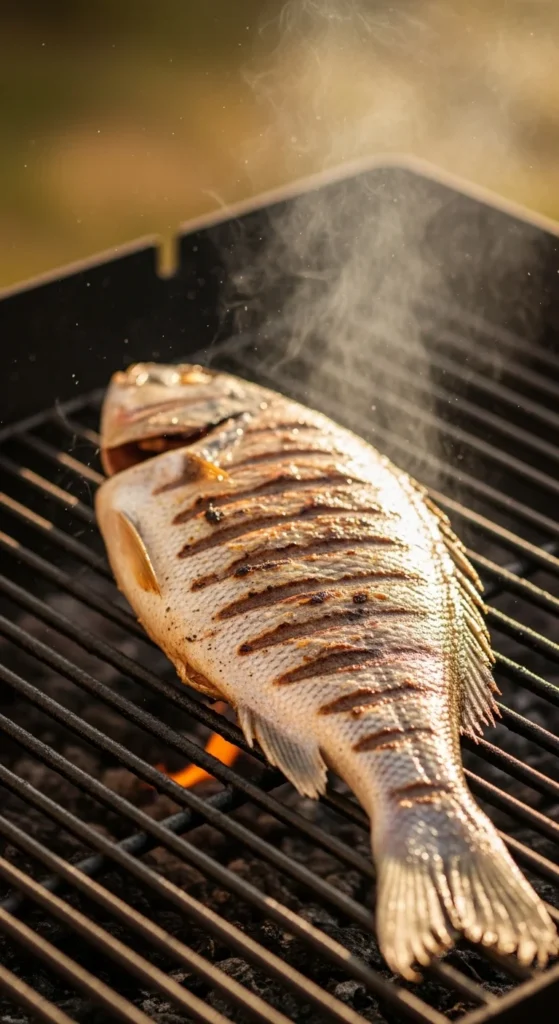
Know When It Is Ready to Flip
Instead of guessing, look for clear signs.
- The edges begin to turn opaque
- Grill marks are visible underneath
- The fish lifts easily without sticking
If it resists, give it another 30 to 60 seconds and check again.
Control Heat Based on Thickness
Thin fillets cook quickly over direct heat and usually need around 2 to 3 minutes per side.
Thicker cuts should start over direct heat for searing, then move to a slightly cooler area and cook for another 4 to 6 minutes.
Use a Light Marinade for Better Results
A simple mixture helps with both flavor and handling.
- Oil
- Lemon juice
- Salt
- Mild spices
Let the fish sit for 10 to 15 minutes. Avoid longer soaking because too much liquid softens the surface and makes grilling harder.
Outdoor Grilling Fish for a Summer Barbecue
For an outdoor setup, keep the process simple and focused.
Preheat the grill, prepare the fish properly, and place it carefully on the hot surface. Let it cook without interference, turn it once, and finish cooking until done.
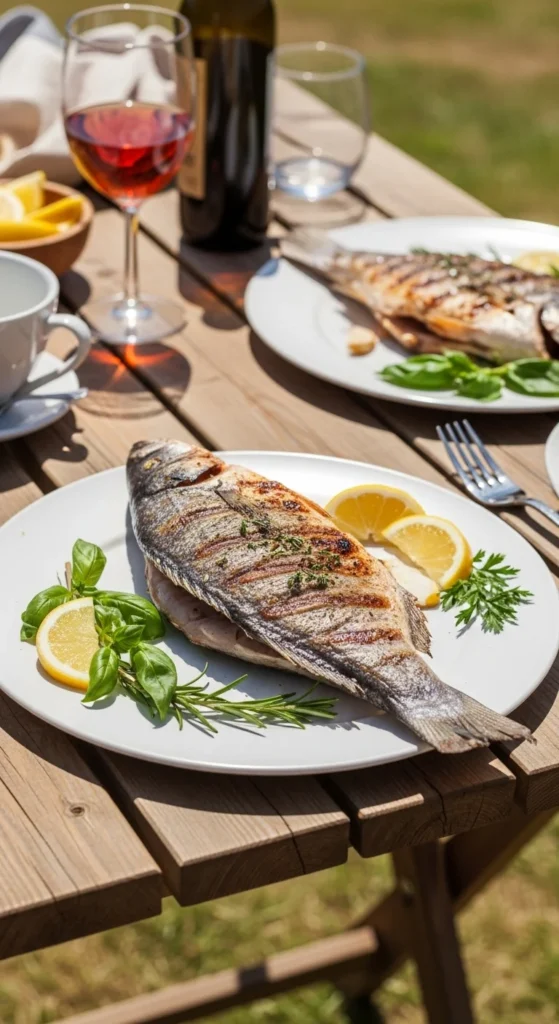
Serve it immediately on an outdoor table with lemon, herbs, and light sides such as grilled vegetables or salads. This keeps the texture intact and works well for casual outdoor meals.
Tools That Make Grilling Easier
- A thin fish spatula helps lift without breaking
- A grill basket supports delicate fish
- A grill mat creates a stable surface
These tools are useful, especially when working with softer fillets.
Extra Tips That Make a Real Difference
- Place lemon slices under the fish for a light barrier
- Keep the temperature steady instead of lowering it mid-cook
- Flip only once
- Avoid pressing the fish while it cooks
Check When the Fish Is Fully Cooked
Look for simple indicators instead of guessing.
- The flesh turns opaque
- It flakes easily with a fork
- Internal temperature reaches around 125°F to 145°F
If the Fish Starts to Stick
Do not pull it off forcefully.
Wait another 30 to 60 seconds and try again gently. Once the surface is properly cooked, it will release without effort.
Let It Rest
After removing the fish from the grill, let it sit for about 5 minutes. This helps it hold together and keeps the texture stable.
Final Thoughts
Grilling fish does not require complicated techniques, but it does require attention to small details. Heat, surface preparation, and patience during cooking all play a role in how the fish behaves on the grill.
When these elements are handled correctly, the fish holds together, develops a clean surface, and cooks evenly. This makes the process more reliable whether you are cooking a quick meal or preparing food for an outdoor gathering.