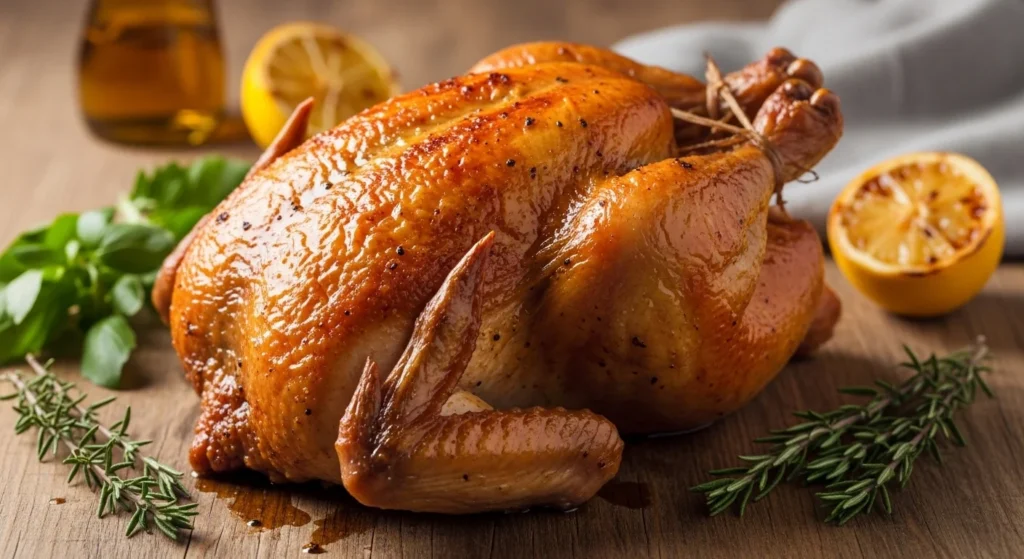
Roasting a whole chicken sounds simple, but small mistakes can completely change the result. Skin turns soft instead of crisp, the breast dries out, or the inside stays undercooked. These issues usually come from heat control, moisture, and poor timing rather than complicated technique.
A well-roasted chicken should have deeply golden skin, juicy meat, and even seasoning throughout. Getting there requires a clear sequence, not guesswork. Each stage plays a role in how the final dish turns out.
What Makes A Perfect Roast Chicken
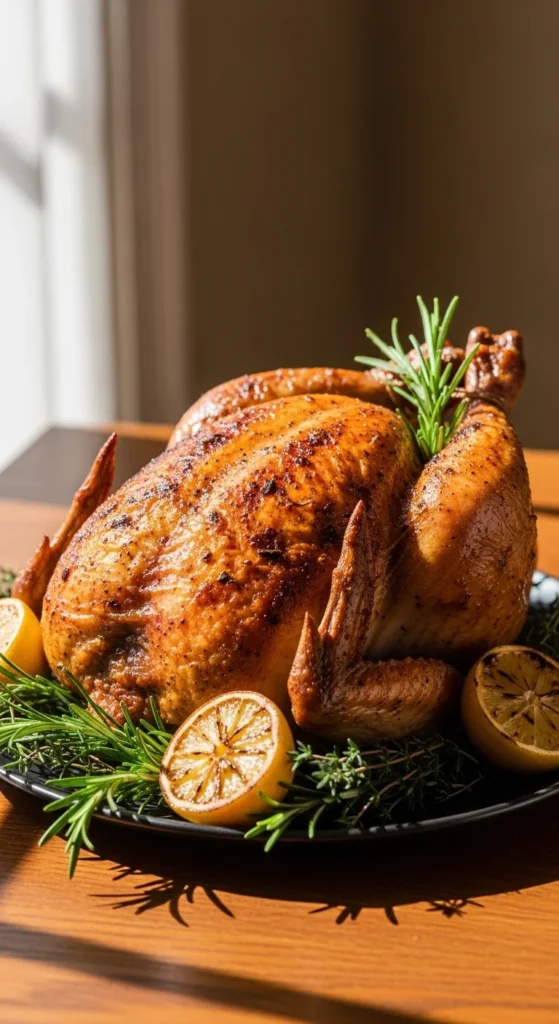
A properly roasted chicken is defined by three things: texture, moisture, and flavor distribution.
- The skin should be crisp, not rubbery or pale
- The meat should stay juicy, especially the breast
- Seasoning should reach both the surface and inner layers
If one of these is off, the method needs adjustment rather than more ingredients.
Step-by-Step Method To Roast Chicken Properly
Follow this step-by-step method to roast a whole chicken evenly, ensuring crisp skin, juicy meat, and consistent results every time.
Step 1: Dry The Chicken Completely
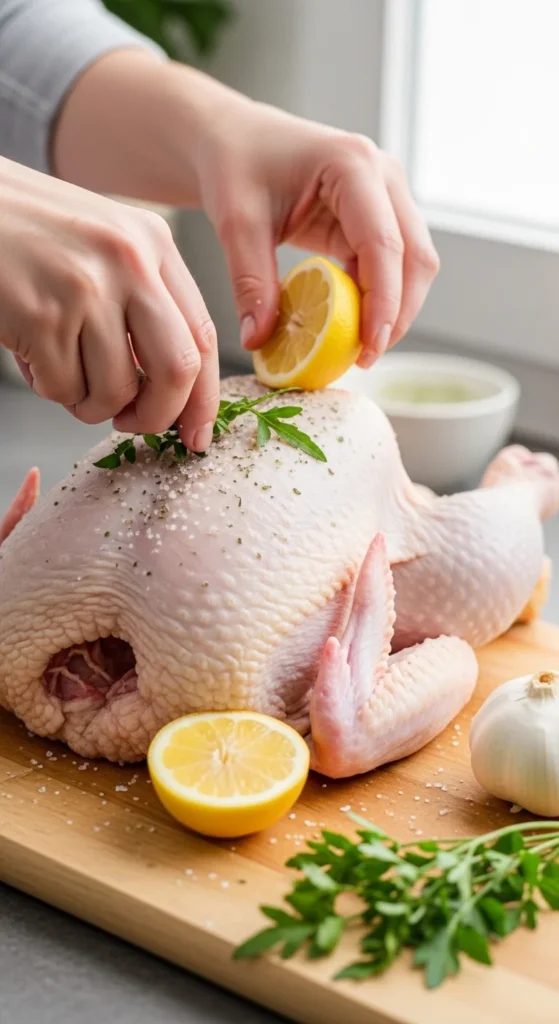
Take the chicken out of the packaging and pat it dry using paper towels. Any surface moisture will turn into steam and prevent the skin from crisping.
Step 2: Season Inside And Outside
Salt the cavity first, then season the outer skin generously. This ensures the flavor is not limited to just the surface.
Step 3: Add Aromatics For Flavor
Place lemon halves, garlic cloves, and herbs inside the cavity. These release flavor into the meat during roasting.
Step 4: Prepare The Pan Base
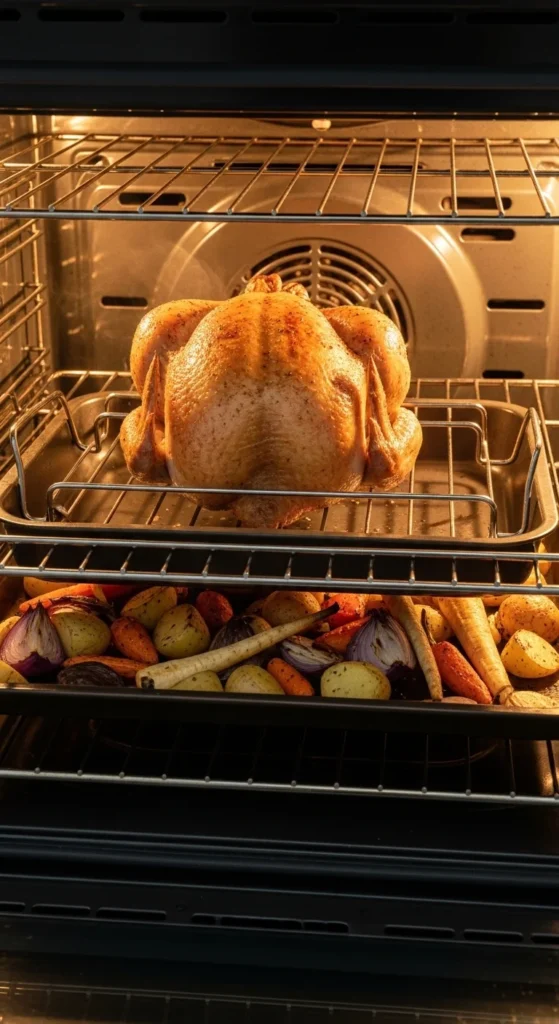
Lay chopped vegetables like onions or carrots under the chicken. This allows better air circulation and creates a natural roasting rack.
Step 5: Set Oven Temperature Correctly
Preheat the oven to 425°F. This temperature helps create a crisp exterior while keeping the inside juicy.
Step 6: Roast Without Covering
Place the chicken uncovered in the oven. Covering traps steam and softens the skin.
Step 7: Baste At The Right Time
After about 25–30 minutes, spoon butter or pan juices over the chicken to enhance color and flavor.
Step 8: Check Internal Temperature
Insert a thermometer into the thigh. The target is 165°F for properly cooked meat.
Step 9: Let It Rest Before Cutting
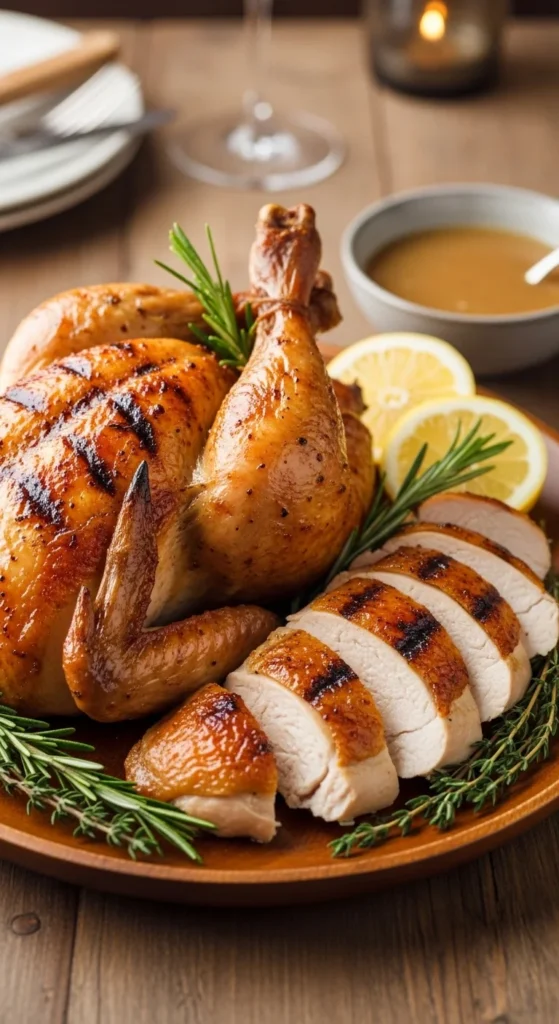
Allow the chicken to rest for at least 10–20 minutes so the juices settle inside the meat.
Oven Setup And Positioning
Where you place the chicken in the oven affects how evenly it cooks.
- Use the lower-middle rack for balanced heat
- Keep space around the pan for airflow
- Avoid placing it too close to the top heat source
Proper placement prevents uneven browning and undercooked sections.
Timing Based On Chicken Size
Cooking time depends on weight rather than guesswork.
- 1 kg chicken: around 45–55 minutes
- 1.5–2 kg chicken: around 60–90 minutes
A general rule is about 15–18 minutes per pound, followed by resting time. Always confirm doneness using temperature instead of relying only on timing.
Common Mistakes When Roasting A Whole Chicken And How To Fix Them
Here are the most frequent problems people face while roasting chicken, along with practical ways to correct them.
Skin Turns Soft Instead Of Crispy
This happens when moisture remains on the surface or heat is too low. Drying the chicken thoroughly and maintaining a high temperature solves this.
Breast Meat Comes Out Dry
The breast cooks faster than the legs. Adjust positioning or baste during cooking to retain moisture.
Chicken Cooks Unevenly
Incorrect rack placement or overcrowding leads to uneven heat distribution. Keep the chicken centered with enough surrounding space.
Flavor Feels Flat
Seasoning only the outer surface limits taste. Season inside the cavity and use aromatics to build depth.
Guessing Doneness Without Tools
Visual checks alone are unreliable. A thermometer ensures accurate and safe cooking every time.
Flavor Boosting Techniques That Make A Difference
Small additions can upgrade the final result without complicating the process.
- Place butter under the skin for deeper richness
- Use herbs like thyme or rosemary for aroma
- Add a light squeeze of lemon after roasting for balance
These changes enhance flavor while keeping the method simple.
Using Leftovers Efficiently
A whole chicken can be used across multiple meals when handled properly.
- Shred leftover meat for wraps or sandwiches
- Use bones for broth or soup
- Add pieces to salads or rice dishes
This makes the roast more practical for weekly cooking.
Final Thoughts
A good roast chicken depends on handling each stage carefully rather than relying on shortcuts. Drying, seasoning, heat control, and resting all contribute to the final result.
When these elements are managed properly, the outcome stays consistent without needing constant adjustments. This approach keeps the process straightforward while still delivering a well-balanced and flavorful dish.