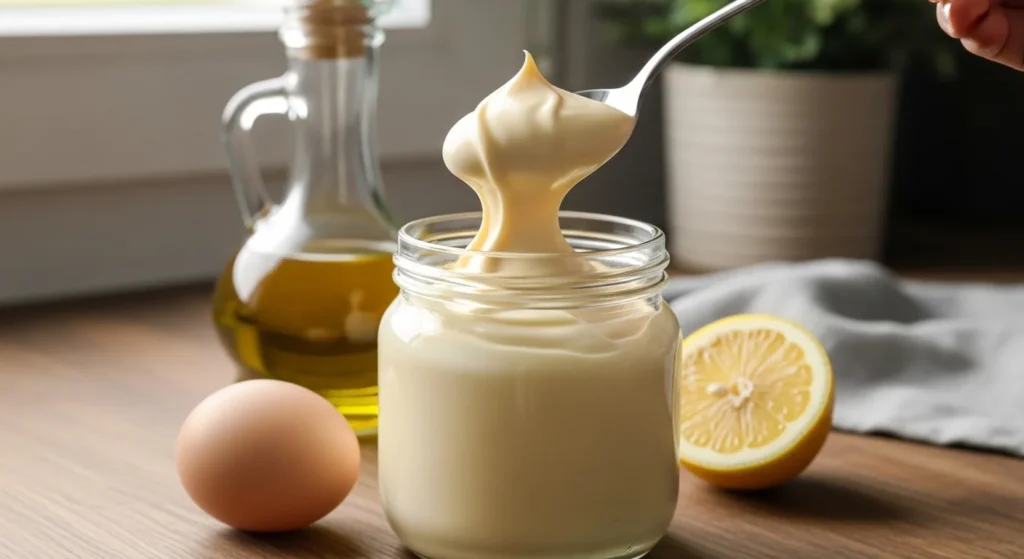
Making mayonnaise at home is not complicated, but it is precise. When it fails, it usually separates into oil and liquid instead of turning thick. That happens when the mixing process is rushed or the ingredients are not handled correctly.
A simple homemade mayonnaise recipe works when oil is pulled slowly into the egg and acid. This creates a smooth, stable texture that holds together. Once you understand how that happens, you can make quick and simple homemade mayo in just a minute.
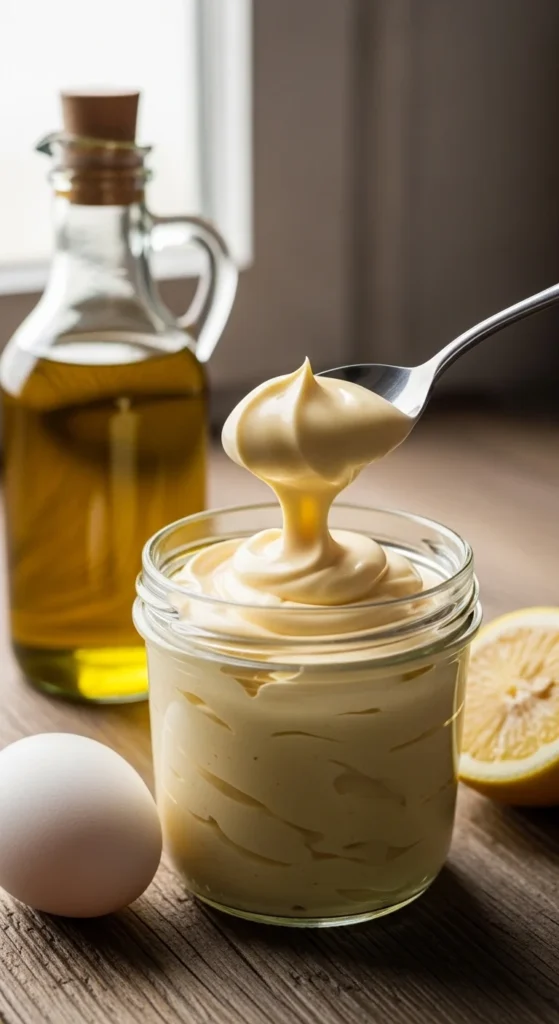
The 3-Ingredient Mayonnaise Recipe Base
This is the simplest form of mayonnaise sauce.
- 1 whole egg or 1 egg yolk
- 1 cup neutral oil
- 1 tablespoon lemon juice or vinegar
This combination creates the structure. The egg binds, the oil thickens, and the acid balances the taste. If you want consistent results, keep all ingredients at room temperature before starting.
Quick And Simple Homemade Mayo Method
This method is beginner-friendly and gives reliable results.
Prepare The Right Setup
Use a tall, narrow jar so the ingredients stay concentrated. This helps the blending process work faster.
Add Everything Without Mixing
- Crack the egg into the jar
- Pour oil directly on top
- Add the acid
Do not stir or shake before blending.
Blend From Bottom To Top
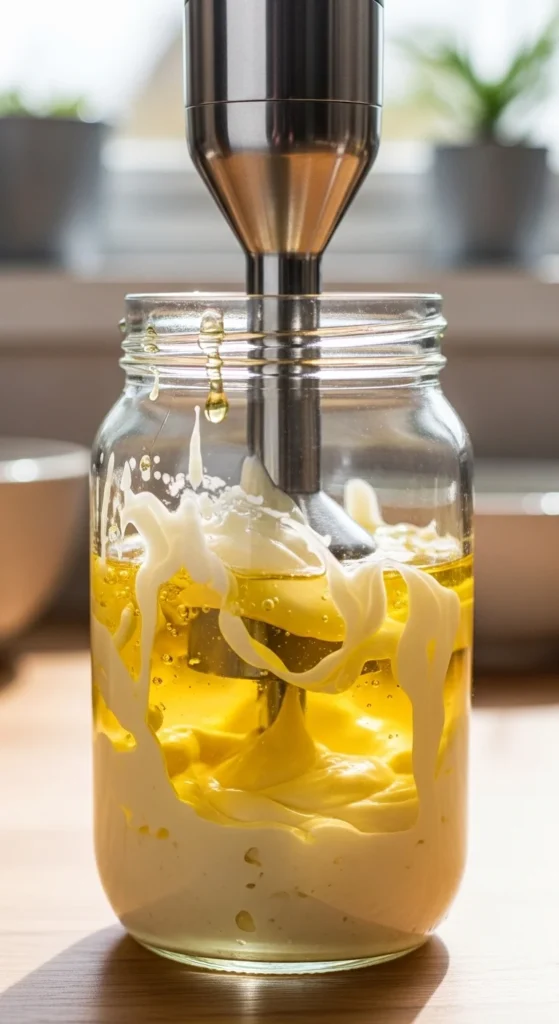
Place the immersion blender at the bottom and turn it on.
Hold it still until the base turns thick.
Then slowly lift upward so the rest of the oil gets incorporated. Within seconds, the mixture transforms into mayonnaise.
How To Check If Your Mayo Is Properly Emulsified
Look for these clear signs:
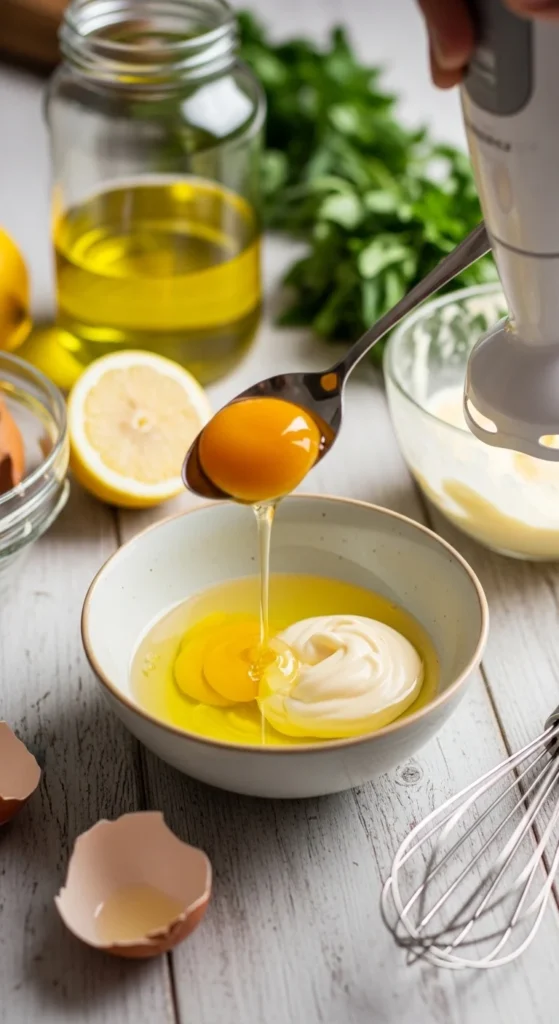
- The texture is thick and holds its shape
- No visible oil separation
- Smooth and glossy finish
If it looks thin, continue blending slowly. Do not rush the movement.
Why Homemade Mayo Breaks And How To Fix It
Breaking happens when oil fails to combine with the egg.
Common Reasons
- Oil added too quickly
- Ingredients too cold
- Blender lifted too early
Fixing Broken Mayo
Take a clean jar with one fresh egg yolk. Slowly add the broken mixture into it while blending. This rebuilds the emulsion and turns it back into a stable mayonnaise sauce.
Choosing The Right Oil For Mayonnaise
Oil affects both taste and appearance.
Neutral Oils
Avocado oil or light olive oil create a mild, smooth flavor. These are best for most mayonnaise recipes.
Strong Oils
Extra virgin olive oil can taste bitter when blended quickly. If using it, combine it with a neutral oil instead of using it alone.
Homemade Mayonnaise Flavors And Variations
Once the base is ready, you can turn it into different flavored mayonnaise recipes without changing the method.
- Add garlic to create a stronger mayo sauce
- Mix in mustard for a sharper and slightly tangy profile
- Add herbs like parsley or oregano for a lighter variation
- Add chili or paprika for a spiced version
These adjustments create different types of mayo while keeping the same 3-ingredient foundation.
How To Adjust Taste After Making Mayo
Do not try to perfect everything before blending. Adjust after.
- Add salt gradually and taste
- Add more acid if it feels too heavy
- Add a small amount of water if it becomes too thick
Always mix and taste again before adding more.
Storage And Safety For Homemade Mayo
- Store in an airtight jar in the refrigerator
- Use within 3 to 7 days
- Use pasteurized eggs if needed for safety
Because it has no preservatives, it should be handled carefully.
Where To Use Mayonnaise Sauce
This mayonnaise sauce works across different dishes.
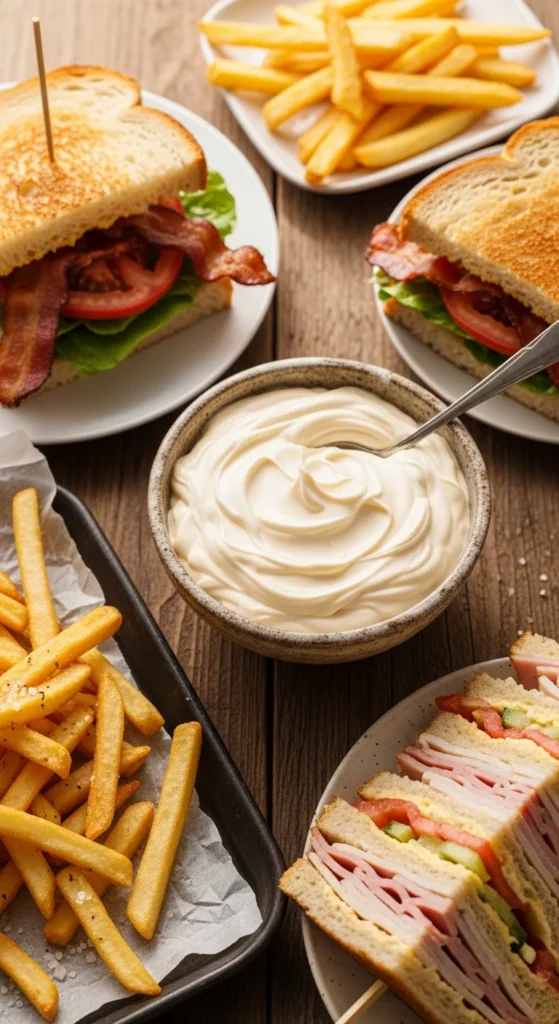
- Spread on sandwiches and burgers
- Mix into potato or pasta salads
- Use as a base for dips by adding spices or herbs
- Combine with garlic or lemon for quick sauces
Its neutral base makes it easy to adapt.
Final Thoughts
A stable mayonnaise depends on how the ingredients are combined, not how many you use. The blending technique, temperature, and speed all play a role in the final texture.
Once the process is clear, making homemade mayo becomes quick, repeatable, and easy to adjust into different flavors.