A buffet table is not just about placing food on a surface. It becomes the center of the room, the place people gather around, and often the part guests remember the most. When it’s done right, it feels organized, easy to move through, and visually appealing without trying too hard.
The biggest difference between an average setup and a stunning one usually comes down to structure. Adding height with stands, keeping a clear flow from plates to mains, and grouping similar items together instantly makes the table feel intentional. Once that base is right, even simple food starts to look like a proper spread.
1. Build-Your-Own Taco Bar
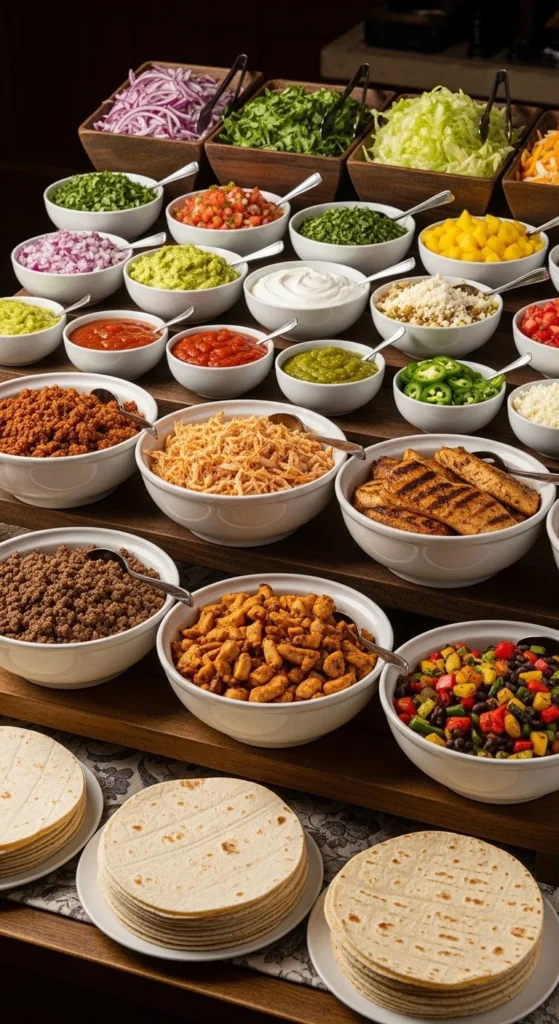
A taco bar works because it gives guests control without creating confusion. Everything is simple, familiar, and easy to assemble, which keeps the line moving and avoids people standing around unsure of what to do.
What to Include
- Soft and hard tortillas
- 2–3 protein options (chicken, beef, beans)
- Toppings like lettuce, cheese, salsa, onions
- Sauces in squeeze bottles for easy use
How to Set It Up
Start with plates and tortillas at the beginning so people can build as they move forward. Place proteins next while they’re still warm, then finish with toppings and sauces at the end. Keep sauces in squeeze bottles to reduce mess and speed up movement.
2. Pasta Bar with Sauce Options
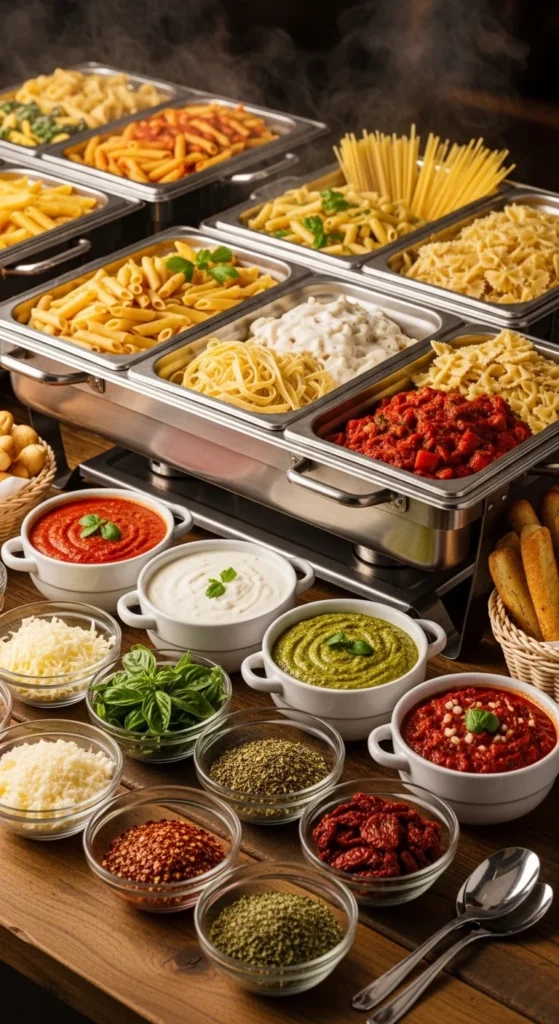
A pasta bar feels more like a complete meal, which makes it a strong choice for larger gatherings. The goal is to keep it simple while still giving enough variety so guests can customize without slowing things down.
What to Include
- 1–2 types of pasta
- 2 sauces (one creamy, one tomato-based)
- Add-ons like grilled chicken, vegetables, cheese
- Fresh herbs or chili flakes for finishing
How to Set It Up
Keep pasta and sauces side by side so guests can build without stepping back and forth. Use deeper dishes or warm trays for sauces to maintain temperature. Place toppings last so guests can finish their plate without blocking the main flow.
3. DIY Slider Station
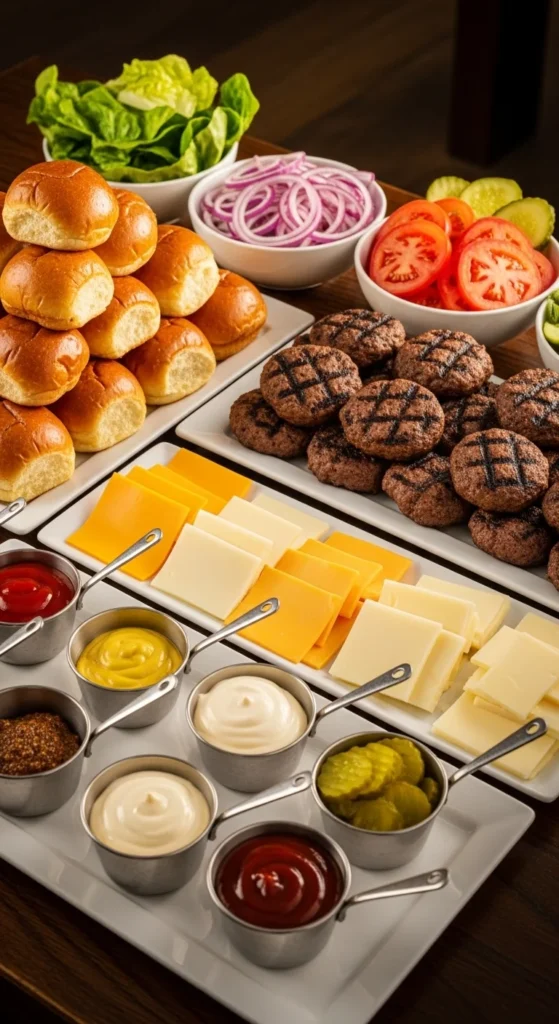
Slider stations feel interactive but still stay manageable when everything is laid out clearly. The smaller size also helps control portions and keeps guests moving instead of stopping for too long.
What to Include
- Mini buns
- Small patties (chicken, beef, or vegetarian)
- Cheese slices
- Simple toppings like lettuce and sauces
How to Set It Up
Stack buns neatly at the start, followed by patties and cheese in flat trays so everything stays visible. Keep toppings minimal and placed at the end to avoid crowding. Use wider spacing between trays so multiple people can serve at once.
4. Loaded Nacho Table
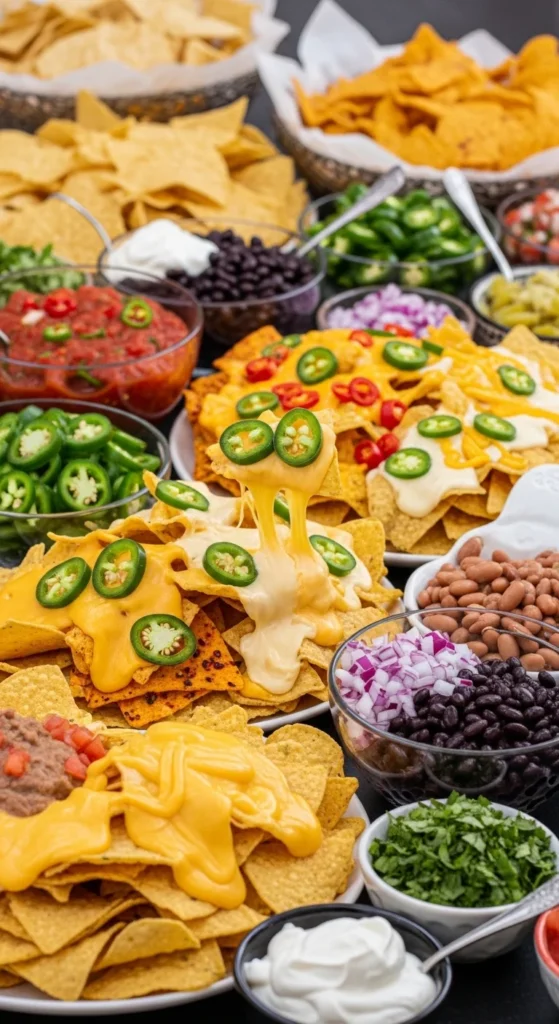
A nacho table creates an abundant look without requiring complicated preparation. It works well when you want something casual that still feels full and visually appealing.
What to Include
- Tortilla chips (keep extra refills ready)
- Cheese sauce or shredded cheese
- Beans, jalapeños, olives
- Salsa, sour cream, guacamole
How to Set It Up
Place chips at the front in large, easy-to-grab bowls. Arrange toppings in a clear, linear order so guests can move without crossing over each other. Keep extra chips off the table and refill in smaller amounts to maintain a fresh appearance.
5. Crostini & Bruschetta Bar
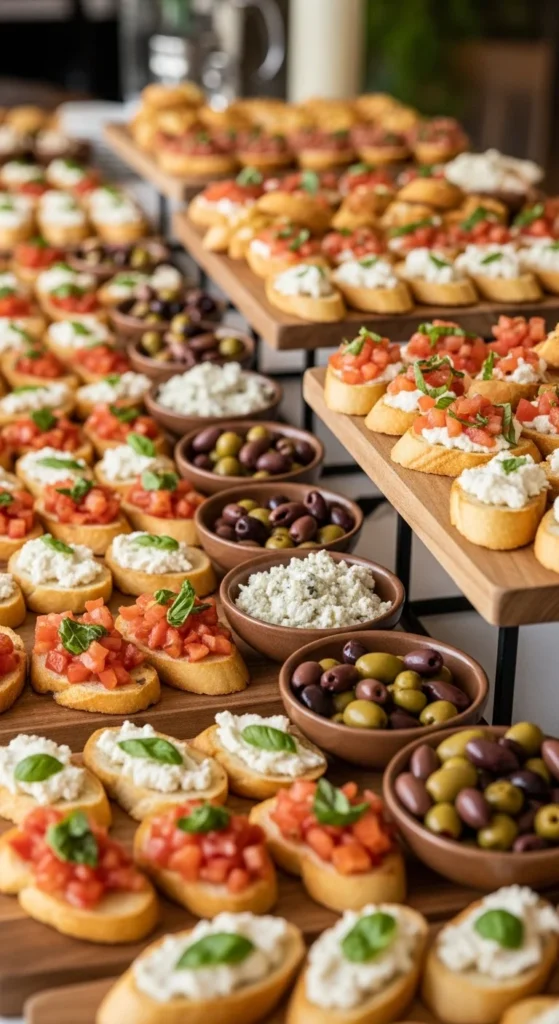
A crostini and bruschetta bar looks simple at first but feels more refined once everything is arranged properly. The variety of toppings adds detail without making the setup complicated.
What to Include
- Sliced toasted baguette or crostini
- 2–3 spreads (cream cheese, ricotta, hummus)
- Fresh toppings (tomato basil mix, olives, roasted vegetables)
- Finishing touches like olive oil, herbs, chili flakes
How to Set It Up
Use raised boards or tiered trays for the bread so it stands out as the base. Keep spreads grouped together in small bowls, and line up toppings in a clean sequence. Avoid overcrowding by spacing items so guests can move along the table smoothly.
6. Finger Food Party Table (Mini Sandwiches & Bites)
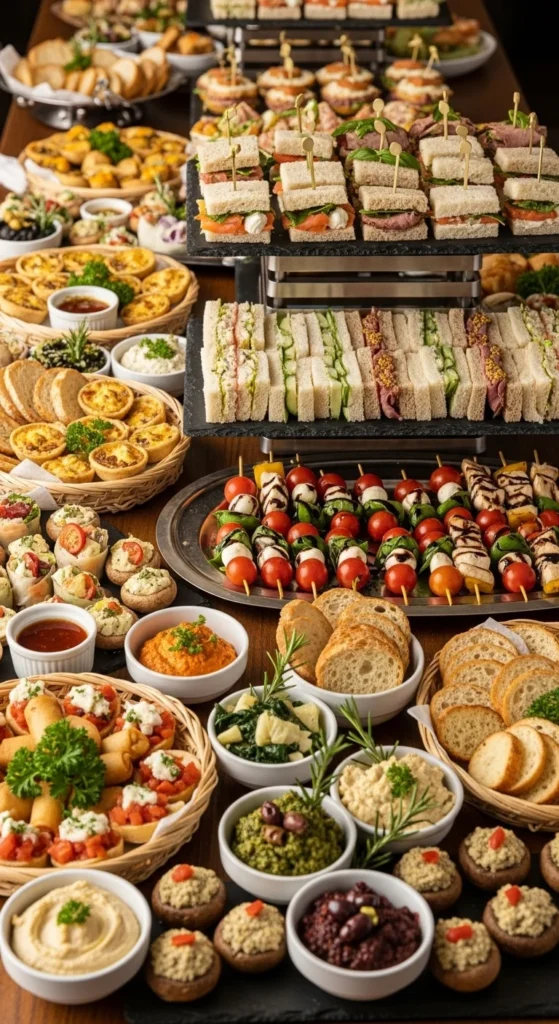
A finger food table is one of the easiest ways to feed a crowd without needing heavy serving setups. Everything is pre-portioned, easy to pick up, and works well for guests who are standing, moving around, or not sitting down for a full meal.
What to Include
- Mini sandwiches or sliders
- Skewers (chicken, cheese, vegetables)
- Bite-sized snacks like spring rolls or mini wraps
- Dips in small bowls
How to Set It Up
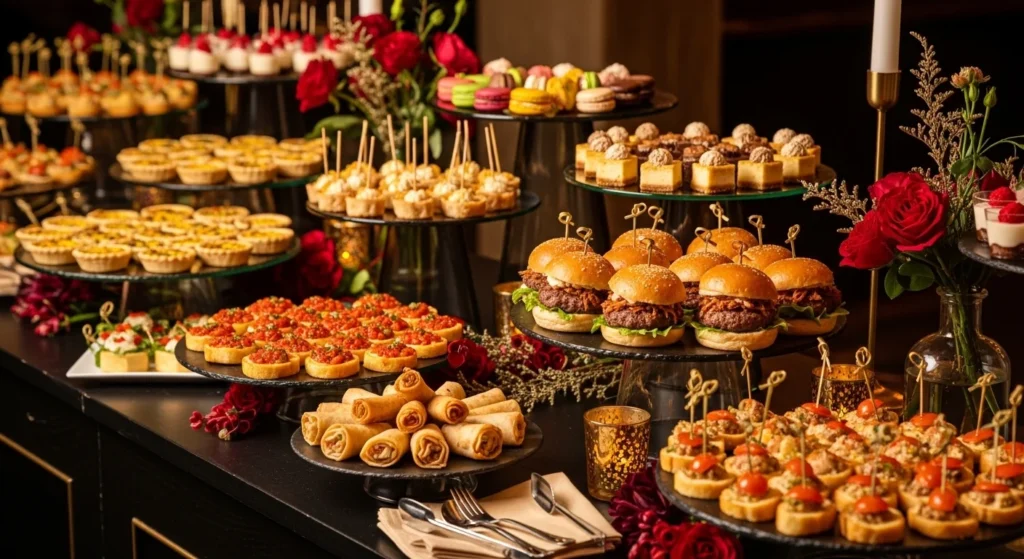
Use tiered trays or stands to create height so smaller items don’t get lost on the table. Group similar items together instead of scattering them across the table. Keep dips slightly off to the side so they don’t interrupt the main flow of movement.
7. BBQ Buffet Table Setup
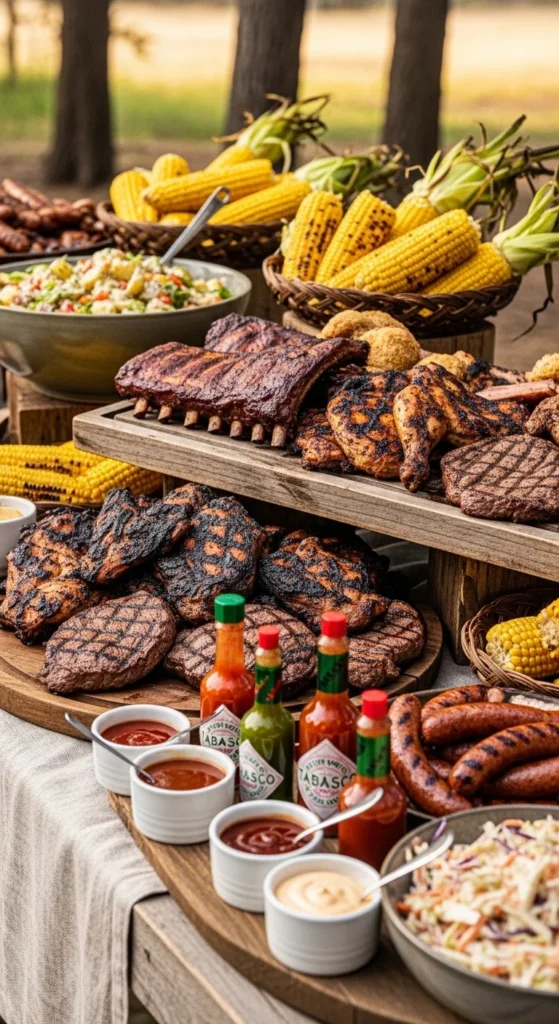
A BBQ buffet works best when it feels relaxed but still organized. The mix of grilled items and sides creates a full spread, but without a clear setup, it can quickly turn messy or crowded.
What to Include
- Grilled meats (chicken, beef, or kebabs)
- Sides like corn, roasted vegetables, or potatoes
- Bread or buns
- BBQ sauces and condiments
How to Set It Up
Keep hot grilled items together in the center so they stay the focus. Place sides on one side and bread on the other to avoid everything mixing into one area. Use trays instead of deep bowls so food stays visible and easy to grab.
8. Comfort Food Buffet (Mac & Cheese, Bakes, Sides)
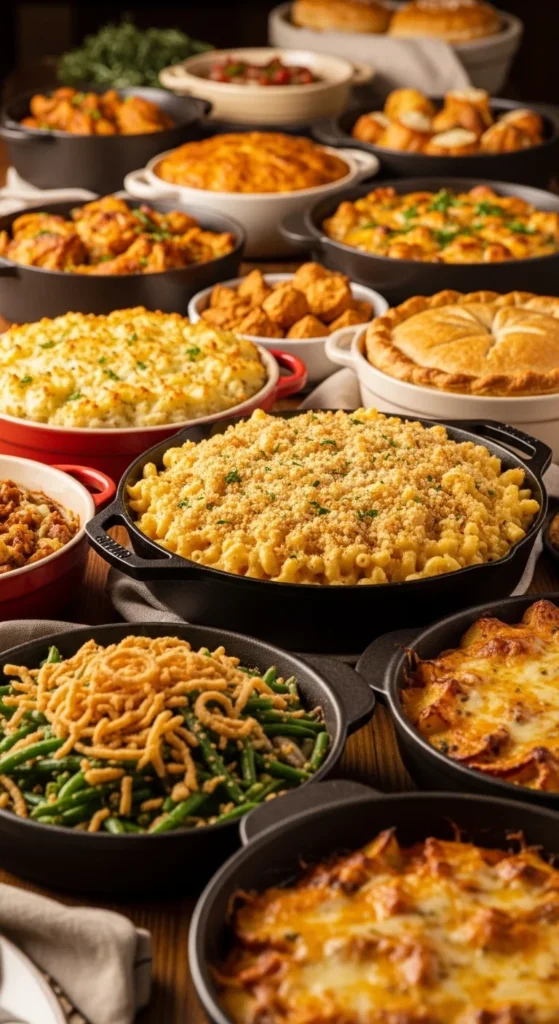
Comfort food buffets feel familiar and satisfying, which makes them ideal for mixed groups. The key is balancing heavier dishes with lighter sides so the table doesn’t feel overwhelming.
What to Include
- Mac and cheese or pasta bake
- Casseroles or baked dishes
- Roasted or sautéed vegetables
- Bread or rolls
How to Set It Up
Place heavier dishes like pasta and casseroles in the middle, where guests naturally pause. Keep lighter sides before or after them so people can build balanced plates. Use deeper dishes for hot items to retain heat longer.
9. Chicken & Rice Crowd Buffet
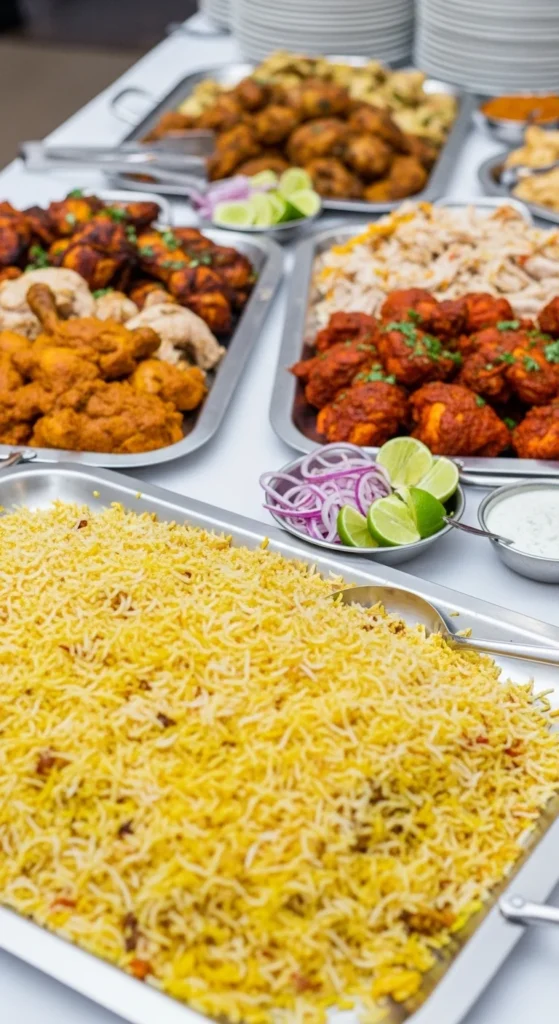
This setup works well when you need something filling, reliable, and easy to scale. Chicken and rice combinations are familiar, and they allow you to serve a large number of guests without overcomplicating the menu.
What to Include
- One main chicken dish (grilled, roasted, or sauced)
- Rice or flavored rice
- 1–2 simple sides (salad or vegetables)
- Sauce or gravy on the side
How to Set It Up
Keep the main dish and rice close together so guests can build their base quickly. Place sides afterward to avoid slowing down the main serving area. Use large trays for the main items so refilling is less frequent.
10. Mixed Appetizer Grazing Table
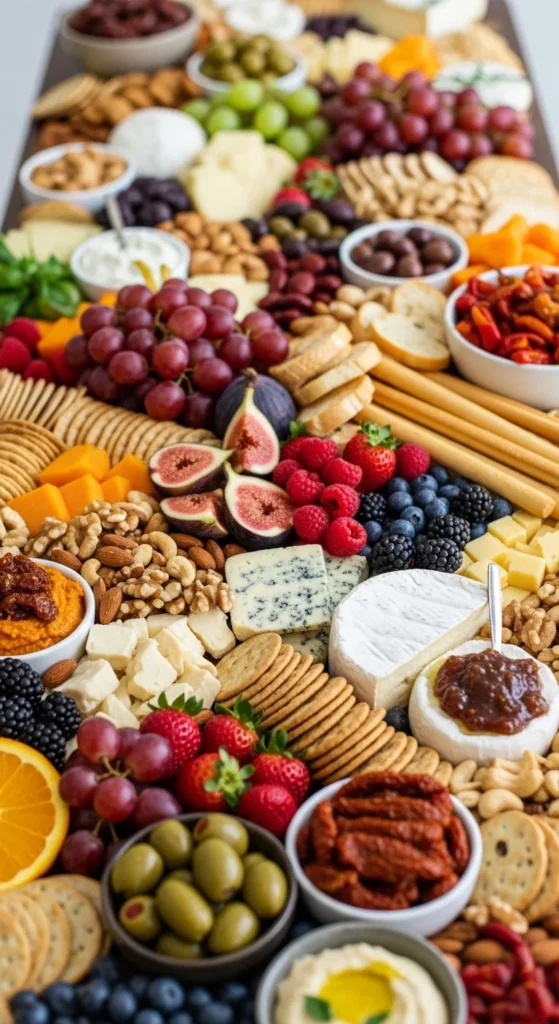
A grazing table is more about visual impact than structure, but it still needs a base layout to avoid looking cluttered. It works best when everything feels abundant but still easy to navigate.
What to Include
- Cheeses and crackers
- Fresh fruits and nuts
- Small appetizers or dips
- Breadsticks or light snacks
How to Set It Up
Start with larger items like boards or trays, then fill gaps with smaller items so the table looks full without overcrowding. Spread items evenly across the table instead of clustering everything in one area. Add height using stands or stacked boards to create variation.
11. Mediterranean Mezze Table
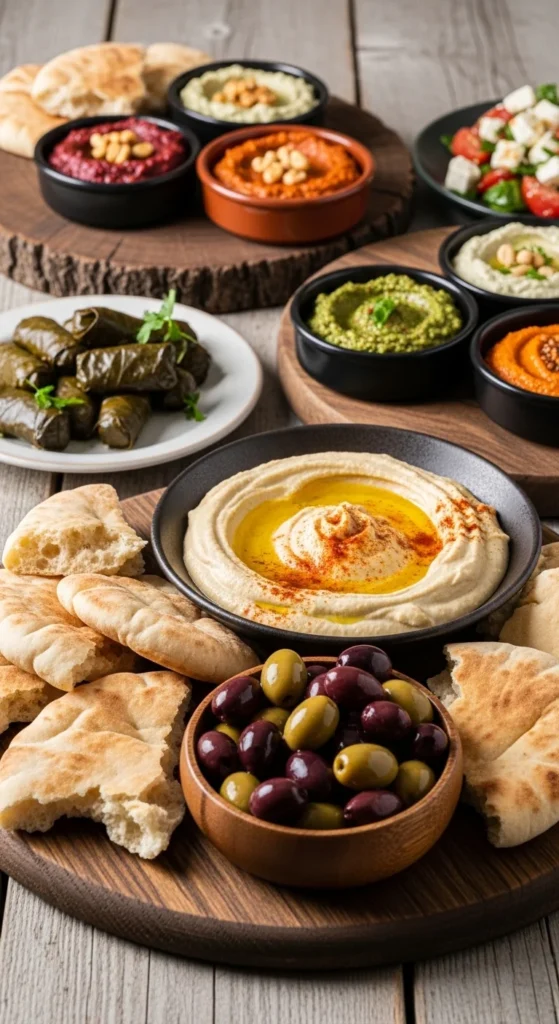
A mezze table naturally looks full and inviting because of the variety of small dishes. It works well when you want a mix of light, fresh, and shareable items that don’t rely heavily on hot food.
What to Include
- Dips like hummus, tzatziki, baba ganoush
- Pita bread or flatbread
- Olives and pickled vegetables
- Fresh salads or chopped vegetables
How to Set It Up
Place dips in the center as the main focus, surrounded by bread and vegetables so guests can build easily. Use small bowls and spread them evenly to avoid crowding in one spot. Add wooden boards or neutral platters to keep the look cohesive.
12. Asian-Inspired Dumpling & Noodle Bar
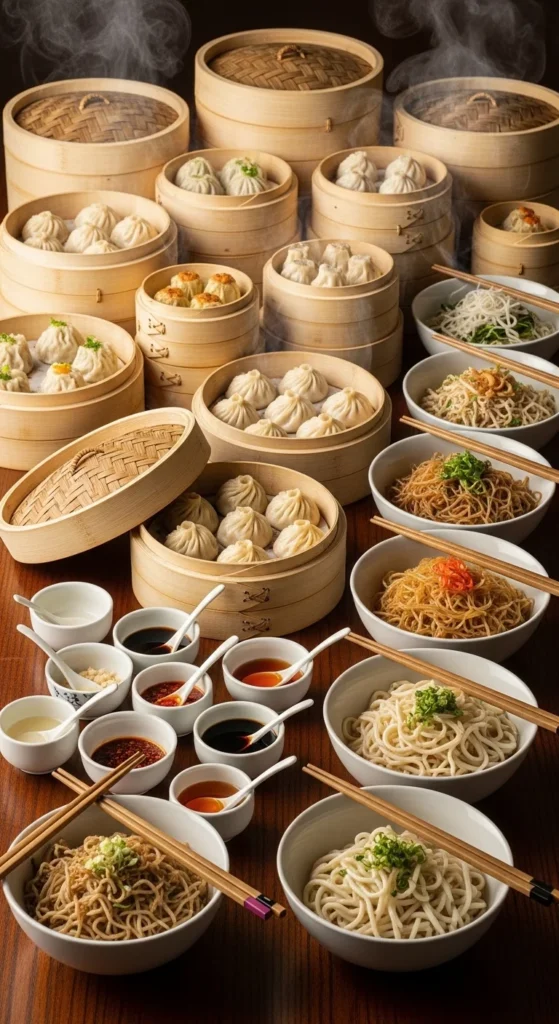
This setup feels interactive but still structured, especially when dumplings and noodles are served together. It works best when the options are simple and clearly arranged.
What to Include
- Dumplings (steamed or pan-fried)
- Noodles or rice
- Simple vegetables or stir-fry sides
- Sauces like soy, chili oil, or garlic sauce
How to Set It Up
Keep dumplings and noodles in separate sections so guests can choose one or both without confusion. Place sauces at the end in small bowls with clear spacing. Use trays or baskets instead of deep containers so everything stays visible.
13. Mexican Fiesta Buffet
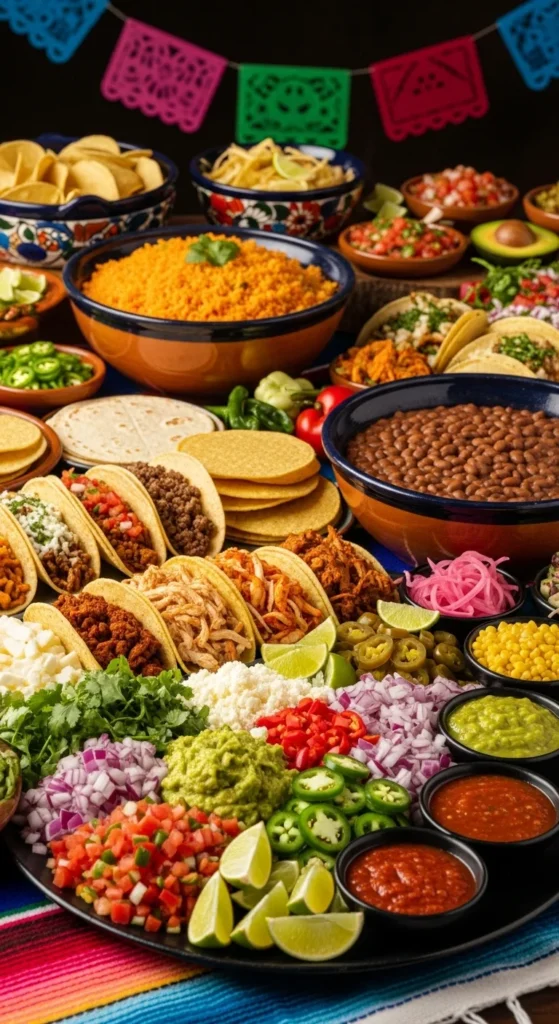
A Mexican-style buffet feels vibrant and energetic, with bold colors and familiar flavors. It works well for larger groups because most items are easy to scale and refill.
What to Include
- Tacos or tortillas
- Rice and beans
- Proteins like chicken or beef
- Toppings such as salsa, cheese, lettuce
How to Set It Up
Keep the main base items like rice and protein in the center, with tortillas and toppings on either side. Use colorful bowls or serving dishes to enhance the overall look without adding extra decoration.
14. Middle Eastern Grill Table
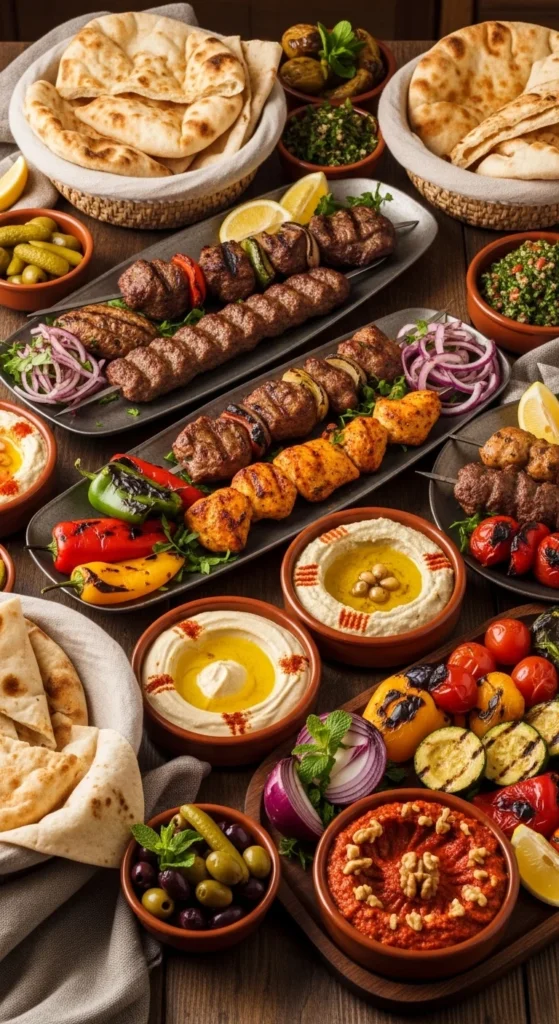
This setup combines grilled items with fresh sides, creating a balanced table that feels both filling and varied. It works especially well for outdoor or evening gatherings.
What to Include
- Grilled meats or kebabs
- Flatbreads
- Dips like hummus or garlic sauce
- Fresh salads or vegetables
How to Set It Up
Place grilled items in the center where they stand out visually. Arrange breads nearby so guests can build quickly, and keep dips slightly spaced to avoid crowding. Use long platters for meats to keep the layout clean and organized.
15. Italian Antipasto & Pasta Combo Table
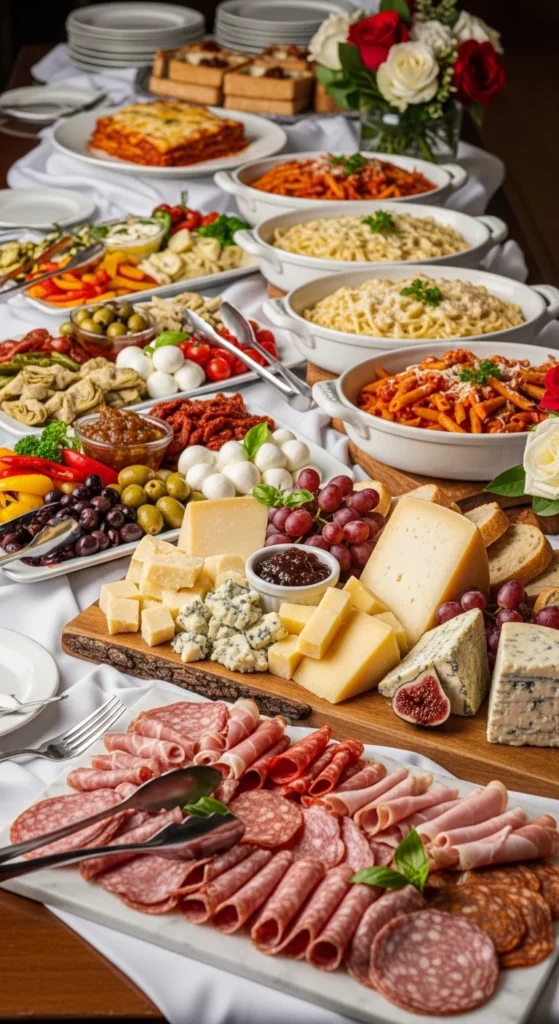
This setup combines lighter appetizer-style items with a more filling pasta option, making it suitable for both casual and slightly formal gatherings. It gives variety without making the table feel too heavy.
What to Include
- Antipasto items (cheese, olives, cured meats)
- One pasta dish
- Bread or breadsticks
- Simple salads or vegetables
How to Set It Up
Separate the table into two clear sections: one for antipasto and one for pasta. This keeps the flow organized and prevents crowding. Use boards for the antipasto side and deeper dishes for pasta to maintain structure and temperature.
16. Wedding-Style Elegant Buffet Table
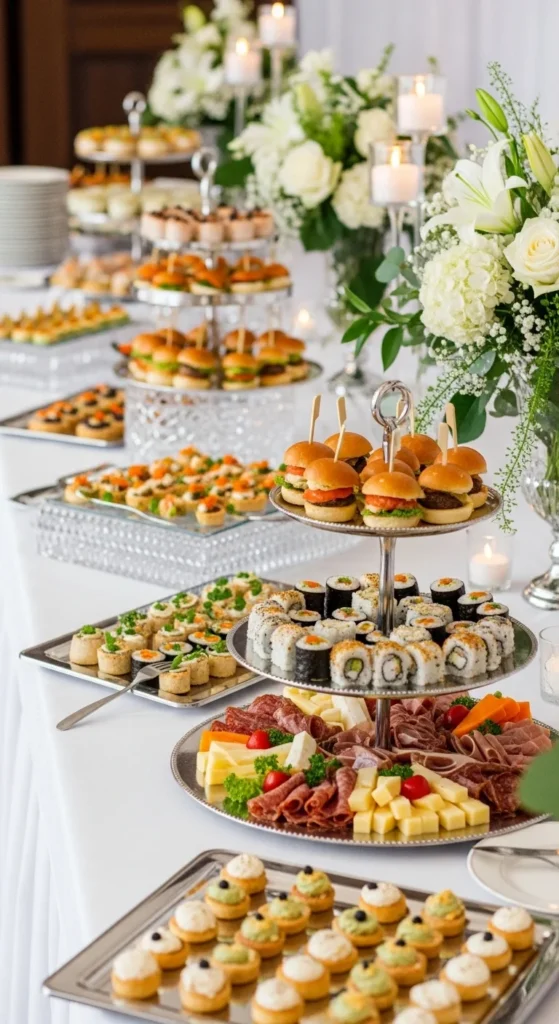
A wedding-style buffet is less about quantity and more about presentation. Everything is spaced out, layered properly, and designed to look clean rather than crowded. Even simple food feels elevated when the setup is intentional.
What to Include
- A balanced mix of mains, sides, and light appetizers
- Bread or rolls with butter
- A small dessert section or plated sweets
- Minimal but refined garnishes
How to Set It Up
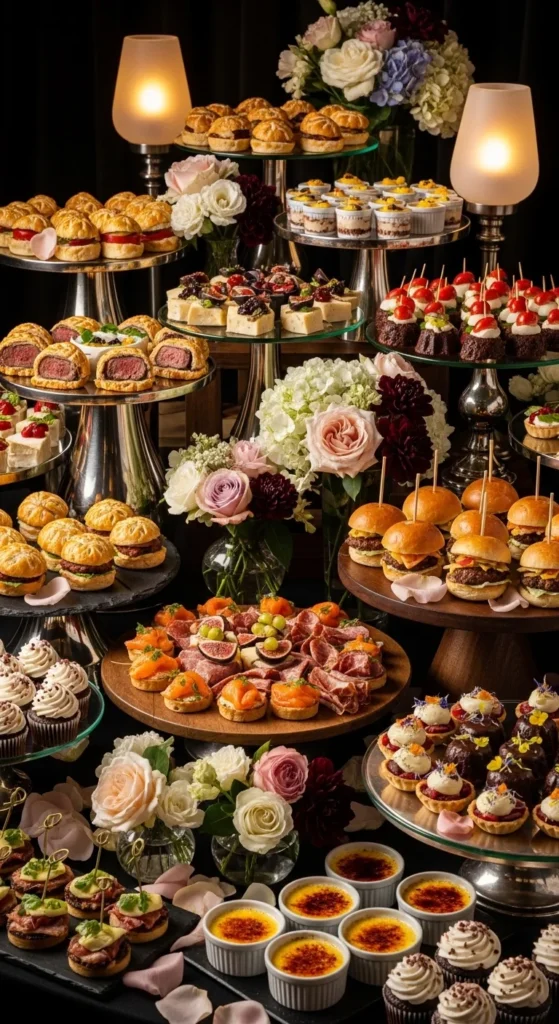
Use neutral tablecloths and keep spacing between dishes so each item stands out. Add height using stands or risers instead of placing everything flat. Place floral elements or candles in between sections instead of clustering them in one spot. Keep serving utensils consistent for a polished look.
17. Minimal-Luxury Neutral Buffet Setup
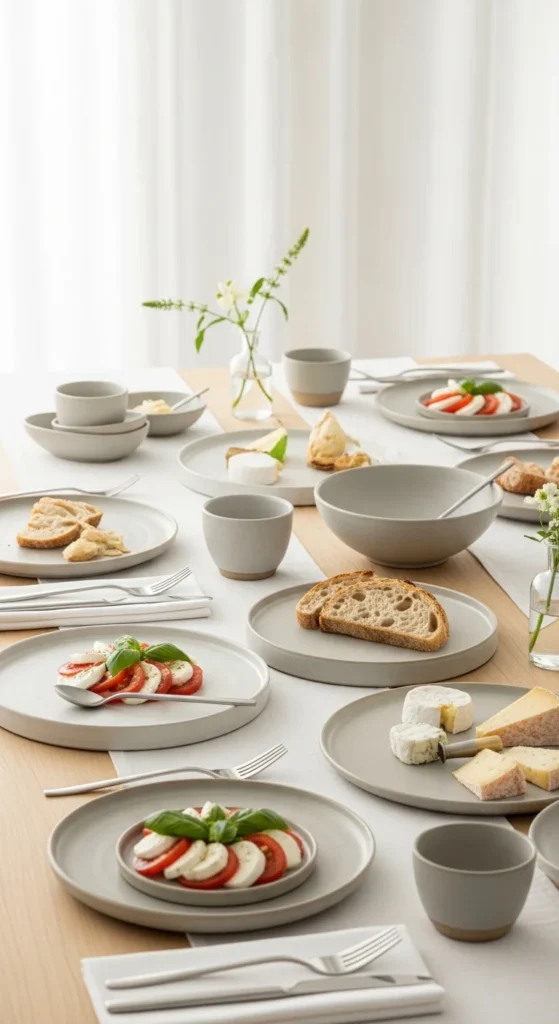
This setup focuses on clean lines and calm colors rather than heavy decoration. It feels modern and intentional, and works especially well when you want the food to stand out without visual clutter.
What to Include
- A small selection of well-presented dishes
- Neutral-toned serveware (white, beige, stone)
- Simple breads, salads, and mains
- Light garnishes like herbs or greens
How to Set It Up
Keep the table uncluttered by limiting the number of items on display at once. Space dishes evenly and avoid overlapping trays. Stick to one color palette across plates, napkins, and serving tools so everything feels cohesive.
18. Floral-Themed Garden Party Table
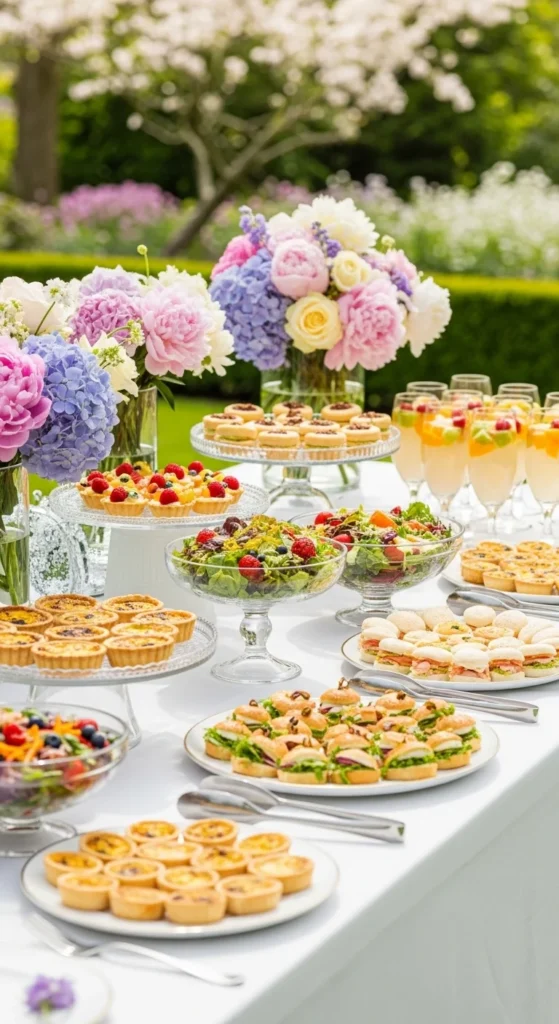
A floral-themed table feels light and inviting, especially for daytime or outdoor events. The visual comes from soft colors and fresh elements rather than heavy food styling.
What to Include
- Light dishes like salads, finger sandwiches, or fruit
- Desserts with simple decoration
- Drinks or refreshments
- Fresh flowers or greenery
How to Set It Up
Spread flowers across the table instead of placing them in one centerpiece. Use soft-colored serving dishes or linens to match the theme. Keep food spaced out so the table doesn’t feel crowded, especially in outdoor settings where visual balance matters more.
19. Retro Party Buffet (Classic Nostalgia Foods)
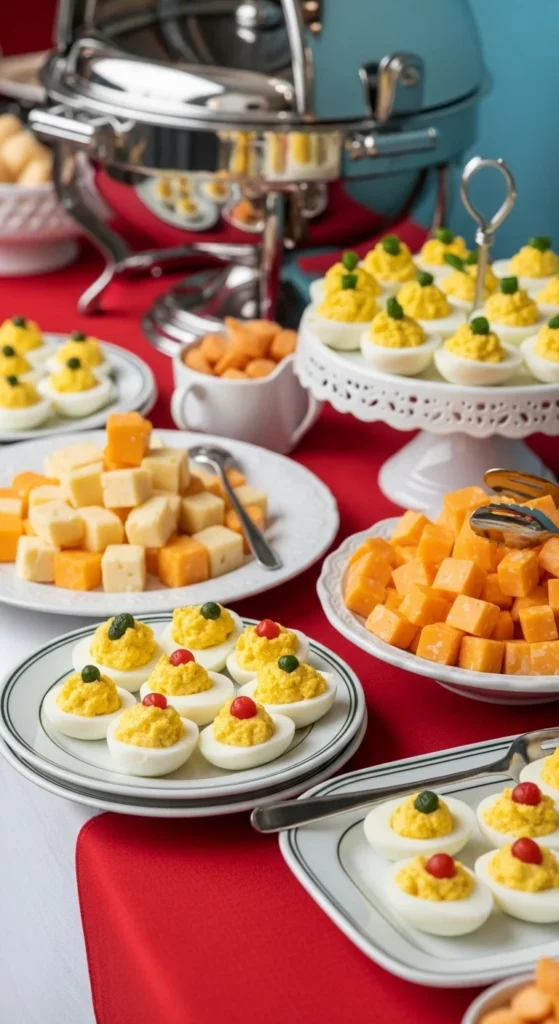
A retro buffet brings back familiar foods but presents them in a cleaner, more updated way. It works well when you want something fun and recognizable without overcomplicating the menu.
What to Include
- Deviled eggs or simple egg dishes
- Cheese cubes or skewers
- Classic party snacks
- Small desserts or sweets
How to Set It Up
Use trays and simple platters to keep the look structured instead of cluttered. Arrange items in straight lines or grouped sections so the table feels organized. Add a few small decorative elements rather than overloading the space.
20. Kids’ Party Snack Table
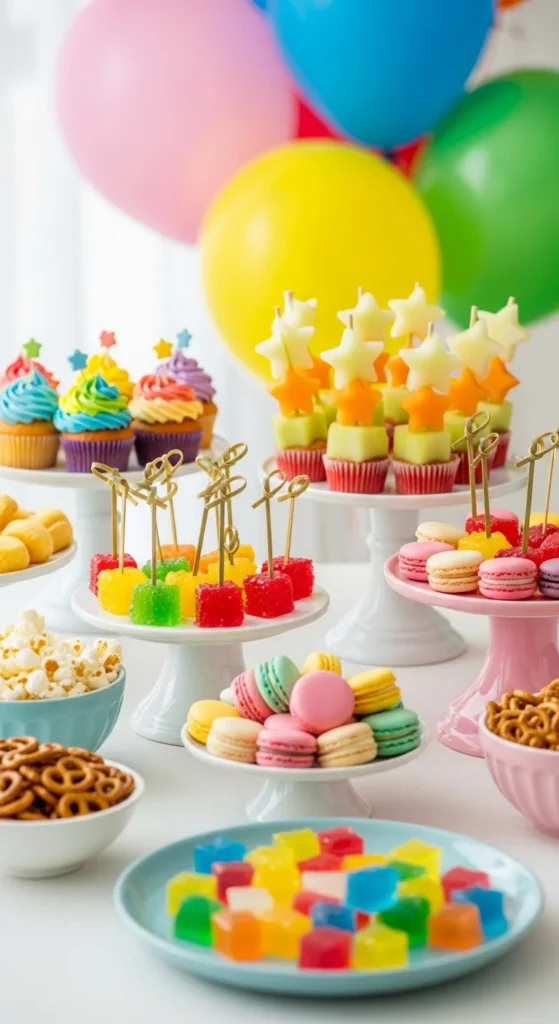
A kids’ table needs to be easy to reach, simple to understand, and quick to move through. The focus is on small portions and clear visibility so kids can pick what they want without needing help.
What to Include
- Bite-sized snacks and mini treats
- Simple sandwiches or wraps
- Sweet options like cupcakes or cookies
- Drinks in small, easy-to-hold cups
How to Set It Up
Keep everything at a lower height so it’s accessible. Use smaller trays and clear spacing so items are easy to see. Avoid overcrowding the table, and group similar items together so kids don’t have to search through everything.
21. Cupcake & Dessert Tower Table
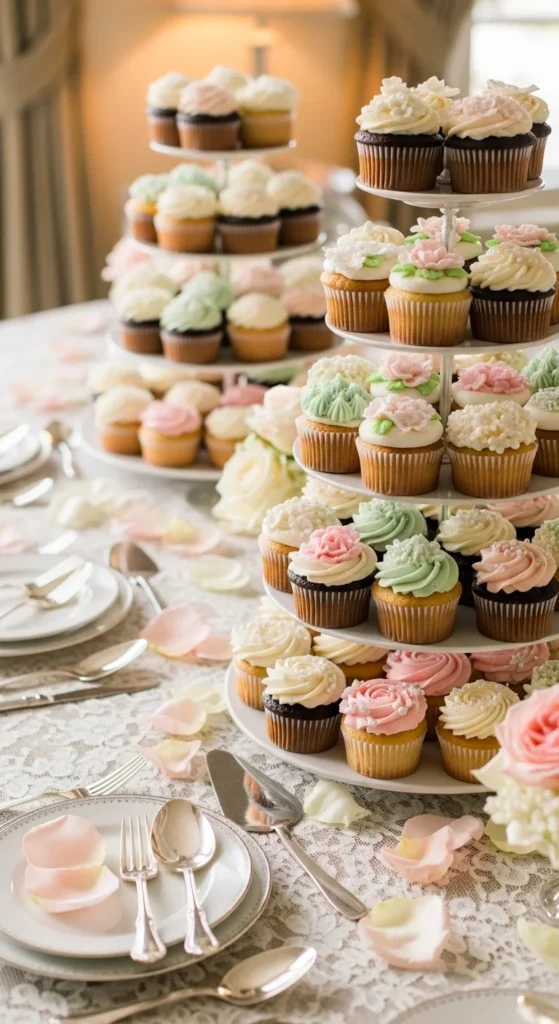
A cupcake and dessert tower instantly creates height and draws attention without needing too many elements. It works well when you want the dessert section to feel like a centerpiece rather than just an add-on.
What to Include
- Cupcakes in 2–3 flavors
- Small desserts like brownies or mini pastries
- Decorative toppers or light garnishes
- Optional cake or centerpiece item
How to Set It Up
Use tiered stands to build vertical layers so the table doesn’t feel flat. Place the tallest stand in the center and surround it with smaller trays. Keep spacing between each level so every item is visible instead of crowded. Stick to a consistent color palette so the table looks coordinated rather than busy.
22. Donut Wall & Sweet Treat Table
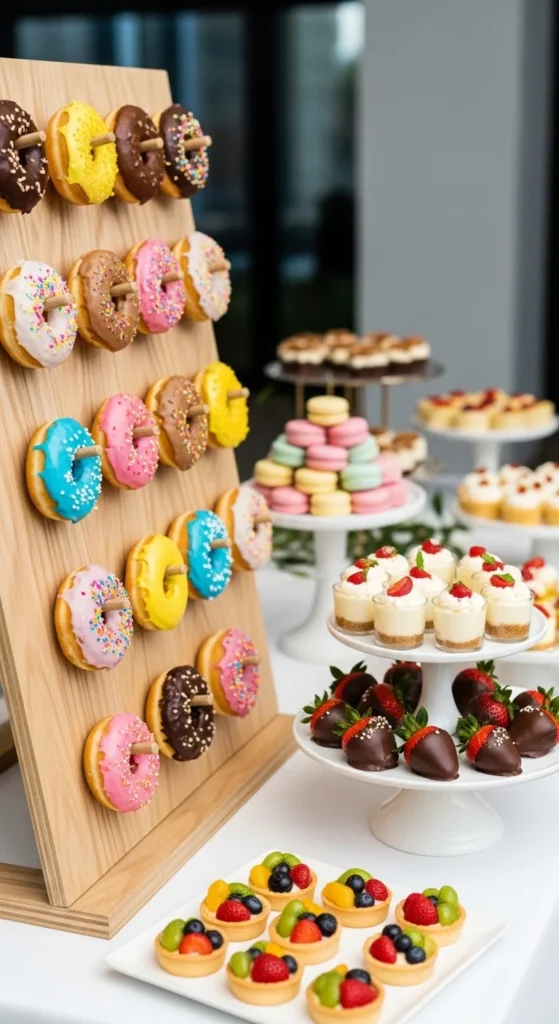
A donut wall adds a visual feature that guests naturally move toward. It works best when paired with a small dessert table so the setup feels complete rather than limited to one item.
What to Include
- Donuts in different flavors
- A few supporting desserts (cookies, brownies)
- Light toppings or glaze variations
- Simple decorative elements
How to Set It Up
Place the donut wall at the back as the focal point, with supporting desserts arranged on trays in front. Keep the layout symmetrical so the wall stays the highlight. Avoid overcrowding the table and leave some space around the wall so it stands out visually.
23. Mini Dessert Cups Buffet
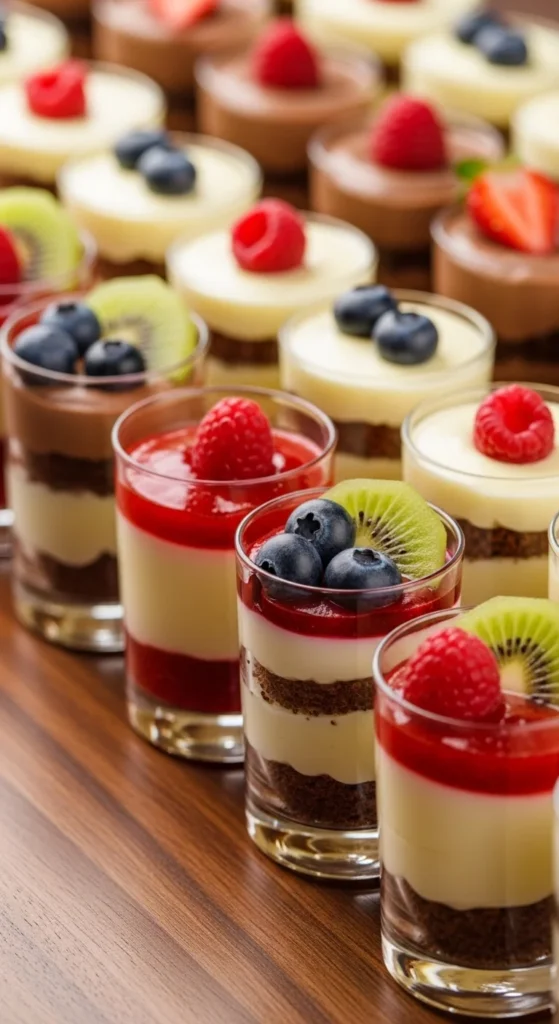
Mini dessert cups give a clean, portion-controlled look while still offering variety. They work especially well for events where guests prefer small servings instead of full slices.
What to Include
- Layered desserts (mousse, cream, cake layers)
- Fruit-based cups
- Chocolate or caramel variations
- Spoons or small utensils
How to Set It Up
Arrange cups in straight rows or neat grids so the table looks structured. Use trays or platforms to create slight height differences. Keep similar flavors grouped together so guests can quickly choose without scanning the entire table.
24. Chocolate & Candy Display Table
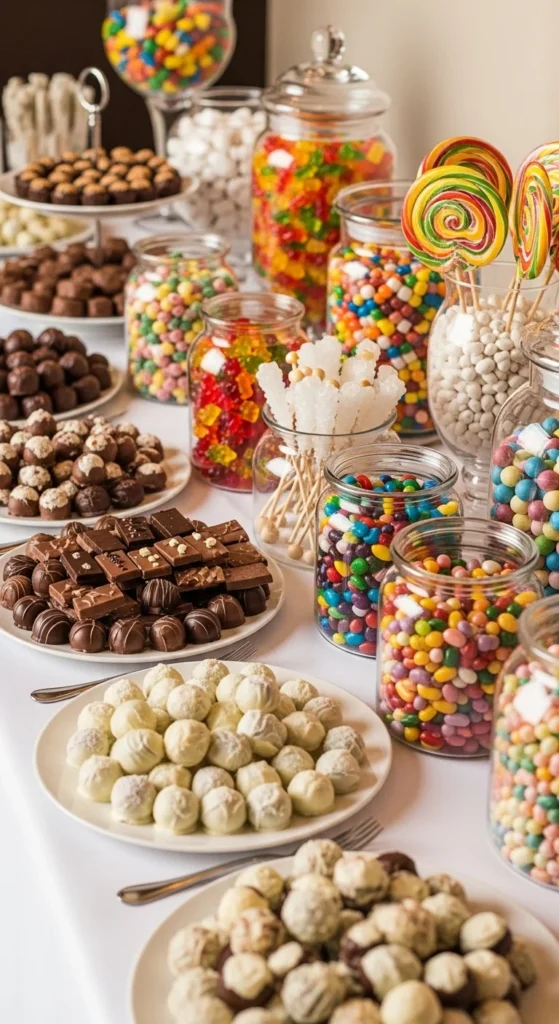
A chocolate and candy table is more about abundance and visual impact than structure, but it still needs balance to avoid looking messy. It works well for both casual and formal setups depending on styling.
What to Include
- Assorted chocolates
- Candy in jars or bowls
- Small scoops or serving tools
- Mix of textures (soft, crunchy, coated)
How to Set It Up
Use jars and containers of different heights to create variation across the table. Place larger jars at the back and smaller ones at the front for easy access. Keep colors balanced across the table instead of grouping everything in one area, so the display feels evenly styled.
25. Late-Night Snack Bar (Mini Burgers, Fries)
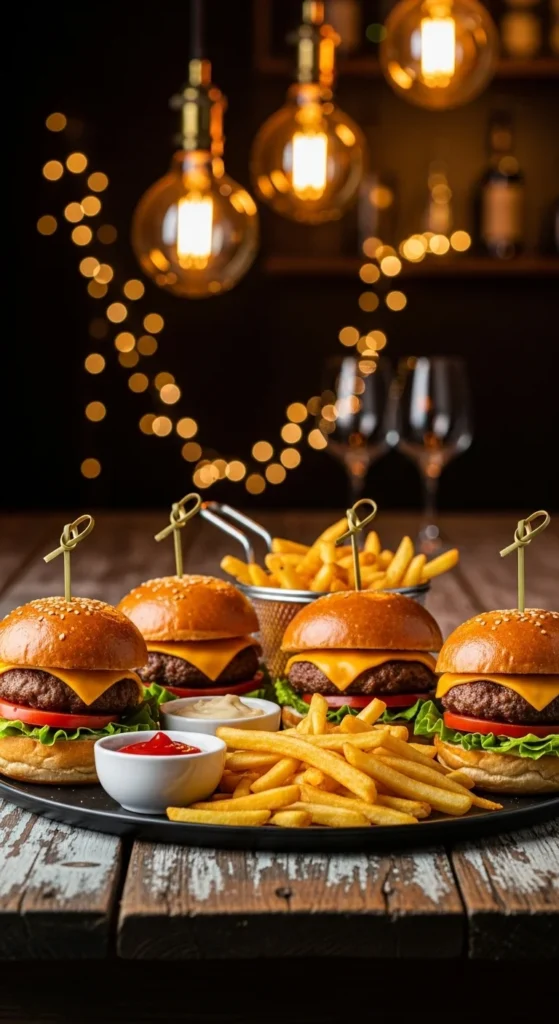
A late-night snack bar works best when the main buffet has already settled and guests want something simple and satisfying. It doesn’t need variety it needs comfort and easy access.
What to Include
- Mini burgers or sliders
- Fries or potato-based sides
- Simple sauces or dips
- Optional add-ons like cheese or pickles
How to Set It Up
Keep this setup compact instead of spreading it across a large table. Use smaller trays and bring food out in batches so it stays warm. Place everything close together so guests can grab something quickly without forming another long line.
26. Mocktail & Drink Pairing Snack Table
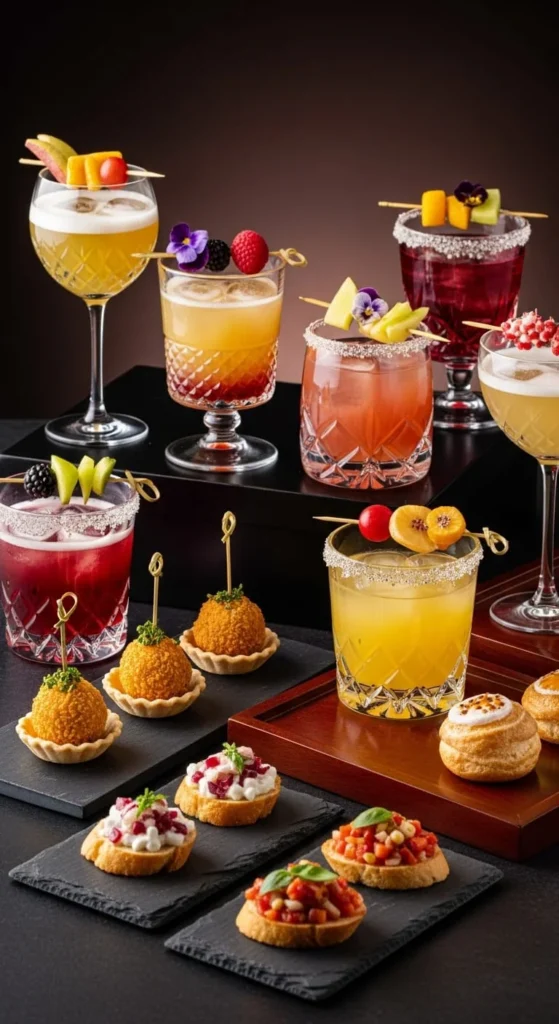
A mocktail table adds a different kind of experience to the buffet. It shifts the focus from just eating to pairing drinks with light snacks, which works well for longer events or evening gatherings.
What to Include
- 2–3 mocktail options
- Garnishes like citrus, mint, or berries
- Light snacks (nuts, small bites, crackers)
- Glasses or serving cups
How to Set It Up
Keep drinks grouped together with garnishes nearby so everything stays in one area. Place snacks slightly to the side so the drink station doesn’t get crowded. Use clear containers or glassware to make the setup feel lighter and more open.
27. Budget-Friendly DIY Party Buffet Setup
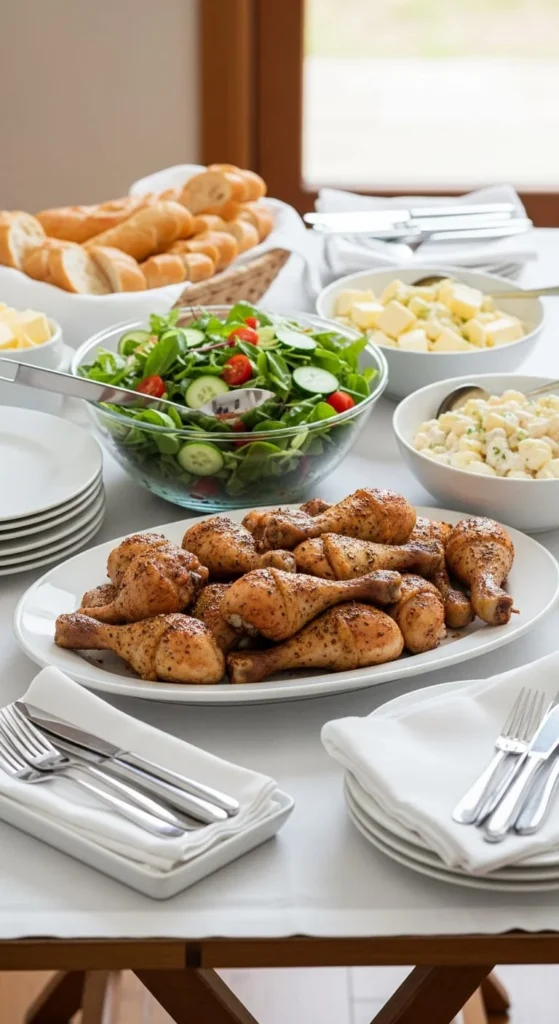
A budget-friendly buffet focuses on using what you already have while still making the table feel put together. It’s less about expensive items and more about how everything is arranged.
What to Include
- Simple, familiar dishes
- A mix of homemade or easy-prep items
- Basic serving trays or plates
- Minimal decoration like napkins or greenery
How to Set It Up
Reuse items like trays, boards, or stands to create height instead of buying new pieces. Keep the table organized with clear sections so it looks intentional. Limit the number of dishes at once and refill as needed to maintain a clean appearance.
Conclusion
When you look at all these setups together, you start to notice that a good buffet is not really about how much food you put out. It is more about how easily people can move through it and how comfortable it feels to pick something without overthinking.
Once the structure is right, with proper spacing, clear flow, and a bit of height, everything else becomes easier to manage. You do not need all 27 ideas. A few well-chosen setups that match your space and guest style are usually enough to create something that feels thoughtful, inviting, and genuinely enjoyable.